Cervical spine problems are becoming increasingly common due to modern lifestyles, especially prolonged screen time and poor posture. One of the most widespread conditions affecting the neck is cervical spondylosis. It can cause discomfort, stiffness, and even neurological symptoms if left unmanaged.
In this detailed guide, we will explore the symptoms of cervical spondylosis, its causes, risks, and answers to commonly asked questions.

What Is Cervical Spondylosis?
Before diving into the symptoms, it’s important to understand what is cervical spondylosis.
Cervical spondylosis is an age-related condition caused by wear and tear of the cervical spine (neck region). It involves degeneration of discs, bones, and joints in the neck.
This condition is also commonly referred to as:
- Neck arthritis
- Cervical osteoarthritis
- Degenerative disc disease
It affects most people after the age of 30–40, but due to poor lifestyle habits, even younger individuals are now experiencing it.
Symptoms of Cervical Spondylosis
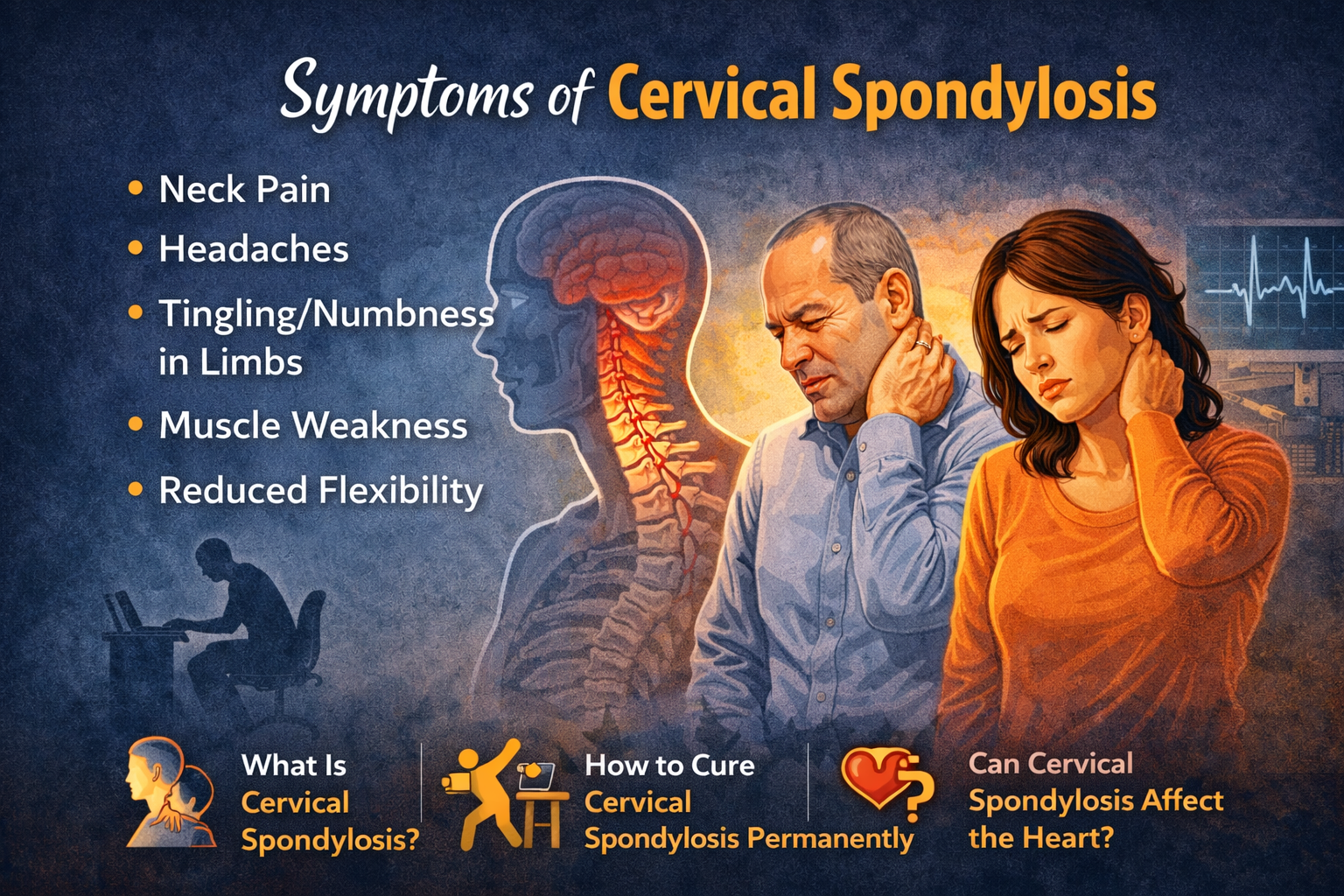
The symptoms of cervical spondylosis can vary from mild discomfort to severe neurological issues depending on the severity of the condition.
Common Symptoms:
- Neck pain and stiffness
- Headaches (especially from the back of the head)
- Shoulder pain
- Pain radiating to arms and hands
- Tingling or numbness in fingers
- Muscle weakness
- Reduced neck flexibility
Advanced Symptoms:
In more serious cases of cervical spondylosis, the condition may affect the spinal cord or nerves.
- Loss of balance
- Difficulty walking
- Lack of coordination
- Bladder or bowel issues (rare but serious)
If you experience these symptoms, immediate medical attention is necessary.
Causes of Cervical Spondylosis
Several factors contribute to the development of cervical spondylosis:
1. Aging
Natural wear and tear of spinal discs over time is the most common cause.
2. Poor Posture
Long hours of mobile or laptop use can strain the neck.
3. Sedentary Lifestyle
Lack of physical activity weakens muscles supporting the spine.
4. Previous Neck Injury
Past injuries can accelerate degeneration.
5. Genetics
Family history may increase the risk.
Risk Factors
You may be more likely to develop cervical spondylosis if you:
- Sit for long hours daily
- Work on computers or phones frequently
- Have poor ergonomics
- Smoke (reduces blood flow to discs)
- Are overweight
How to Cure Cervical Spondylosis Permanently
Many people search for how to cure cervical spondylosis permanently, but the reality is slightly different.
There is no permanent “cure,” but the condition can be effectively managed and symptoms can be significantly reduced.
Effective Management Methods:
1. Exercise & Physiotherapy
- Neck stretching exercises
- Strengthening muscles
- Posture correction
2. Lifestyle Changes
- Maintain proper sitting posture
- Use ergonomic chairs
- Take breaks from screens
3. Pain Management
- Hot/cold therapy
- Pain relief medications (under medical advice)
4. Yoga & Meditation
Helps reduce pain and improve flexibility.
5. Surgery (Severe Cases)
Only recommended if nerve compression is serious.
Can Cervical Spondylosis Cause Death?
A common concern is: can cervical spondylosis cause death?
The answer is No, it is not life-threatening.
However, in rare and severe cases where the spinal cord is compressed, it may lead to serious complications. Early diagnosis and treatment can prevent such risks.
Is Cervical Spondylosis a Disability?
Many people wonder: is cervical spondylosis a disability?
In most cases, it is not considered a disability. However:
- Severe cases with nerve damage
- Chronic pain affecting mobility
- Loss of function
may qualify as a disability depending on medical evaluation and legal standards.
Can Cervical Spondylosis Affect the Heart?
Another common question is: can cervical spondylosis affect the heart?
Directly, no. Cervical spondylosis does not impact heart function.
However, it may cause:
- Chest discomfort
- Pain radiating to shoulders
This can sometimes be confused with heart-related issues. Always consult a doctor if symptoms are unclear.
Diagnosis of Cervical Spondylosis
Doctors use several methods to diagnose cervical spondylosis:
- Physical examination
- X-rays
- MRI or CT scans
- Nerve function tests
Early diagnosis helps in better management.
Prevention Tips
While aging cannot be stopped, you can reduce the risk of cervical spondylosis:
- Maintain good posture
- Exercise regularly
- Avoid prolonged screen time
- Use proper pillows while sleeping
- Stay active
Daily Lifestyle Tips for Relief
Small daily habits can make a big difference:
- Keep your screen at eye level
- Stretch your neck every hour
- Avoid sleeping on very high pillows
- Stay hydrated
- Maintain a healthy weight
When to See a Doctor
Consult a healthcare professional if you experience:
- Persistent neck pain
- Numbness or weakness
- Loss of coordination
- Severe headaches
Ignoring symptoms can worsen the condition.
Conclusion
Understanding the symptoms of cervical spondylosis is essential for early diagnosis and effective management. While cervical spondylosis is a common condition, it does not have to control your life. With the right lifestyle changes, exercises, and medical guidance, you can manage symptoms and maintain a healthy, active life.
FAQ (Frequently Asked Questions)
1. How to cure cervical spondylosis permanently?
There is no permanent cure, but it can be managed with exercise, posture correction, and medical treatment.
2. What is cervical spondylosis?
It is a degenerative condition affecting the neck due to aging and wear and tear.
3. Can cervical spondylosis cause death?
No, it is not life-threatening, but severe cases need medical attention.
4. Is cervical spondylosis a disability?
Usually no, but severe cases may qualify depending on the condition.
5. Can cervical spondylosis affect the heart?
No, but symptoms may sometimes mimic heart-related pain.
6. What are the early symptoms of cervical spondylosis?
Neck pain, stiffness, and headaches are early signs.
7. Can young people get cervical spondylosis?
Yes, due to poor posture and excessive screen time.
8. Is exercise helpful for cervical spondylosis?
Yes, it is one of the best ways to manage symptoms.
9. Can cervical spondylosis be reversed?
No, but its progression can be slowed and symptoms controlled.
10. What is the best sleeping position?
Sleeping on your back with a supportive pillow is recommended.
Author- Health Author