Losing weight can feel confusing, especially when there are countless diets, trends, and “quick fixes” promising fast results. However, science tells Weight Loss Tips a different story. Sustainable fat loss comes from consistent habits, not extreme measures.
In this Health Blog, we will break down weight loss tips that are backed by science, easy to follow, and effective in the long run. Moreover, these tips focus on building a healthier lifestyle rather than chasing temporary results.
Why Most Weight Loss Methods Fail
Before diving into the tips, it’s important to understand why many people struggle.
First, many diets are too restrictive. As a result, people quit quickly.
Second, unrealistic expectations lead to disappointment.
Finally, lack of consistency often becomes the biggest barrier.
Therefore, instead of shortcuts, we will focus on sustainable strategies.
1. Focus on a Calorie Deficit (But Do It Smartly)
To begin with, weight loss fundamentally depends on burning more calories than you consume. This is known as a calorie deficit.
However, this doesn’t mean starving yourself. Instead:
- Eat slightly fewer calories than your body needs
- Choose nutrient-dense foods
- Avoid empty calories like sugary drinks
As a result, your body starts using stored fat for energy.
2. Eat More Protein
Next, increasing protein intake is one of the most effective weight loss tips.
Why? Because protein:
- Reduces hunger
- Boosts metabolism
- Preserves muscle mass
For example, including eggs, chicken, paneer, or lentils in your meals can significantly improve satiety.
Moreover, protein helps you stay full longer, which reduces unnecessary snacking.
3. Prioritize Whole Foods Over Processed Foods
Another key tip is to replace processed foods with whole foods.
Processed foods often contain:
- High sugar
- Unhealthy fats
- Excess calories
On the other hand, whole foods like vegetables, fruits, and whole grains provide essential nutrients.
Consequently, your body functions better, and weight loss becomes easier.
4. Stay Hydrated Throughout the Day
Interestingly, many people confuse thirst with hunger.
Therefore, drinking enough water can:
- Reduce unnecessary eating
- Improve metabolism
- Support digestion
For instance, drinking a glass of water before meals can help control portion sizes.
In addition, hydration plays a crucial role in overall health.
5. Incorporate Strength Training
While cardio is popular, strength training is equally important.
It helps:
- Build muscle
- Increase metabolism
- Burn more calories even at rest
For example, exercises like squats, push-ups, and planks are highly effective.
As a result, combining strength training with cardio gives better results.
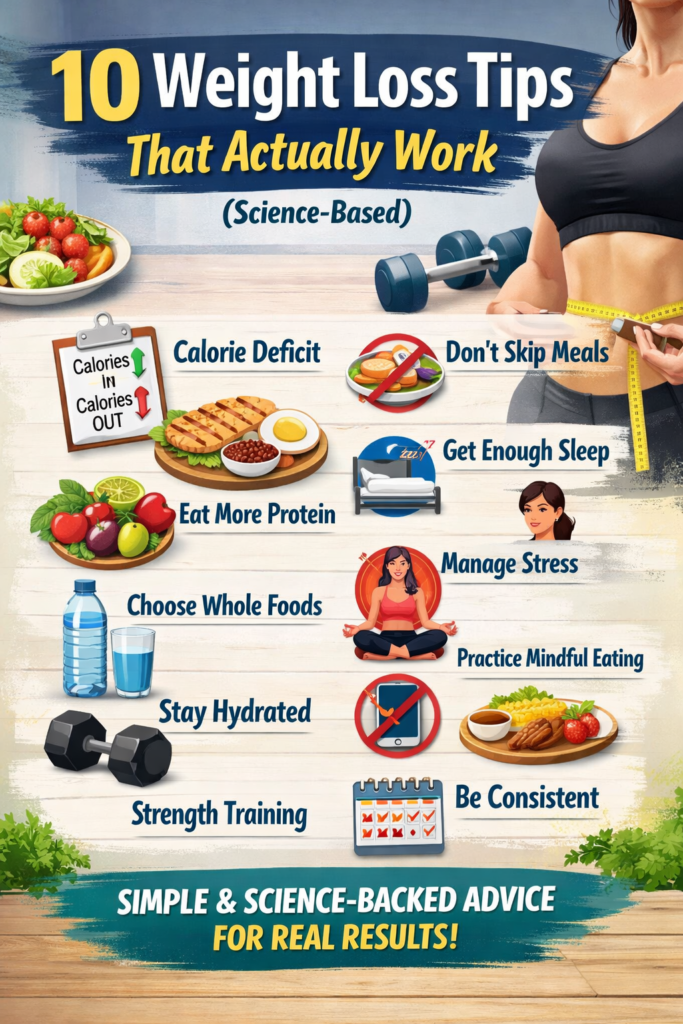
6. Don’t Skip Meals
Many people think skipping meals leads to faster weight loss. However, this is a myth.
In reality:
- Skipping meals slows metabolism
- Increases hunger later
- Leads to overeating
Instead, eat balanced meals at regular intervals.
Thus, your energy levels remain stable throughout the day.
7. Get Enough Sleep
Surprisingly, sleep plays a major role in weight loss.
Lack of sleep:
- Increases hunger hormones
- Reduces metabolism
- Leads to cravings
Therefore, aim for 7–8 hours of quality sleep every night.
As a result, your body recovers better and burns fat more efficiently.
8. Manage Stress Effectively
Stress is often overlooked, yet it directly affects weight gain.
When stressed:
- Cortisol levels increase
- Fat storage increases, especially around the belly
Therefore, managing stress is essential.
You can try:
- Meditation
- Deep breathing
- Walking in nature
Consequently, your body remains balanced and healthier.
9. Practice Mindful Eating
Mindful eating means paying attention to what and how you eat.
For example:
- Eat slowly
- Avoid distractions like mobile phones
- Listen to your hunger cues
As a result, you avoid overeating and improve digestion.
Moreover, this habit builds a healthier relationship with food.
10. Stay Consistent and Patient
Finally, consistency is the most important factor.
Weight loss is not instant. Instead, it’s a gradual process.
Therefore:
- Track your progress
- Stay committed
- Don’t give up after small setbacks
In the long run, consistency always beats intensity.
How to Combine These Tips Effectively
Now that you know the best weight loss tips, the next step is combining them.
For example:
- Eat a balanced diet with protein
- Exercise regularly
- Stay hydrated
- Sleep well
When these habits work together, results become more noticeable.
Common Mistakes to Avoid
Even with the right knowledge, mistakes can slow progress.
Avoid:
- Extreme dieting
- Over-exercising
- Comparing yourself to others
- Relying on supplements
Instead, focus on sustainable habits.
Realistic Expectations
It’s important to set realistic goals.
Typically:
- 0.5 to 1 kg per week is healthy
- Visible changes take time
Therefore, patience is key.
Final Thoughts
In conclusion, weight loss doesn’t require complicated strategies. Instead, simple and science-backed habits can lead to long-term success.
This Health Blog highlighted practical weight loss tips that anyone can follow. By focusing on consistency, balanced nutrition, and a healthy lifestyle, you can achieve your goals naturally.
FAQs
1. What are some effective tips for losing weight?
Answer: Some effective tips for losing weight include maintaining a balanced diet, incorporating regular exercise into your routine, staying hydrated, getting enough sleep, and managing stress levels.
2. How quickly can I lose weight safely?
Safe weight loss is around 0.5–1 kg per week.
3. Do I need to exercise daily?
Not necessarily, but regular activity is important.
4. Is dieting necessary for weight loss?
Yes, nutrition plays a major role.
5. Can I lose weight without a gym?
Yes, home workouts can be effective.
6. Does drinking water help in weight loss?
Yes, it helps control appetite and boosts metabolism.
7. Are cheat meals allowed?
Occasionally, yes—but in moderation.
8. What is the best time to exercise?
Any time that fits your schedule.
9. Can stress cause weight gain?
Yes, stress increases fat storage.
10. Is sleep important for weight loss?
Absolutely, it affects hormones and metabolism.
11. Should I avoid carbs completely?
No, choose healthy carbs instead.
12. Are supplements necessary?
Not usually, focus on real food first.
13. How important is protein intake?
Very important for muscle and satiety.
14. Can walking help lose weight?
Yes, it’s a simple and effective exercise.
15. Why am I not losing weight?
It could be due to diet, stress, or inconsistency.
16. Is fasting effective?
It can work, but not for everyone.
17. Can I eat at night?
Yes, but keep it light and healthy.
18. How do I stay motivated?
Set goals and track progress.
19. Do genetics affect weight loss?
Yes, but habits matter more.
20. Can beginners follow these tips?
Yes, these tips are beginner-friendly and effective.