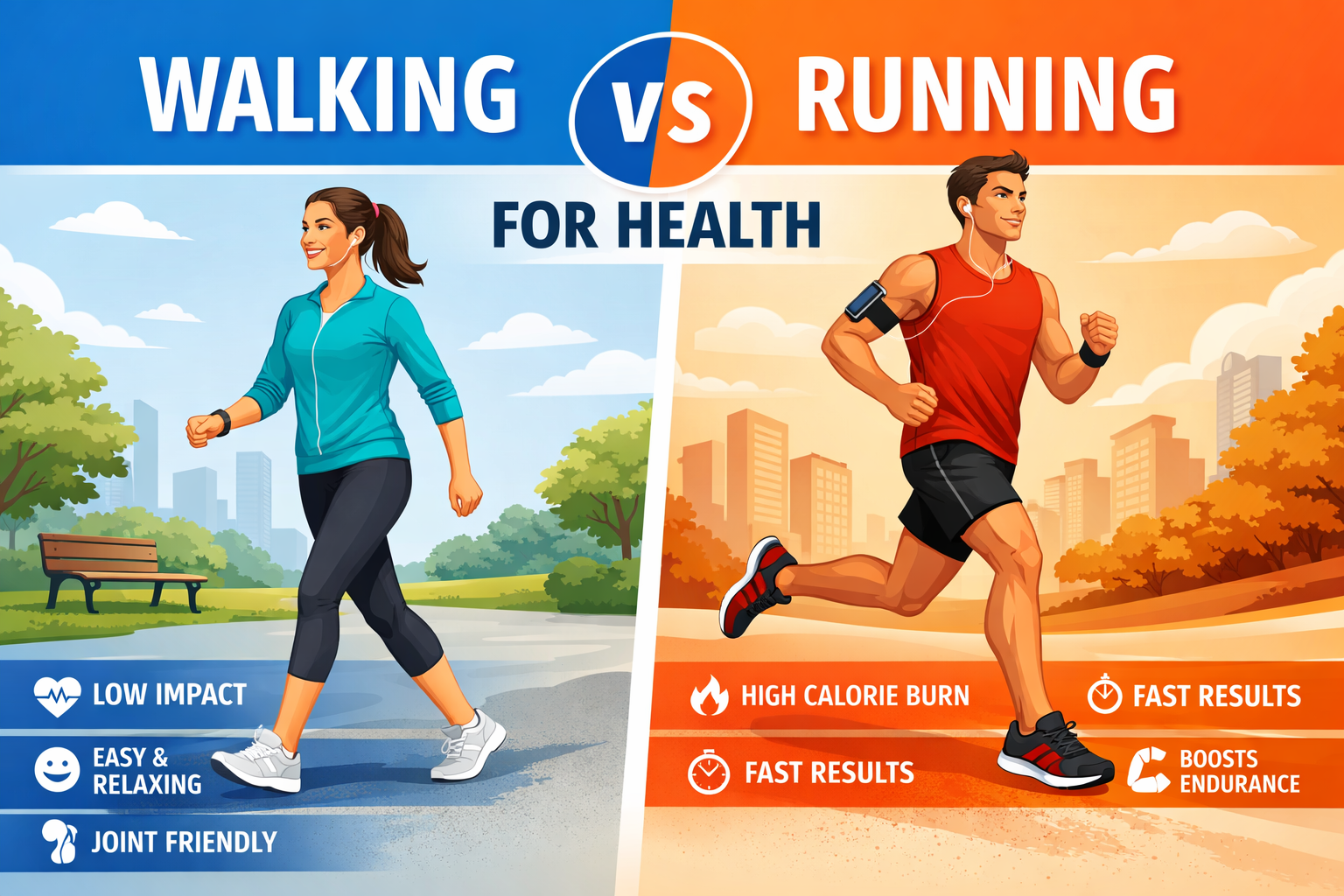
Which Is Better for Your Health: Walking or Running?
When it comes to improving fitness, burning calories, and staying healthy, one question comes up again and again: Which is better for your health: walking or running? Both are simple, natural, and highly effective forms of exercise, yet they offer different benefits depending on your goals, fitness level, age, and lifestyle.
In this complete health guide, we’ll compare walking vs running, explore their benefits, risks, calorie burn, weight loss impact, heart health effects, and help you decide which is best for overall health, weight loss, and long-term fitness.

Understanding Walking and Running
Before choosing between walking and running, it’s important to understand what each activity offers.
What Is Walking?
Walking exercise is a low-impact physical activity where at least one foot stays on the ground at all times. It is accessible, beginner-friendly, and suitable for people of all ages.
What Is Running?
Running exercise is a high-impact cardiovascular activity where both feet leave the ground momentarily. It requires more energy, strength, and endurance.
Both activities are powerful tools for fitness, fat loss, and heart health.
Walking vs Running: Key Differences
| Factor | Walking | Running |
|---|---|---|
| Impact | Low impact | High impact |
| Calories burned | Moderate | High |
| Injury risk | Low | Higher |
| Accessibility | Very easy | Requires conditioning |
| Weight loss | Slower | Faster |
| Joint stress | Minimal | Significant |
This comparison helps clarify walking vs running for health.
Health Benefits of Walking
Walking for health is one of the most recommended exercises by doctors worldwide.
1. Improves Heart Health
Regular brisk walking strengthens the heart, lowers blood pressure, and reduces the risk of heart disease.
2. Supports Weight Loss
While slower than running, walking for weight loss is effective when done consistently.
3. Joint-Friendly Exercise
Walking is ideal for people with knee pain, arthritis, or joint issues.
4. Boosts Mental Health
Daily walking reduces stress, anxiety, and depression.
5. Improves Blood Sugar Control
Walking after meals helps manage blood sugar and prevents diabetes.
Because of these benefits, walking exercise is considered one of the best habits for long-term health.
Health Benefits of Running
Running for health delivers faster and more intense results.
1. Burns More Calories
Running burns more calories than walking, making it ideal for fat loss.
2. Improves Cardiovascular Fitness
Running strengthens lungs, heart, and endurance more quickly.
3. Helps Lose Weight Faster
If your goal is weight loss, running can help you achieve results sooner.
4. Strengthens Bones
High-impact activity increases bone density.
5. Boosts Metabolism
Running increases metabolic rate even after the workout ends.
These benefits make running exercise a favorite for people seeking faster transformation.
Walking vs Running for Weight Loss
One of the most searched questions online is:
Walking vs running for weight loss – which is better?
Calories Burned Comparison
- Walking (30 min): 120–150 calories
- Running (30 min): 250–400 calories
Running burns more calories in less time. However, walking for weight loss is easier to maintain long term.
👉 Best option:
- Choose running if you want fast results
- Choose walking if you want sustainable weight loss
Consistency matters more than intensity.
Walking vs Running for Heart Health
Both activities improve cardiovascular health, but in different ways.
- Walking daily lowers cholesterol and blood pressure
- Running regularly improves heart strength and VO₂ max
Studies show that when calories burned are equal, walking and running provide similar heart benefits.
Which Is Better for Beginners?
For beginners, walking is better for health because:
- Lower injury risk
- Easier to stay consistent
- Requires no special equipment
Once fitness improves, you can gradually add running.
Impact on Joints and Injury Risk
Walking
- Safe for knees and hips
- Ideal for older adults
- Recommended for recovery days
Running
- Higher risk of shin splints, knee pain, stress fractures
- Requires good footwear and form
If joint health is a concern, walking exercise is the safer choice.
Walking vs Running for Mental Health
Both exercises improve mental well-being.
Benefits Include
- Reduced stress
- Improved mood
- Better sleep
- Increased focus
Walking outdoors is especially effective for stress relief, while running can provide a strong mood boost through endorphins.
Time Efficiency: Walking or Running?
If time is limited:
- Running gives faster results in less time
- Walking requires more time but is easier to maintain
Choose based on your schedule and energy levels.
Can You Combine Walking and Running?
Yes! A mix of both is often the best exercise strategy.
Example Plan
- Walk on rest or recovery days
- Run 2–3 times per week
- Try walk-run intervals
This approach balances fat loss, fitness, and injury prevention.
Walking vs Running for Long-Term Health
For lifelong fitness:
- Walking is more sustainable
- Running may be harder to maintain with age
Many health experts recommend daily walking as the foundation of long-term wellness.
Which Is Better Based on Your Goal?
- Weight loss: Running
- Joint health: Walking
- Heart health: Both
- Stress relief: Walking
- Time efficiency: Running
- Beginners: Walking
- Advanced fitness: Running
The answer to which is better for your health: walking or running depends on you.
Final Verdict: Walking or Running?
There is no single winner in the walking vs running debate. Both are excellent forms of exercise with powerful health benefits.
👉 If you want safe, sustainable fitness, choose walking.
👉 If you want fast results and higher calorie burn, choose running.
The best exercise for health is the one you enjoy and can stick with consistently.
10 FAQs: Walking vs Running
1. Is walking better than running for health?
Both are healthy; walking is safer, running is more intense.
2. Can walking replace running?
Yes, if done briskly and consistently.
3. Which burns more fat, walking or running?
Running burns fat faster, but walking also works long term.
4. Is running bad for knees?
Improper form or overuse can cause issues.
5. How much walking is equal to running?
Roughly double the time of walking equals running calorie burn.
6. Can I lose weight by walking daily?
Yes, with diet control and consistency.
7. Is running better for heart health?
Both offer similar heart benefits when calorie burn is equal.
8. Should beginners start with walking or running?
Walking is recommended.
9. Is fast walking as good as running?
Brisk walking can offer comparable benefits.
10. What is the best exercise for overall health?
A combination of walking, running, and strength training.