Have you ever wondered whether a simple ice cube could improve your skincare routine? Using ice on the face is a popular beauty practice because it is inexpensive, easy to try at home, and may temporarily reduce facial puffiness. Many people include ice facials in their morning routines to help their skin look refreshed before starting the day.
But what are the real benefits of using ice on skin? Can ice help with puffy eyes, acne, pores, and glowing skin? Although facial icing may offer temporary cosmetic benefits, it is not a miracle treatment and cannot permanently shrink pores, remove acne, or stop skin aging.
In this article, discover 15 benefits of ice for skin, how to use ice safely, and practical Skincare Tips for achieving Naturally Glowing Skin at home.
What Is Facial Icing?
Facial icing involves gently applying a cold compress or a cloth-wrapped ice cube to the face for a short period. Cold temperatures temporarily narrow blood vessels and may reduce swelling, making the skin appear less puffy.
However, scientific evidence supporting many popular beauty claims about ice is limited. According to the Cleveland Clinic, facial icing may temporarily help with puffiness, but it is not a permanent solution for skin concerns.
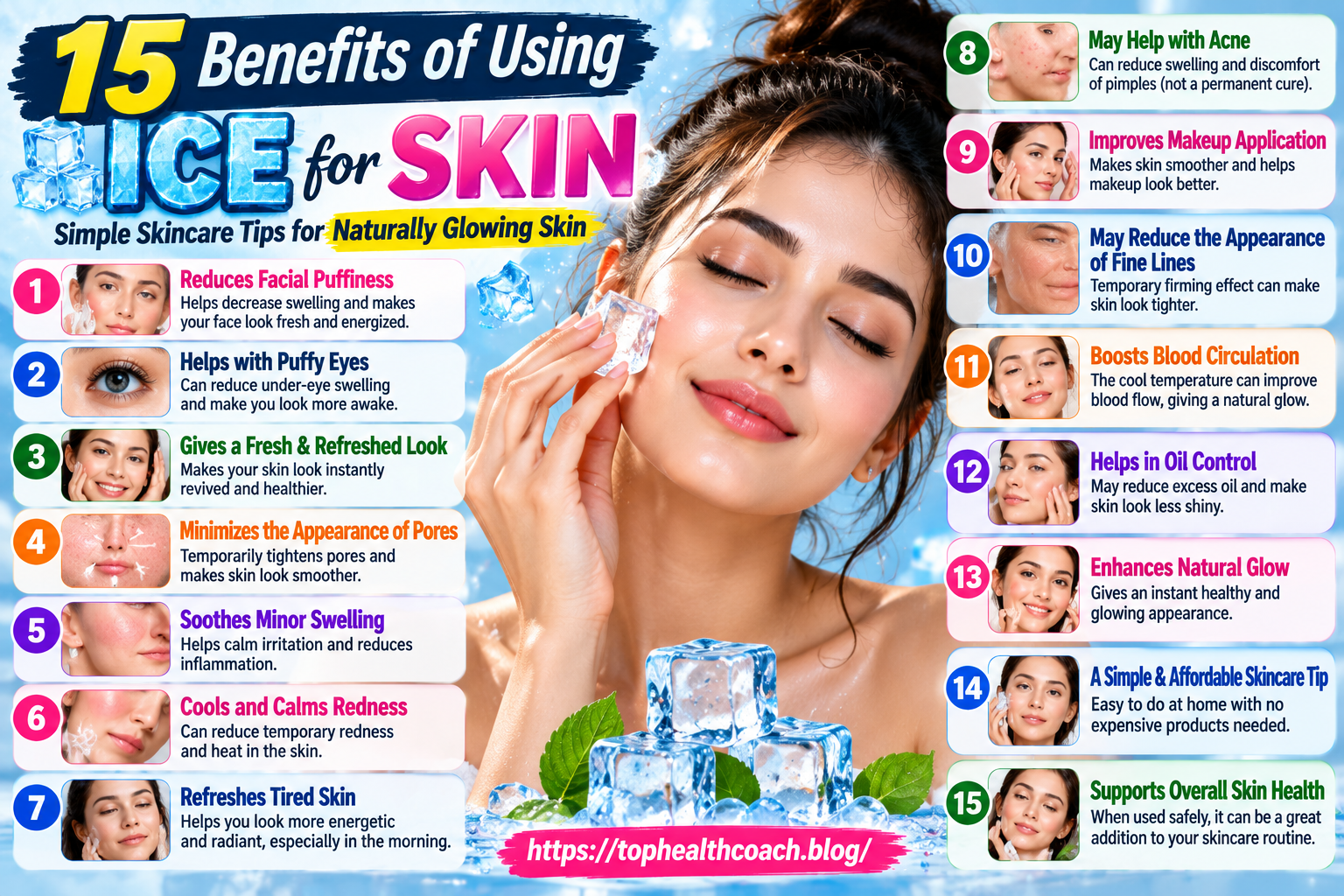
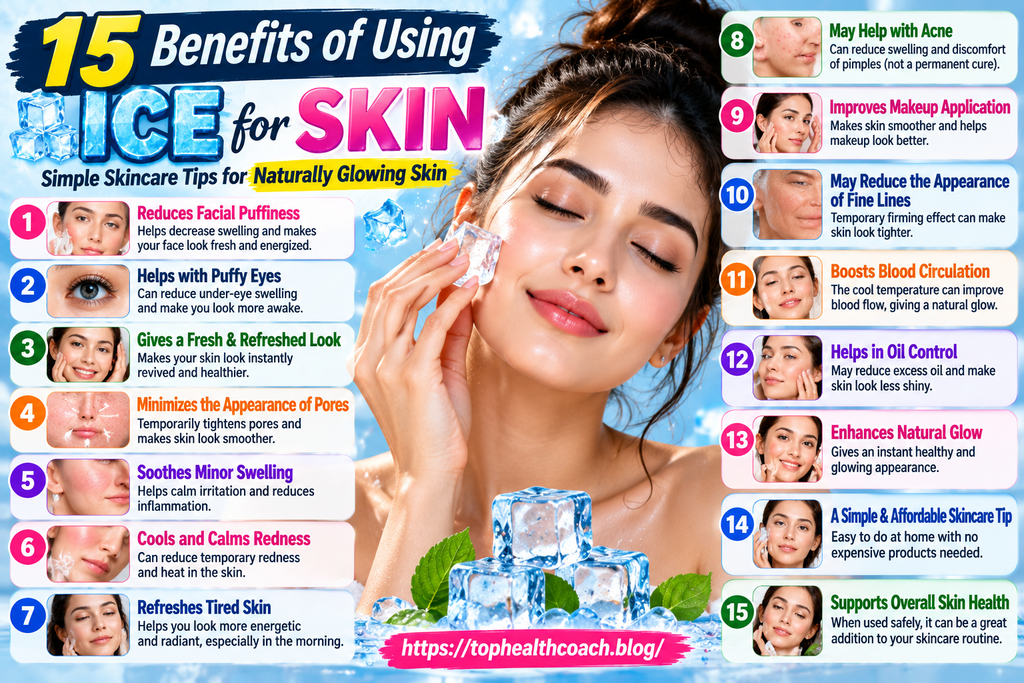
15 Benefits of Using Ice for Skin
1. Helps Reduce Facial Puffiness
One of the best-known benefits of ice on the face is temporary relief from puffiness. If your face looks swollen after waking up, a cool compress may help reduce the appearance of mild swelling.
Cold temperatures can temporarily decrease blood flow and swelling in the treated area. This may help your face look fresher, especially in the morning.
Skincare tip: Use a clean, cool washcloth or a cloth-wrapped cold pack rather than placing ice directly on your skin.
2. May Reduce the Appearance of Puffy Eyes
Ice for puffy eyes is a popular home beauty remedy. Mild under-eye puffiness can sometimes result from fluid accumulation, allergies, lack of sleep, or other everyday factors.
A cool compress may temporarily make the under-eye area look less swollen. However, it will not remove genetic eye bags, treat underlying allergies, or permanently eliminate dark circles.
For better results: Get enough sleep, avoid rubbing your eyes, and consider medical advice if swelling persists or occurs suddenly.
3. Gives Skin a Temporarily Refreshed Appearance
If your skin looks tired in the morning, a brief cool compress may help it appear refreshed. The cooling sensation can make your skincare routine feel invigorating.
This is one reason people try ice facials for glowing skin before applying moisturizer or getting ready for the day.
Remember that a temporary refreshed appearance is not the same as improving your skin’s long-term health. Consistent skincare, sun protection, and adequate sleep remain important.
4. May Temporarily Minimize the Appearance of Pores
Many people search for how to shrink pores naturally. Cooling the skin may temporarily make pores look less noticeable, but ice cannot permanently shrink them.
Pore appearance is influenced by genetics, oil production, age, and the structure of your skin.
For more effective skincare tips for large pores, cleanse gently, use non-comedogenic products, and consider ingredients such as salicylic acid if appropriate for your skin type.
5. May Temporarily Soothe Minor Swelling
Cold therapy is commonly used to help manage minor swelling in certain situations. A cool compress may temporarily soothe mild facial puffiness.
However, facial swelling can have many causes, including infection, allergic reactions, or dental problems. Ice should not be used to delay medical care when swelling is severe, painful, persistent, or unexplained.
Important: Never apply ice to an open wound, a burn, or irritated skin without appropriate medical guidance.
6. Can Make Your Morning Skincare Routine Feel Refreshing
A cool facial compress can provide a refreshing sensation, particularly during hot weather. Some people enjoy including it in their morning daily skincare routine.
Although this benefit is mainly about comfort and appearance, a simple routine can help you stay consistent with other useful habits, such as cleansing, moisturizing, and applying sunscreen.
You do not need expensive tools or elaborate treatments to build a good skincare routine.
7. May Temporarily Calm the Feeling of Skin Warmth
After spending time in warm weather, your face may feel hot or uncomfortable. A cool, damp cloth can provide temporary relief from that sensation.
However, ice is not a treatment for sunburn. Direct ice application can further injure damaged skin. For sunburn, use cool—not icy—water or a cool compress, moisturize gently, and seek medical advice if symptoms are severe.
8. May Temporarily Reduce the Appearance of Mild Redness
Cooling may temporarily reduce some redness associated with mild swelling. However, results vary depending on the cause of the redness and your skin type.
If you have sensitive skin, rosacea, visible broken blood vessels, or frequent facial flushing, facial icing may worsen irritation.
For sensitive skin care, use gentle, fragrance-free products and avoid extreme temperatures. Consult a dermatologist if redness is persistent or unexplained.
9. May Help Skin Look Smoother Before Makeup
Some people use ice before makeup because their skin appears temporarily less puffy afterward. A cool compress may help create a refreshed look before applying makeup.
However, ice does not permanently smooth fine lines or change skin texture. Your makeup results will also depend on skin hydration, product selection, and application technique.
Beauty tip: Apply a suitable moisturizer and allow it to absorb before using makeup. Avoid facial icing if it causes redness, stinging, or tightness.
10. Is an Affordable Skincare Option
One practical advantage of using ice for skin is that a cool compress can be inexpensive and easy to prepare at home.
You do not need costly beauty devices to enjoy the temporary soothing effects of cool water or a clean, cool cloth.
That said, inexpensive does not automatically mean risk-free. Direct or prolonged contact with ice can damage the skin, so use a protective cloth and avoid excessive cold.
11. May Temporarily Improve the Appearance of Tired Skin
Poor sleep, stress, and dehydration can make you look tired. A cool compress may temporarily reduce puffiness, helping your face appear more awake.
But ice for tired-looking skin cannot replace adequate sleep, balanced nutrition, or hydration.
For healthier-looking skin, aim for consistent sleep habits and follow a simple routine that suits your skin type.
12. Can Be a Simple Part of Self-Care
A short skincare routine can encourage you to slow down and take care of yourself. If you enjoy the refreshing sensation of a cool compress, it may become a relaxing part of your daily self-care routine.
However, you should not feel that you must use ice every day to achieve healthy skin. Gentle cleansing, moisturizing, sun protection, and consistency are more important than any single beauty trend.
13. May Temporarily Soothe Minor Discomfort
Cold can temporarily reduce the sensation of discomfort in some situations. However, facial icing is not a general treatment for acne pain, skin infections, or unexplained facial discomfort.
If a painful spot is swollen, warm, worsening, or producing pus, avoid aggressive home treatments and seek appropriate medical advice.
For acne-prone skin, use gentle, non-comedogenic products and evidence-based acne treatments rather than relying on ice alone.
14. Can Encourage a Consistent Skincare Habit
Building a skincare habit is often more useful than trying multiple beauty trends. If you enjoy facial icing, you can use a cool compress as an optional step in a simple routine.
A practical skincare routine for naturally glowing skin might include:
- Morning: Gentle cleanser, moisturizer, and broad-spectrum SPF 30 or higher sunscreen.
- Evening: Gentle cleanser and moisturizer.
- Optional: A brief cool compress if it feels comfortable and does not irritate your skin.
You can achieve healthy-looking skin without facial icing. Choose products based on your individual needs.
15. Complements Other Healthy Skin Habits
Perhaps the most useful benefit of facial icing is that it can be an optional addition to a broader skincare routine. It may provide temporary cosmetic effects, but long-term skin health depends on several factors.
For Naturally Glowing Skin, focus on:
- Eating a balanced diet with vegetables, fruits, whole grains, and adequate protein.
- Drinking enough fluids to stay hydrated.
- Getting sufficient sleep.
- Using sunscreen to protect against ultraviolet radiation.
- Avoiding smoking and harsh skincare practices.
- Choosing products suitable for your skin type.
These habits support overall skin health more reliably than depending on ice for visible results.
How to Use Ice on Your Face Safely
If you want to try facial icing at home, follow these precautions:
- Clean your face first: Remove makeup, dirt, and excess oil using a gentle cleanser.
- Wrap the ice: Place an ice cube in a clean, thin cloth. Never press bare ice directly against your face.
- Keep it moving: Gently move the wrapped ice over the skin without pressing hard or holding it in one place.
- Keep the session brief: Start with a short application. Stop immediately if you experience pain, burning, numbness, or significant redness.
- Moisturize afterward: Apply a gentle moisturizer if your skin feels dry.
- Use sunscreen in the morning: Facial icing does not protect your skin from UV damage.
Avoid facial icing if you have very sensitive skin, rosacea that reacts to cold, visible broken capillaries, reduced skin sensation, or a condition that affects circulation unless a healthcare professional advises it is safe. Avoid it on injured skin and after cosmetic procedures unless your clinician approves it.
Prolonged exposure to ice can cause cold burns or frostbite.
Does Ice Help Remove Acne, Dark Circles, or Wrinkles?
There is a lot of online interest in ice for acne, ice for dark circles, and ice for wrinkles. It is important to understand what facial icing can and cannot do.
- Acne: Cold may temporarily soothe discomfort or swelling, but it does not treat the underlying causes of acne.
- Dark circles: A cool compress may help if puffiness contributes to their appearance, but it will not remove every cause of dark circles.
- Wrinkles: Ice cannot permanently remove wrinkles or reverse skin aging.
- Dark spots: Ice does not reliably fade pigmentation or treat melasma.
- Glowing skin: Cooling may create a temporary refreshed appearance, but lasting results depend on consistent skincare and healthy habits.
Do not expect overnight transformations from any single home remedy.
Final Thoughts
The 15 benefits of using ice for skin mainly involve temporary relief from puffiness, a refreshed appearance, and a cooling sensation. Facial icing is inexpensive, but it is not essential for healthy skin and does not permanently shrink pores, cure acne, or erase wrinkles.
For Naturally Glowing Skin, combine safe skincare practices with balanced nutrition, adequate sleep, moisturizing, and daily sunscreen. If you choose to try ice, use a cloth barrier, keep the application brief, and stop if irritation develops.
Healthy skin is built through consistent care—not extreme treatments or overnight beauty promises.
10 Frequently Asked Questions (FAQs)
1. What are the main benefits of using ice on the face?
Using ice on the face may temporarily reduce puffiness, soothe minor swelling, and help the skin look refreshed. Results vary, and facial icing does not treat every skin concern.
2. Can I apply ice to my face every day?
Some people use a brief cool compress daily, but it is not necessary. If you try it, avoid direct ice contact, keep the application short, and stop if your skin becomes irritated.
3. Does ice make your skin glow naturally?
Ice may temporarily make your face look less puffy and more refreshed. For Naturally Glowing Skin, prioritize sunscreen, moisturizer, sleep, and a balanced diet.
4. Is ice good for acne and pimples?
Cold may temporarily soothe swelling or discomfort, but ice does not cure acne. Avoid squeezing pimples and consider evidence-based acne products or advice from a dermatologist.
5. Can ice remove dark circles under the eyes?
A cool compress may temporarily reduce puffiness around the eyes. However, ice cannot remove all dark circles, especially when they are related to genetics, pigmentation, or facial anatomy.
6. Does ice permanently shrink open pores?
No. Ice cannot permanently shrink pores. Cooling may temporarily change their appearance, while appropriate cleansing and skincare can help manage oil and clogged pores.
7. Should I use ice before or after washing my face?
If you choose facial icing, wash your face first and use a clean, cloth-wrapped ice cube or cool compress. Follow with moisturizer if needed.
8. How long should I keep ice on my face?
Keep facial icing brief and never hold ice in one spot. There is no universally established ideal duration for cosmetic facial icing. Stop immediately if you notice pain, numbness, burning, or significant redness.
9. Can ice help reduce wrinkles and fine lines?
Ice does not permanently remove wrinkles or fine lines. Sunscreen, suitable moisturizers, and dermatologist-recommended treatments are more appropriate options for managing visible signs of aging.
10. What is the best skincare routine for naturally glowing skin?
A simple skincare routine for glowing skin includes gentle cleansing, moisturizer, and broad-spectrum SPF 30 or higher sunscreen during the day. At night, cleanse gently and moisturize. Add other products according to your skin type and specific concerns.