How to Deal with People with Mental Health Issues
Mental health awareness has grown significantly in recent years, yet many people still feel confused about how to interact with someone experiencing emotional or psychological struggles. Whether it is a friend, family member, coworker, or partner, knowing how to support someone with a mental illness can make a meaningful difference in their recovery and overall well-being.
People living with mental health disorders often face misunderstanding, stigma, and isolation. Instead of judgment, they need compassion, patience, and support. Understanding the basics of mental health conditions helps create a more supportive and empathetic environment for those who are struggling.
This guide will help you understand how to deal with people facing mental health challenges and how to provide meaningful support.
Understanding Mental Health Issues
Mental health refers to emotional, psychological, and social well-being. It affects how people think, feel, and behave in daily life. When someone develops a mental disorder, it can impact their mood, thinking patterns, relationships, and ability to function normally.
There are many different types of mental health disorders, and they can vary from mild to severe. Some individuals may experience short-term emotional distress, while others may live with long-term mental health conditions that require treatment and ongoing support.
Learning about the mental disorders list can help people better understand what others might be experiencing. Mental health issues are medical conditions, not personality flaws or weaknesses.
Common Types of Mental Health Disorders
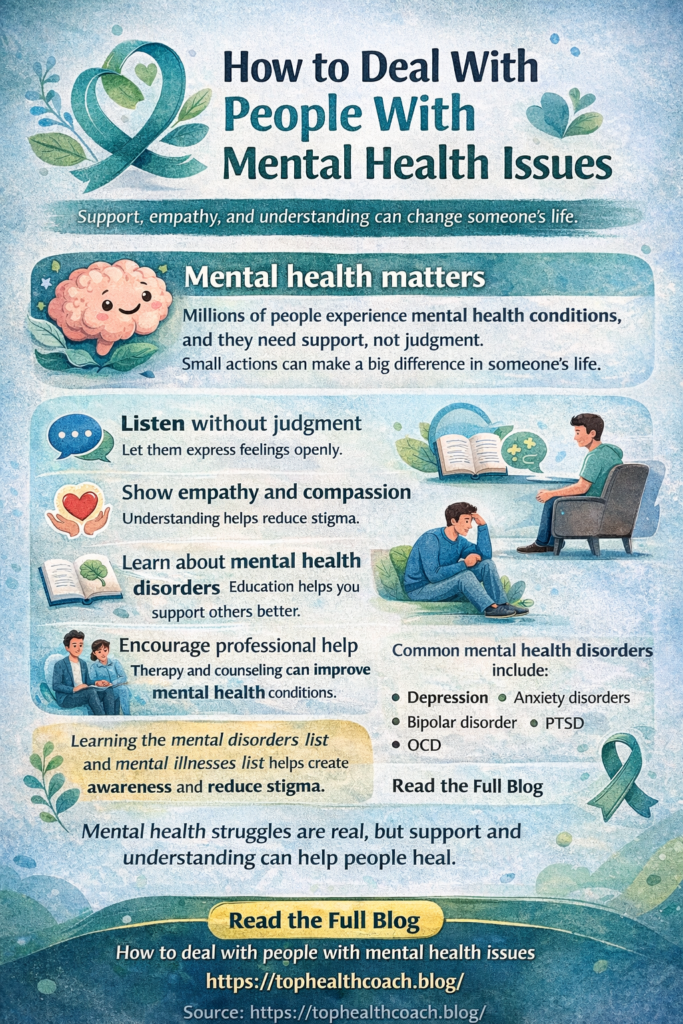
Understanding common mental illnesses list helps reduce stigma and encourages empathy. Some of the most common mental health disorders include:
- Depression
- Anxiety disorders
- Bipolar disorder
- Schizophrenia
- Obsessive-compulsive disorder (OCD)
- Post-traumatic stress disorder (PTSD)
- Eating disorders
- Personality disorders
These mental health conditions affect millions of people worldwide. Each condition has different symptoms, challenges, and treatment approaches.
By familiarizing yourself with the mental disorders list, you can better understand what someone may be going through and how to support them appropriately.
Recognizing Signs of Mental Health Struggles
People experiencing mental illness may show emotional, behavioral, or physical changes. Recognizing these signs early can help provide timely support.
Common signs include:
- Persistent sadness or mood swings
- Withdrawal from friends and family
- Changes in sleeping or eating habits
- Loss of interest in activities
- Difficulty concentrating
- Increased irritability or anger
- Feelings of hopelessness
These symptoms may indicate the presence of mental health disorders or other mental health conditions that require attention and support.
Listen Without Judgment
One of the most powerful ways to help someone dealing with a mental disorder is to listen to them without judgment. Many people suffering from mental illness fear being misunderstood or criticized.
When someone opens up about their struggles, try to listen with empathy. Avoid interrupting or immediately offering solutions. Sometimes people simply need someone who will listen and understand.
Creating a safe environment encourages open conversations about mental health conditions and helps the person feel valued and respected.
Show Empathy and Compassion
Empathy means understanding someone else’s emotions from their perspective. When dealing with individuals facing mental health disorders, compassion can make a huge difference.
Instead of saying things like:
- “Just think positive.”
- “Everyone feels stressed sometimes.”
Try supportive statements such as:
- “I’m here for you.”
- “You’re not alone.”
- “I understand that this must be difficult.”
Showing empathy helps reduce the stigma associated with mental illness and encourages people to seek help.
Educate Yourself About Mental Health
Learning about different mental disorders list is an important step in supporting someone with a mental disorder. Education helps remove misconceptions and promotes understanding.
For example, depression is not simply sadness, and anxiety disorders are not just nervousness. These are serious mental health conditions that affect brain function and emotional regulation.
When you understand the mental illnesses list, you become better equipped to offer meaningful support.
Encourage Professional Help
While emotional support from family and friends is valuable, professional help is often necessary for managing mental health disorders.
Encourage the person to seek support from:
- Psychologists
- Psychiatrists
- Therapists
- Counselors
Professional treatment may include therapy, counseling, medication, or lifestyle adjustments. These approaches can significantly improve many mental health conditions.
Encouraging someone to seek help should always be done gently and respectfully.
Be Patient and Supportive
Recovery from mental illness takes time. There is rarely a quick fix for mental health disorders.
People with mental health conditions may experience ups and downs during their recovery journey. Patience is essential when supporting someone dealing with emotional or psychological struggles.
Celebrate small improvements and continue offering encouragement.
Avoid Stigma and Judgment
Unfortunately, stigma around mental illness still exists in many societies. Negative attitudes toward mental health disorders often prevent people from seeking help.
Avoid labeling or judging individuals based on their mental health conditions. Remember that these conditions are medical issues that deserve compassion and care.
Promoting awareness about the mental disorders list helps reduce stigma and creates a more supportive society.
Take Care of Yourself Too
Supporting someone with a mental disorder can sometimes be emotionally challenging. It is important to maintain your own mental and emotional well-being.
Practice self-care by:
- Setting healthy boundaries
- Talking to someone you trust
- Taking breaks when needed
- Engaging in relaxing activities
Maintaining your own mental health helps you remain strong and supportive for others dealing with mental health disorders.
Creating a Supportive Environment
A supportive environment plays an important role in managing mental health conditions. People struggling with mental illness often feel safer and more comfortable when surrounded by understanding individuals.
Ways to create a supportive environment include:
- Encouraging open conversations
- Showing kindness and patience
- Avoiding criticism or blame
- Supporting treatment and therapy
Small acts of support can make a significant difference in the lives of people living with mental health disorders.
Conclusion
Dealing with people who experience mental illness requires patience, understanding, and compassion. Learning about the mental disorders list, recognizing symptoms, and offering emotional support can make a powerful difference.
Remember that individuals living with mental health conditions are not defined by their struggles. With the right support system and professional help, many people successfully manage their mental health disorders and lead fulfilling lives.
By promoting awareness about the mental illnesses list and encouraging open conversations, we can create a world where mental health is treated with the same care and respect as physical health.
Frequently Asked Questions (FAQs)
1. What is the difference between mental illness and mental disorder?
A mental illness and a mental disorder are often used interchangeably. Both refer to conditions that affect thinking, mood, behavior, and emotional health.
2. What are common mental health disorders?
Common mental health disorders include depression, anxiety disorders, bipolar disorder, schizophrenia, and PTSD.
3. Where can I find a mental disorders list?
A mental disorders list usually includes conditions such as depression, anxiety, bipolar disorder, OCD, eating disorders, and personality disorders.
4. What are examples from the mental illnesses list?
Examples from the mental illnesses list include depression, anxiety disorder, bipolar disorder, schizophrenia, and obsessive-compulsive disorder.
5. What causes mental health conditions?
Mental health conditions may be caused by a combination of genetic, biological, psychological, and environmental factors.
6. How can I support someone with mental illness?
Supporting someone with mental illness involves listening, showing empathy, encouraging professional help, and being patient.
7. Are mental health disorders treatable?
Yes, many mental health disorders can be managed successfully with therapy, medication, lifestyle changes, and emotional support.
8. Can mental disorders affect daily life?
Yes, a mental disorder can impact work, relationships, and daily activities, which is why proper treatment is important.
9. Are mental health conditions common?
Yes, mental health conditions are very common and affect millions of people worldwide.
10. Why is it important to understand the mental disorders list?
Understanding the mental disorders list helps reduce stigma, improve awareness, and support people dealing with mental health challenges.