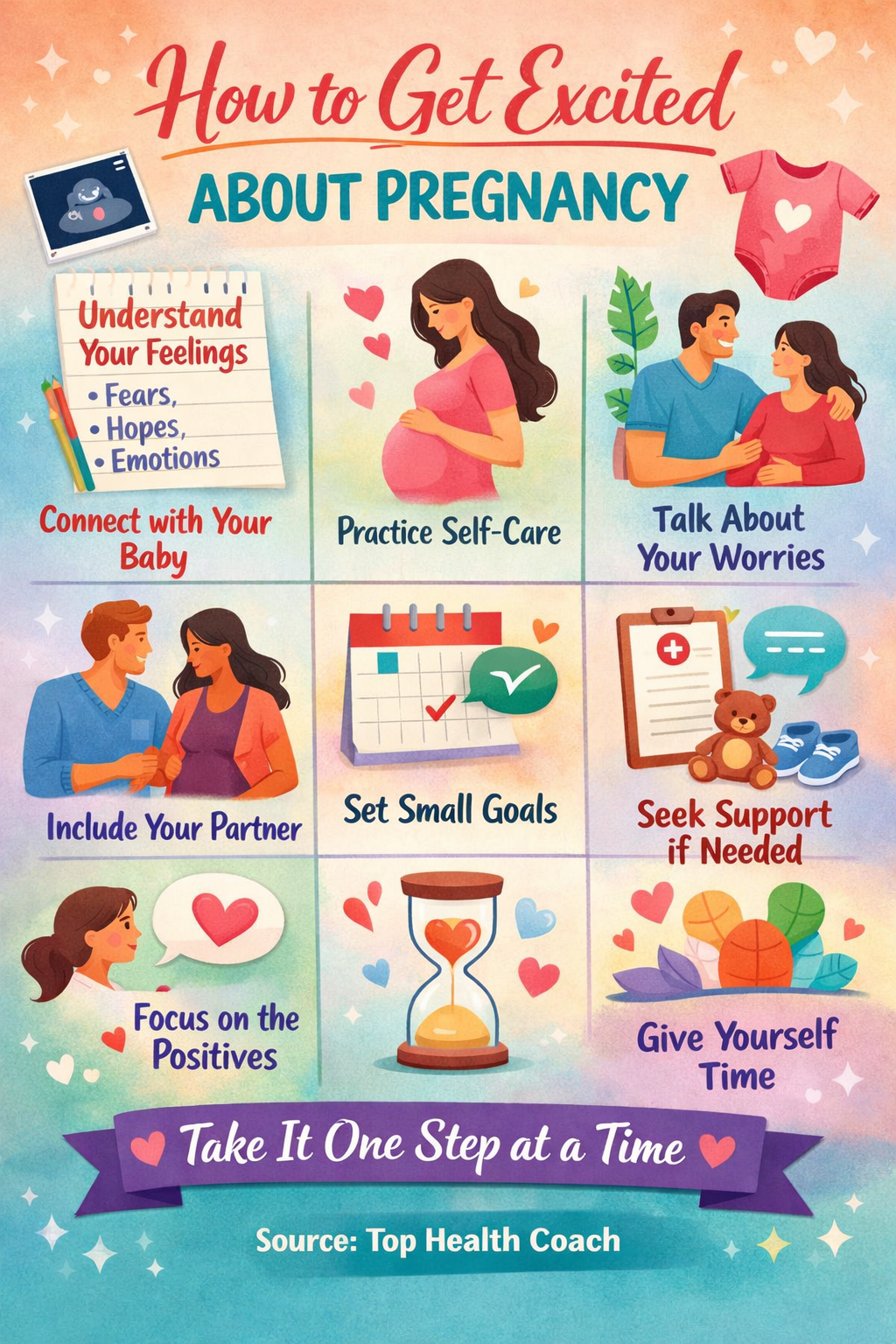
Pregnancy is often portrayed as a time of glowing skin, happy tears, and instant excitement. But for many people, the reality is very different. You might feel scared, numb, anxious, or even unhappy—and then feel guilty for not feeling “grateful enough.”
If you’re searching for how to get excited about pregnancy, take a deep breath. You’re not broken. You’re human.
This guide is built on experience, empathy, and evidence-based health tips wellness advice to help you understand your emotions, reduce fear, and slowly build a real, authentic connection with your pregnancy—at your own pace.
Why It’s Normal to Feel Confused About Pregnancy
Not everyone feels instant joy after seeing two lines on a test. Some common reasons include:
- Fear of responsibility
- Worries about money or career
- Physical symptoms like nausea and fatigue
- Relationship stress
- Past trauma, miscarriage, or infertility struggles
- An unplanned pregnancy
- Anxiety about childbirth or parenting
Your brain is trying to protect you by preparing for change. Big change. That doesn’t mean you won’t love your baby. It just means your mind is adjusting.
Learning how to get excited about pregnancy is often less about forcing happiness and more about creating safety, clarity, and emotional space.
Step 1: Stop Comparing Your Journey to Others
Social media shows highlight reels: cute bumps, baby showers, smiling couples. It rarely shows vomiting at 6 a.m., crying in the shower, or lying awake worrying about the future.
Your pregnancy does not need to look like anyone else’s to be valid.
Instead of asking:
“Why am I not excited like them?”
Try asking:
“What do I need right now to feel more supported and calm?”
That small shift can change everything.
Step 2: Understand What You’re Really Feeling
Often, “I’m not excited” is actually:
- “I’m scared.”
- “I’m overwhelmed.”
- “I don’t feel ready.”
- “My body feels out of control.”
Grab a notebook and write honestly:
- What am I afraid of?
- What feels heavy right now?
- What would make this feel a little easier?
Naming your emotions reduces their power. This is a core mental health technique used in therapy and supported by modern psychology.
Step 3: Build a Small Daily Connection With Your Pregnancy
You don’t need to feel magical love overnight. Start tiny:
- Place your hand on your belly and take 5 slow breaths
- Read one short article about baby development
- Save one baby name you like
- Write one sentence to your future child
- Take one bump photo a week
These small rituals slowly turn “this is happening to me” into “this is something I’m part of.”
That’s a real, gentle path toward how to get excited about pregnancy.
Step 4: Take Care of Your Body (It Affects Your Mind)
Your emotions are deeply connected to your physical state. When your body feels awful, your mood often follows.
Some simple health tips wellness advice during pregnancy:
- Sleep whenever you can
- Eat small, frequent meals to reduce nausea
- Stay hydrated
- Do gentle movement like walking or prenatal yoga
- Practice breathing or short meditation
- Talk to your doctor about severe fatigue, anxiety, or sadness
When your body feels even 10% better, your mind often becomes more hopeful too.
Step 5: Talk About It (Out Loud)
Keeping worries inside makes them grow.
Talk to:
- Your partner
- A close friend
- A family member
- Your doctor or midwife
- A therapist or counselor
You don’t have to say “I hate this.” You can start with:
“I’m having mixed feelings and I don’t understand them yet.”
That alone can bring huge relief.
Step 6: Redefine What “Excitement” Looks Like
Excitement doesn’t always mean:
- Jumping with joy
- Crying happy tears
- Feeling blissful 24/7
Sometimes excitement looks like:
- Feeling a little less scared than yesterday
- Smiling at a baby onesie in a shop
- Imagining your life one year from now
- Feeling curious instead of terrified
Progress counts. Quiet progress counts even more.
Step 7: Include Your Partner (Especially for Men)
Men often react very differently—especially in unplanned pregnancies. Some go into “fix-it mode,” some panic, some shut down emotionally.
Open conversations help both sides feel less alone.
Also, topics like fitness, recovery, and intimacy matter too. Even subjects such as kegel exercises benefits sexually men can become part of a broader, healthy discussion about body awareness, pelvic health, and shared responsibility for well-being before and after birth.
A healthy couple mindset supports a healthier pregnancy experience.
Step 8: Watch for Signs You Need Extra Support
Feeling unsure is normal. But please talk to a professional if you notice:
- Constant sadness or anxiety
- Panic attacks
- No interest in anything
- Feeling hopeless or trapped
- Trouble sleeping even when tired
- Thoughts of harming yourself
Prenatal depression and anxiety are real—and treatable. Getting help is strength, not weakness.
Step 9: Use Evidence, Not Fear, to Guide You
The internet can be scary. One search can lead to 20 worst-case stories.
Balance that with:
- Advice from your doctor
- Trusted medical sources
- Evidence-based pregnancy books
- Calm, factual information
Fear shrinks when facts grow.
This is part of building EEAT: experience, expertise, authoritativeness, and trust—both in what you read and in how you treat yourself.
Step 10: Give Yourself Time
You may fall in love with your pregnancy:
- When you hear the heartbeat
- When you feel the first kick
- When you see the ultrasound
- When you set up the baby’s space
- Or even after the baby is born
There is no deadline for bonding.
Learning how to get excited about pregnancy is not a race. It’s a relationship that grows.
Frequently Asked Questions (10 FAQs)
1. Is it normal to not be excited about pregnancy?
Yes. Many people feel scared, numb, or anxious at first. Emotions often change over time as reality settles in.
2. When can I start getting excited about my pregnancy?
Some feel excited immediately, others after the first scan, first kick, or even after birth. There is no “right” time.
3. What is the 3-2-1 rule in pregnancy?
It’s often used as a grounding or anxiety-reduction method: name 3 things you see, 2 you feel, 1 you hear—helpful for calming pregnancy anxiety.
4. What is the regret rate for having a baby?
True long-term regret is relatively rare. Many parents struggle at first but report strong bonding and meaning over time.
5. What is the hardest month of pregnancy?
For many, the first trimester is hardest due to nausea, fatigue, and emotional changes. For others, late pregnancy is more physically challenging.
6. How do men react to unplanned pregnancies?
Reactions vary: shock, stress, fear, or practical problem-solving. Emotional processing may take time, just like it does for women.
7. Why am I unhappy about being pregnant?
Hormones, fear, life stress, relationship issues, or mental health challenges can all play a role. You’re not ungrateful—you’re human.
8. When are the most tired weeks of pregnancy?
Extreme fatigue is common in the first trimester and again in the third trimester due to hormonal and physical changes.
9. How to find joy in pregnancy?
Start with small moments: gentle routines, baby milestones, self-care, honest conversations, and realistic expectations.
10. What are the signs of unhealthy early pregnancy (emotionally or physically)?
Severe pain, heavy bleeding, extreme sadness, constant anxiety, or feeling hopeless are signs to contact a doctor or mental health professional.
A Gentle Reminder
You don’t owe anyone a perfect emotional reaction.
Your job is not to perform happiness.
Your job is to take care of yourself, step by step.
With time, support, and honest self-care, many people do find their own version of joy—and their own answer to how to get excited about pregnancy.
And if today that joy is just feeling 5% less scared than yesterday? That still counts. 🌱