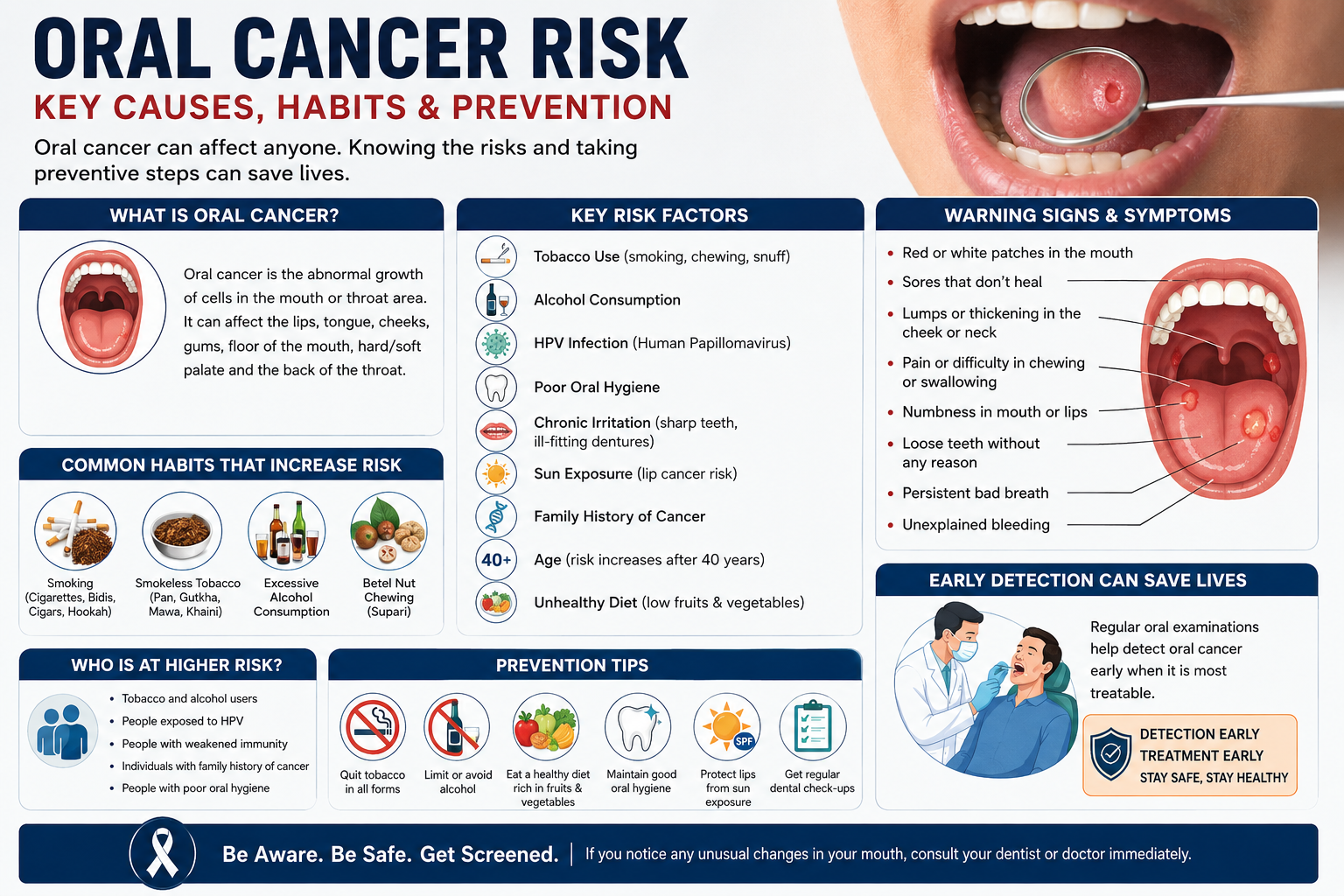
Oral cancer is becoming a growing health concern worldwide. Many people ignore early warning signs like mouth ulcers, white patches, difficulty swallowing, or persistent pain until the condition becomes serious. Understanding the risk factors, harmful habits, and preventive steps can help save lives.
In this detailed guide, you’ll learn about oral cancer risk factors, common causes, symptoms, lifestyle habits linked to oral cancer, and the best ways to reduce your chances of developing this disease.
What Is Oral Cancer?
Oral cancer refers to cancer that develops in any part of the mouth, including the lips, tongue, cheeks, gums, roof of the mouth, floor of the mouth, or throat area. It belongs to a group called head and neck cancers.
The disease can affect people of all ages, but it is more common in adults over 40, especially those with unhealthy lifestyle habits.
Common Areas Affected by Oral Cancer
- Tongue
- Lips
- Gums
- Inner cheeks
- Roof of the mouth
- Throat
- Salivary glands
Early diagnosis is important because oral cancer is highly treatable in its initial stages.
What Causes Oral Cancer in Adults?
Several factors can increase the chances of developing oral cancer. Some are related to lifestyle habits, while others may be linked to infections or genetics.
1. Tobacco Use
Smoking cigarettes, cigars, bidis, or using smokeless tobacco products significantly increases oral cancer risk.
How Tobacco Damages the Mouth
Tobacco contains harmful chemicals that damage cells inside the mouth. Over time, this damage may lead to abnormal cell growth and cancer.
Tobacco Products Linked to Oral Cancer
- Cigarettes
- Gutka
- Pan masala
- Chewing tobacco
- Hookah
- Bidis
People who both smoke and drink alcohol have an even higher risk.
Does Smoking Increase Oral Cancer Risk?
Yes, smoking is one of the biggest risk factors.
Research shows that smokers are several times more likely to develop oral cancer compared to non-smokers. The longer a person smokes, the higher the risk becomes.
Signs Smokers Should Never Ignore
- Mouth sores that do not heal
- White or red patches
- Loose teeth
- Difficulty chewing
- Pain while swallowing
- Persistent bad breath
Quitting smoking can greatly reduce cancer risk over time.
How Chewing Tobacco Causes Mouth Cancer
Chewing tobacco is extremely harmful because the chemicals remain in direct contact with mouth tissues for long periods.
Products like gutka and pan masala contain carcinogens that can damage the lining of the cheeks, tongue, and gums.
Early Symptoms of Tobacco-Related Oral Cancer
- Burning sensation in mouth
- Thick patches inside cheeks
- Difficulty opening the mouth
- Bleeding gums
- Persistent ulcers
Many cases of oral cancer in India are linked to chewing tobacco products.
Alcohol and Oral Cancer Risk Factors
Heavy alcohol consumption is another major contributor.
Alcohol irritates mouth tissues and makes it easier for harmful chemicals from tobacco to enter cells.
Why Alcohol Increases Oral Cancer Risk
- Damages mouth lining
- Weakens immune system
- Increases inflammation
- Works together with smoking to multiply cancer risk
Reducing alcohol intake is an important step toward prevention.
Human Papillomavirus HPV and Oral Cancer
Certain strains of the Human Papillomavirus (HPV), especially HPV-16, are associated with oral and throat cancers.
HPV-related oral cancers are becoming more common in younger adults.
Symptoms of HPV-Related Oral Cancer
- Sore throat lasting weeks
- Neck swelling
- Difficulty swallowing
- Ear pain
- Voice changes
Vaccination and safe practices may help lower HPV infection risk.
Poor Oral Hygiene and Oral Cancer Connection
Poor dental hygiene can also increase risk.
When bacteria and inflammation remain untreated for long periods, the mouth becomes more vulnerable to abnormal cell changes.
Habits That Harm Oral Health
- Not brushing regularly
- Ignoring dental problems
- Poorly fitted dentures
- Chronic mouth irritation
- Skipping dental checkups
Maintaining proper oral hygiene supports overall mouth health and reduces risks.
Early Signs and Symptoms of Oral Cancer
Recognizing symptoms early can improve treatment success.
Common Warning Signs
- Mouth ulcers lasting more than two weeks
- White patches in mouth
- Red patches on gums or tongue
- Pain while swallowing
- Persistent mouth pain
- Lump in neck
- Difficulty speaking
- Numbness in mouth
- Loose teeth without reason
Many people ignore these symptoms, assuming they are minor problems.
What Does Oral Cancer Look Like in Early Stages?
Early oral cancer may appear as:
- White or red patches
- Thickened skin inside mouth
- Small ulcers
- Swelling on tongue or gums
- Bleeding areas
These symptoms may not always cause pain initially.
That is why regular self-checks and dental examinations are important.
Who Is Most at Risk for Oral Cancer?
Certain groups are more vulnerable.
High-Risk Groups
- Smokers
- Tobacco chewers
- Heavy alcohol users
- Adults over 40
- People with HPV infection
- Individuals with weak immunity
- Those with family history of cancer
- People exposed to excessive sunlight on lips
Men are generally more affected than women, although cases among women are increasing.
Can Young Adults Get Oral Cancer?
Yes, oral cancer is no longer limited to older adults.
HPV infections, smoking, vaping, and unhealthy habits are contributing to rising cases among younger people.
Risk Factors in Young Adults
- Smoking and vaping
- HPV infection
- Alcohol use
- Poor diet
- Lack of oral hygiene
Awareness among young adults is extremely important.
Best Foods to Prevent Oral Cancer Naturally
A healthy diet may help reduce cancer risk.
Fruits and vegetables contain antioxidants that protect cells from damage.
Cancer-Fighting Foods
- Berries
- Citrus fruits
- Tomatoes
- Green leafy vegetables
- Carrots
- Broccoli
- Nuts and seeds
- Turmeric
- Garlic
Drinking enough water and reducing processed foods can also help.
How to Reduce Oral Cancer Risk Naturally
Prevention starts with healthy lifestyle choices.
Important Prevention Tips
Quit Tobacco Completely
Stopping smoking and tobacco chewing is the most effective step.
Limit Alcohol Consumption
Reduce or avoid heavy drinking.
Maintain Good Oral Hygiene
Brush twice daily and visit the dentist regularly.
Eat a Healthy Diet
Focus on fresh fruits and vegetables.
Use Lip Protection
Protect lips from excessive sunlight exposure.
Get Regular Oral Screenings
Dental checkups help detect problems early.
How Dentists Detect Oral Cancer Early
Dentists play an important role in early diagnosis.
During routine checkups, dentists examine the mouth for unusual patches, sores, or lumps.
Oral Cancer Screening Methods
- Physical examination
- Biopsy
- Imaging tests
- Endoscopy
- Tissue sampling
Early detection greatly improves survival rates.
Can Oral Cancer Be Cured If Detected Early?
Yes, early-stage oral cancer is often treatable.
Treatment success depends on:
- Cancer stage
- Tumor size
- Overall health
- Early diagnosis
Common Treatment Options
- Surgery
- Radiation therapy
- Chemotherapy
- Targeted therapy
- Immunotherapy
People diagnosed early usually have better recovery outcomes.
Mouth Ulcers and Oral Cancer Difference
Not every mouth ulcer is cancer.
However, ulcers that last more than two weeks should never be ignored.
Difference Between Normal Ulcers and Cancerous Sores
Normal Ulcers
- Heal within days
- Often painful
- Caused by stress or injury
Cancerous Ulcers
- Last longer than two weeks
- May bleed easily
- Can become painless over time
- May grow in size
Consult a doctor if symptoms persist.
Does Vaping Cause Oral Cancer?
Researchers are still studying the long-term effects of vaping.
Some studies suggest that chemicals in e-cigarettes may damage mouth tissues and increase cancer risk.
Possible Risks of Vaping
- Gum inflammation
- Dry mouth
- Cell damage
- Increased irritation
Avoiding smoking and vaping is the safest choice.
Family History and Genetic Risk of Oral Cancer
Genetics may also play a role.
People with a family history of cancer may have a slightly higher risk, especially when combined with smoking or alcohol use.
Important Lifestyle Changes for High-Risk Individuals
- Avoid tobacco
- Reduce alcohol
- Eat antioxidant-rich foods
- Schedule regular screenings
Healthy habits can lower overall risk.
Why Regular Dental Checkups Are Important for Oral Cancer Prevention
Many people visit dentists only when they feel pain.
Regular checkups can identify abnormalities before they become dangerous.
Benefits of Regular Oral Exams
- Early cancer detection
- Better oral hygiene
- Lower treatment costs
- Prevention of gum disease
- Monitoring suspicious changes
Experts recommend dental visits at least twice a year.
Lifestyle Habits That Increase Oral Cancer Risk
Certain daily habits can silently damage mouth tissues.
Harmful Habits to Avoid
- Smoking
- Tobacco chewing
- Excess alcohol
- Poor oral hygiene
- Eating highly processed foods
- Ignoring mouth sores
- Excessive sun exposure on lips
Replacing these habits with healthier routines can improve long-term health.
Signs You Should Visit a Doctor Immediately
Seek medical attention if you notice:
- Mouth sores lasting more than two weeks
- Difficulty swallowing
- Unexplained mouth bleeding
- White or red patches
- Persistent throat pain
- Neck swelling
- Sudden voice changes
Early medical evaluation is essential.
Psychological Impact of Oral Cancer
Oral cancer affects more than physical health.
People may experience:
- Anxiety
- Depression
- Social discomfort
- Difficulty speaking
- Low self-confidence
Family support and counseling can help during recovery.
Oral Cancer Prevention Tips for Daily Life
Simple daily habits can make a big difference.
Daily Prevention Checklist
- Brush teeth twice daily
- Floss regularly
- Avoid tobacco products
- Drink less alcohol
- Eat fresh fruits and vegetables
- Stay hydrated
- Schedule dental checkups
- Exercise regularly
- Protect lips from sunlight
Consistency matters more than perfection.
Conclusion
Oral cancer is a serious but often preventable disease. Tobacco us
Author- Certified Health Coach Author