Ultimate Diabetes-Friendly Nutrition Guide: Best Foods to Control Blood Sugar
Living with diabetes does not mean you have to give up every food you enjoy. However, choosing the right foods, managing portion sizes, and following a balanced eating routine can make a meaningful difference in your overall health.
A well-planned diabetes friendly diet focuses on nutrient-rich foods, fibre, quality carbohydrates, lean protein, and healthy fats. It also helps reduce excessive intake of sugary drinks, refined grains, and highly processed foods.
Whether you have type 2 diabetes, prediabetes, or are trying to improve your eating habits, understanding how different foods affect your blood glucose is an important first step.
The goal is not to follow a restrictive diet or eliminate all carbohydrates. Instead, build a practical healthy meal plan that supports consistent blood sugar control while providing the nutrients your body needs.
Here are five important areas to understand when planning diabetes-friendly meals.
1. Why Diet Matters in Diabetes Management
Food plays an important role in managing diabetes because different nutrients affect blood glucose in different ways.
When you eat carbohydrates, your digestive system breaks much of them down into glucose, which enters your bloodstream. This can cause blood sugar levels to rise after meals.
Carbohydrates are found in foods such as rice, roti, bread, potatoes, fruit, milk, beans, and sweets. The amount and type of carbohydrate you eat, along with your portion size and medication, can influence your blood glucose response.
A balanced diet can help you manage glucose levels, maintain a healthy weight, and support heart health.
How a Balanced Diet Supports Blood Sugar Control
A nutritious eating pattern can help by:
- Providing fibre that supports digestion and slows the absorption of carbohydrates.
- Including protein to make meals more satisfying.
- Replacing sugary drinks with water or unsweetened beverages.
- Reducing excessive intake of refined carbohydrates.
- Supporting healthy cholesterol and blood pressure levels.
- Helping maintain a healthy body weight when weight management is needed.
The Centers for Disease Control and Prevention (CDC) recommends meal planning, portion awareness, and regular eating patterns as useful tools for diabetes management.
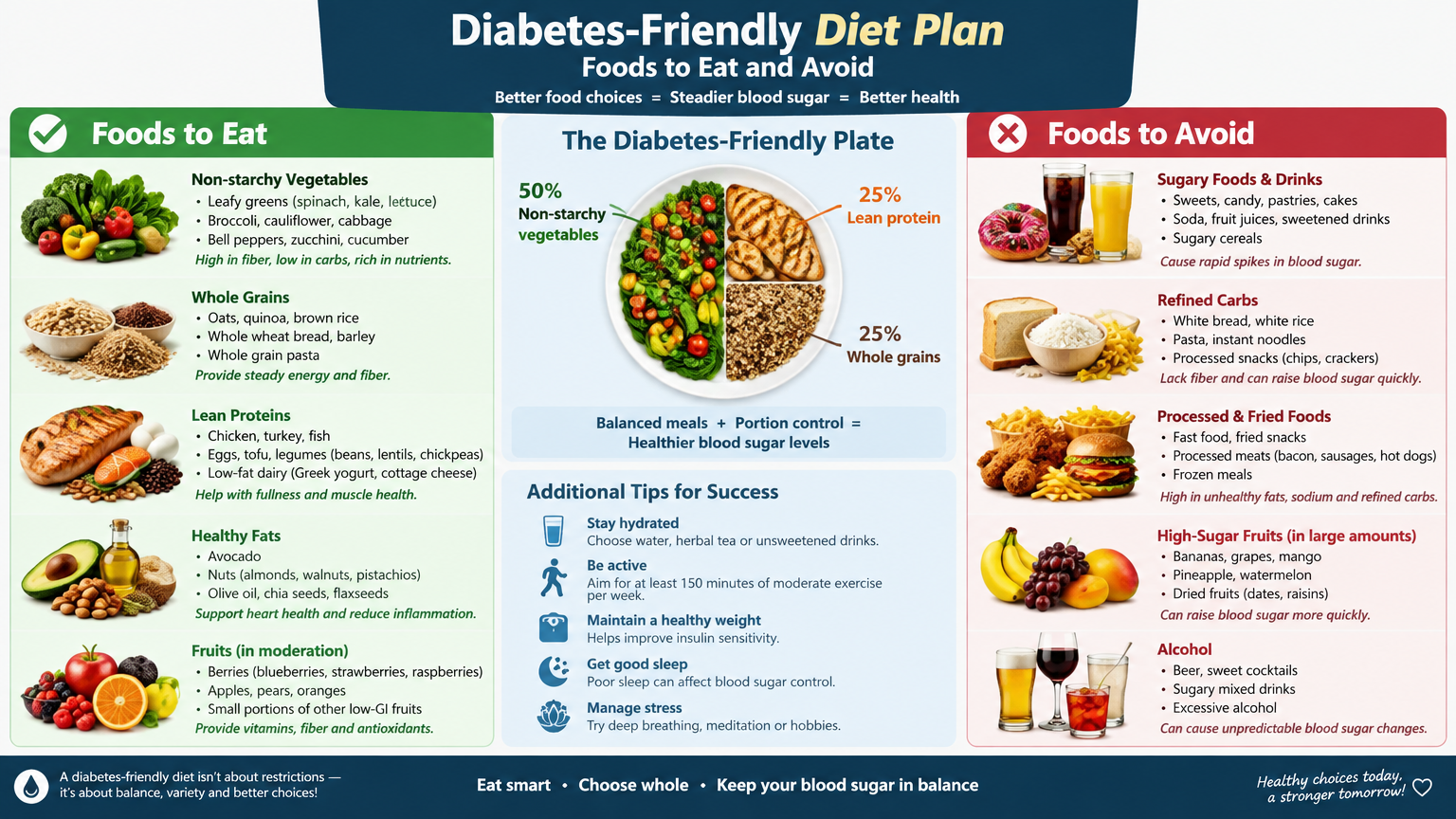
Understand the Diabetes Plate Method
One simple way to build balanced meals is the Diabetes Plate Method.
Use a plate approximately nine inches across and divide it into three sections:
- Half the plate: Non-starchy vegetables such as spinach, cabbage, broccoli, cucumber, cauliflower, and green beans.
- One-quarter: Protein foods such as eggs, fish, chicken, tofu, paneer, or other suitable protein sources.
- One-quarter: Quality carbohydrate foods such as whole grains, beans, lentils, or appropriate portions of other carbohydrate-rich foods.
Choose water or another unsweetened drink alongside your meal.
This method makes meal planning easier without requiring you to weigh every ingredient. Your personal carbohydrate requirements may still need adjustment based on your medication, glucose readings, and health goals.
2. Best Low-Glycemic Foods to Include
The glycemic index (GI) measures how quickly a carbohydrate-containing food may raise blood glucose compared with a reference food.
Low-GI foods can be useful when planning meals, but GI is not the only factor that matters. Portion size, preparation, ripeness, and what you eat alongside a food can all affect your blood sugar response.
A balanced diabetes friendly diet should include a variety of vegetables, whole fruits, protein sources, whole grains, and healthy fats.
A. Non-Starchy Vegetables
Non-starchy vegetables are excellent choices because they generally contain fewer carbohydrates than starchy vegetables and provide fibre, vitamins, and minerals.
Good options include:
- Spinach
- Broccoli
- Cauliflower
- Cabbage
- Cucumber
- Bottle gourd (lauki)
- Bitter gourd (karela)
- Green beans
- Capsicum
- Tomatoes
Try adding vegetables to lunch and dinner. You can prepare them as salads, lightly cooked vegetables, soups, or simple homemade sabzi.
Avoid relying on deep-fried vegetable dishes or preparations containing large amounts of oil.
B. Whole Fruits in Appropriate Portions
People with diabetes can usually enjoy whole fruits as part of a balanced eating plan. Fruit contains natural sugars, but it also provides fibre, vitamins, minerals, and other beneficial nutrients.
Suitable options include:
- Apples
- Guava
- Oranges
- Pears
- Papaya
- Berries
- Peaches
Choose whole fruit instead of fruit juice whenever possible. Whole fruit generally provides more fibre and is more filling than juice.
Remember that fruit still contains carbohydrates. Pay attention to portion sizes and monitor your individual glucose response.
C. Whole Grains and High-Fibre Carbohydrates
Whole grains can provide fibre and other nutrients. They are generally a better everyday choice than highly refined grains.
Consider including:
- Whole-wheat roti
- Oats
- Barley (jau)
- Brown rice
- Quinoa
- Millets such as jowar and bajra
However, whole grains still contain carbohydrates. Eating large portions can raise blood glucose, so quantity matters.
For example, choose a moderate portion of roti or rice and balance it with vegetables and protein rather than filling most of your plate with grains.
D. Protein-Rich Foods
Protein helps maintain muscles and supports normal body functions. Including protein in meals can also make them more satisfying.
Good options include:
- Dal
- Chickpeas (chana)
- Kidney beans (rajma)
- Moong
- Eggs
- Fish
- Skinless chicken
- Tofu
- Unsweetened yoghurt or curd
- Paneer in appropriate portions
Plant-based proteins such as beans and lentils are nutritious, but they also contain carbohydrates. Include their carbohydrate content when planning your meals.
E. Nuts, Seeds, and Healthy Fats
Nuts and seeds provide healthy fats, fibre, and other nutrients.
Useful choices include:
- Almonds
- Walnuts
- Pistachios
- Flaxseeds
- Chia seeds
- Pumpkin seeds
Use moderate portions because nuts and seeds are calorie-dense.
For cooking, consider using moderate amounts of unsaturated oils rather than relying heavily on butter, ghee, or other sources of saturated fat.
F. Healthy Dairy Choices
Unsweetened milk, plain curd, and yoghurt can provide protein and calcium.
Choose products without added sugar where possible. Remember that milk and yoghurt contain carbohydrates, so they should be included in your meal planning.
The American Diabetes Association recommends eating patterns that emphasize non-starchy vegetables, whole fruits, legumes, lean proteins, whole grains, nuts, and seeds.
3. Foods and Drinks to Strictly Avoid
There is no single universal list of foods that every person with diabetes must completely avoid. However, certain foods and drinks are best limited because they can contribute to blood glucose spikes or make it harder to maintain a balanced diet.
The most important approach is to reduce frequent consumption of sugary drinks, added sugars, refined grains, and highly processed foods.
A. Sugary Drinks
Sugar-sweetened drinks can raise blood glucose quickly because they contain easily absorbed carbohydrates and often provide little nutritional value.
Limit:
- Regular soft drinks
- Sweetened packaged juices
- Energy drinks
- Sweetened iced tea
- Sugary milkshakes
- Sweetened coffee drinks
Choose water, plain sparkling water, or unsweetened tea instead.
Even homemade fruit juice can contain a substantial amount of natural sugar while providing less fibre than whole fruit.
B. Sweets and Desserts
Frequently eating large portions of sweets can make glucose management more difficult.
Try to limit:
- Cakes
- Cookies
- Doughnuts
- Candies
- Sweetened breakfast cereals
- Ice cream
- Sugar-loaded desserts
- Traditional sweets such as gulab jamun and jalebi
You do not necessarily need to eliminate every dessert forever. Discuss suitable portions and frequency with your dietitian, especially if you use glucose-lowering medication.
C. Refined Carbohydrates
Refined grains often contain less fibre than whole-grain alternatives.
Examples include:
- White bread
- Maida-based foods
- Large portions of white rice
- Refined-flour noodles
- Bakery products
- Many packaged snacks
Try replacing some refined grains with whole-wheat roti, oats, barley, or other fibre-rich choices. Portion control remains important even when choosing whole grains.
D. Deep-Fried and Highly Processed Foods
Regularly eating deep-fried or highly processed foods can increase calorie intake and may contribute to poor heart-health outcomes.
Limit frequent consumption of:
- French fries
- Chips
- Fried snacks
- Packaged fast food
- Processed meats
- Foods high in saturated fat and sodium
Choose grilled, steamed, baked, or lightly cooked alternatives more often.
E. Excessive Alcohol
Alcohol can affect blood glucose in different ways. Some alcoholic drinks contain added sugar, and alcohol can increase the risk of low blood glucose in people taking insulin or certain diabetes medicines.
If you drink alcohol, discuss its safety with your healthcare professional. Some people should avoid it altogether.
Important Reminder
Do not stop eating carbohydrates completely or skip meals to control diabetes. If you take insulin or medicines that can cause low blood glucose, changing your meal timing or carbohydrate intake may increase the risk of hypoglycaemia.
The CDC and NIDDK recommend reducing sugary drinks and highly refined foods while creating an eating pattern suited to individual needs.
4. Sample 1-Day Diabetic Diet Plan
A practical meal plan can help you make healthier food choices without feeling confused about what to eat.
The following is an example of an Indian-style eating routine. It is not a prescription or a fixed carbohydrate target. Individual portions should be adjusted according to your glucose readings, medication, activity level, and advice from a registered dietitian.
Early Morning
Suggested options:
- A glass of plain water.
- A small portion of unsalted almonds or walnuts, if suitable for your meal plan.
Avoid adding sugar or honey to drinks simply because they are considered natural.
Breakfast
Suggested meal:
- Two small vegetable besan chillas.
- Plain unsweetened curd.
- Cucumber or tomato salad.
Besan provides protein and carbohydrates. The vegetables add fibre, while curd provides additional protein.
If you prefer oats, choose unsweetened oats and combine them with nuts or another suitable protein source.
Mid-Morning Snack
Suggested options:
- One small guava or apple.
- Water or unsweetened tea.
Choose whole fruit rather than juice and keep the portion appropriate for your carbohydrate goals.
Lunch
Suggested meal:
- One or two small whole-wheat rotis, depending on individual needs.
- One portion of dal.
- A generous serving of non-starchy vegetable sabzi.
- Cucumber and leafy vegetable salad.
- Plain curd, if suitable.
Try to make vegetables the largest part of the meal. Remember that dal, roti, and curd all contribute carbohydrates, so portion sizes should be considered together.
Evening Snack
Suggested options:
- A small portion of roasted chana.
- A few nuts.
- Unsweetened tea or water.
Avoid making biscuits, namkeen, or sugary tea your regular evening snack.
Dinner
Suggested meal:
- A moderate portion of grilled fish, tofu, paneer, or another suitable protein.
- A large serving of cooked vegetables or salad.
- One small roti or another planned carbohydrate portion.
If you prefer a vegetarian dinner, moong dal, tofu, or paneer can provide protein.
Before Bed
If you are hungry or your prescribed diabetes plan includes a bedtime snack, discuss suitable choices with your healthcare professional. Not everyone with diabetes needs to eat before bed.
Remember: Your medication, meal timing, and carbohydrate intake should work together. Do not copy this sample plan without adjusting it to your personal needs.
5. Summary and Expert Recommendations
A healthy eating pattern is an important part of diabetes management. However, there is no single diet that works perfectly for everyone.
Your ideal healthy meal plan should consider your diabetes type, glucose targets, medication, activity level, food preferences, cultural habits, and any other health conditions.
Five Practical Tips for Better Blood Sugar Control
- Build balanced plates: Include non-starchy vegetables, protein, and an appropriate portion of quality carbohydrates.
- Choose whole foods: Eat more vegetables, whole fruits, legumes, nuts, seeds, and minimally processed grains.
- Watch portion sizes: Even nutritious carbohydrate-rich foods can raise blood glucose when eaten in large quantities.
- Choose unsweetened drinks: Replace sugary beverages and fruit juice with water or other suitable low-calorie drinks.
- Stay consistent: Follow a meal routine that works with your medication and daily schedule.
Monitor Your Blood Glucose
Checking your blood glucose as recommended by your healthcare professional can help you understand how meals, activity, stress, illness, and medication affect your readings.
Keep a record of your readings when advised. This information can help your diabetes care team make appropriate adjustments.
Do not change or stop prescribed medication based only on changes in your diet or glucose readings.
Get Personalized Nutrition Advice
A registered dietitian or diabetes care and education specialist can help you create an eating plan that matches your health needs.
This is particularly important if you have kidney disease, heart disease, pregnancy-related diabetes, frequent low blood glucose episodes, or other medical conditions that affect your food choices.
Final Thoughts
Managing diabetes does not mean living on tasteless food or avoiding every carbohydrate. It means making informed choices, eating balanced meals, and understanding how different foods affect your body.
A practical diabetes friendly diet can include vegetables, whole fruits, lentils, whole grains, lean protein, nuts, and healthy fats. Limiting sugary drinks, refined grains, and highly processed foods can also support better blood sugar control.
Start with small, sustainable changes. Choose healthier drinks, add vegetables to your meals, pay attention to portions, and follow a personalized healthy meal plan.
Consistency, regular monitoring, physical activity, and professional guidance can help you manage diabetes while enjoying a varied and satisfying diet.
Medical Disclaimer: This article is for general educational purposes only. It is not a diagnosis or a substitute for medical advice, diagnosis, or treatment. Food and carbohydrate requirements vary from person to person. Consult your doctor or a registered dietitian before making major dietary changes, particularly if you take insulin or glucose-lowering medication.