Aging gracefully is not just about looking younger — it’s about staying mobile, independent, and confident in daily life. After the age of 60, balance becomes one of the most important aspects of Morning Exercises because poor balance increases the risk of falls, injuries, and reduced mobility.
While yoga is often recommended for seniors, experts now say certain targeted movements may improve stability even faster. These simple routines can strengthen muscles, improve coordination, and boost confidence within weeks.
Adding a daily good morning exercise routine can help older adults stay active, energetic, and physically independent for years to come.
In this guide, we’ll explore the best balance-boosting exercises, the science behind them, and how to build the perfect morning exercise routine after 60.

Why Balance Declines After 60
As people age, several body systems naturally weaken, including:
- Muscle strength
- Joint flexibility
- Reflex speed
- Vision coordination
- Inner ear balance function
These changes make seniors more vulnerable to falls and injuries.
The good news is that balance can improve dramatically with consistent movement and targeted exercises.
Experts say the key is practicing exercises that challenge:
- Stability
- Core strength
- Leg muscles
- Coordination
- Posture control
This is where a structured best morning exercise routine becomes highly effective.
Why Morning Workouts Are Ideal for Seniors
Many seniors wonder: is it better to exercise in the morning or evening?
Health experts often recommend morning workouts because they:
- Improve circulation
- Reduce stiffness
- Boost mood and energy
- Increase consistency
- Enhance mental focus throughout the day
Morning movement also helps activate muscles and joints after hours of inactivity during sleep.
One major advantage of a morning workout routine is that it creates a healthy habit before distractions begin.
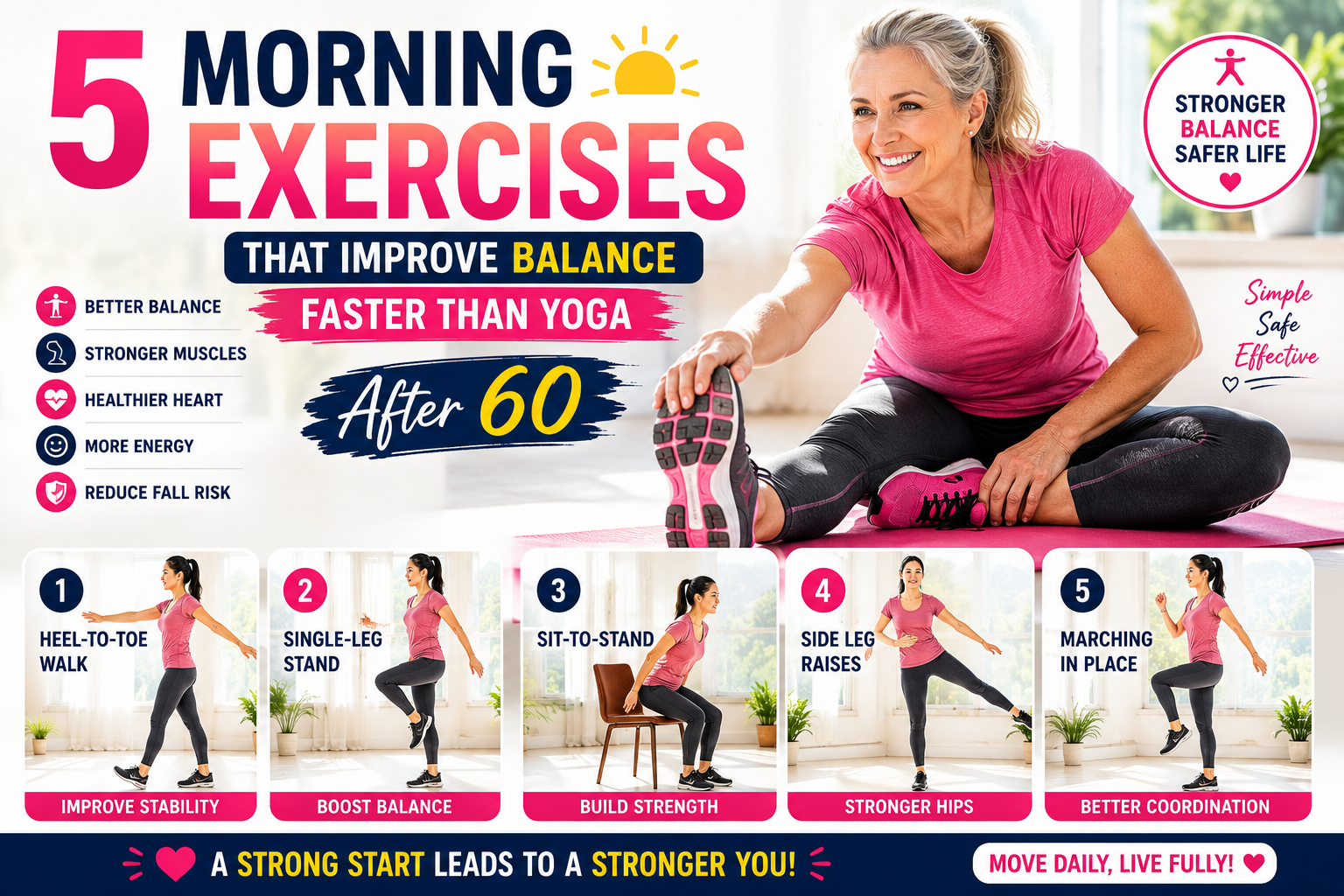
1. Heel-to-Toe Walk
The heel-to-toe walk is one of the most effective exercises for improving coordination and balance.
How to Do It
- Stand upright near a wall or chair for support.
- Place one foot directly in front of the other.
- Touch the heel of your front foot to the toes of the back foot.
- Walk slowly in a straight line.
Benefits
- Improves walking stability
- Strengthens leg muscles
- Enhances coordination
- Reduces fall risk
This movement is often included in advanced rehabilitation programs because it trains the body to maintain control during movement.
Adding it to your good mornings exercise routine can produce noticeable improvements within a few weeks.
2. Single-Leg Stand
Standing on one leg may look simple, but it is one of the most powerful balance exercises for older adults.
Steps
- Stand beside a chair.
- Lift one foot slightly off the floor.
- Hold for 10–20 seconds.
- Switch legs.
Advanced Version
Close your eyes or move your arms slowly while balancing.
Why It Works
This exercise strengthens:
- Ankles
- Calves
- Core muscles
- Hip stabilizers
Practicing this daily is considered one of the best morning exercises at home for seniors.
3. Sit-to-Stand Exercise
Many falls happen when older adults try to stand too quickly. This exercise strengthens the muscles needed for safe movement.
Instructions
- Sit in a sturdy chair.
- Keep feet flat on the floor.
- Slowly stand up without using hands.
- Sit back down with control.
Repeat 10–15 times.
Benefits
- Strengthens thighs and hips
- Improves posture
- Builds lower body power
- Enhances daily mobility
This movement is a foundation of many senior fitness programs and an excellent addition to any morning exercise routine.
4. Side Leg Raises
Weak hip muscles can reduce stability and increase the risk of falls.
How to Perform
- Stand behind a chair.
- Lift one leg slowly to the side.
- Keep your back straight.
- Lower slowly and repeat.
Benefits
- Strengthens hip muscles
- Improves walking balance
- Supports joint stability
Side leg raises are safer and easier than many complex yoga poses while still providing excellent results.
5. Marching in Place
Marching improves coordination, circulation, and balance simultaneously.
Instructions
- Stand tall.
- Slowly lift one knee at a time.
- Swing arms naturally.
- Continue for 30–60 seconds.
Why Seniors Love It
- Easy on joints
- Boosts heart health
- Improves reaction time
- Increases confidence walking outdoors
It’s one of the most effective movements in a morning workout routine for older adults.
Why These Exercises May Work Faster Than Yoga
Yoga provides many benefits, but some seniors struggle with:
- Complex poses
- Limited flexibility
- Joint discomfort
- Slow progress
The exercises above directly target the muscles and systems responsible for balance.
They focus on:
- Functional movement
- Real-world stability
- Muscle activation
- Coordination training
That’s why many physical therapists recommend them before advanced yoga programs.
The Science Behind Morning Exercise
Research shows that regular morning activity improves:
- Brain function
- Blood circulation
- Muscle activation
- Mood regulation
- Joint mobility
This explains many morning workout benefits for older adults.
Morning exercise also increases dopamine and endorphins, helping seniors feel happier and more motivated throughout the day.
Building the Perfect Best Morning Exercise Routine
A safe and effective routine should include:
- Warm-up
- Balance exercises
- Strength training
- Stretching
- Breathing exercises
Sample 20-Minute Routine
- Marching in place – 3 minutes
- Heel-to-toe walk – 3 minutes
- Single-leg stands – 4 minutes
- Sit-to-stands – 5 minutes
- Side leg raises – 3 minutes
- Gentle stretching – 2 minutes
This simple plan works well as a morning workout routine for seniors.
Tips to Exercise Safely After 60
Safety should always come first.
Important Tips
- Wear supportive shoes
- Use a chair for stability
- Exercise slowly
- Stay hydrated
- Stop if you feel dizzy
- Consult a doctor before starting new workouts
Consistency matters more than intensity.
Good Morning Exercise Habits That Improve Longevity
Daily movement can increase lifespan and reduce disease risk.
Studies link regular exercise to lower rates of:
- Heart disease
- Diabetes
- Dementia
- Depression
- Osteoporosis
A simple good morning exercise routine may help seniors stay independent longer.
Mental Health Benefits of Morning Exercise
Exercise supports not only the body but also the brain.
Regular movement can:
- Reduce anxiety
- Improve sleep
- Increase confidence
- Boost memory
- Fight loneliness
This is why experts believe is working out in the morning better for emotional wellness too.
The Connection Between Balance and Brain Health
Balance exercises challenge the brain to communicate efficiently with muscles and joints.
This helps:
- Improve coordination
- Sharpen focus
- Enhance reflexes
- Reduce cognitive decline risk
Many neurologists now recommend balance training as part of healthy aging.
How Often Should Seniors Exercise?
Experts recommend:
- Balance exercises: daily
- Strength training: 2–3 times weekly
- Walking: 30 minutes daily
- Stretching: every day
Even short sessions provide benefits when done consistently.
Common Mistakes Seniors Should Avoid
Exercising Too Fast
Slow, controlled movement improves stability more effectively.
Skipping Warm-Ups
Cold muscles increase injury risk.
Holding Breath
Proper breathing supports muscle performance.
Overtraining
Rest is essential for recovery and muscle repair.
Nutrition Tips to Support Balance and Strength
Exercise works best when combined with healthy nutrition.
Important Nutrients
- Protein for muscle repair
- Calcium for bone health
- Vitamin D for strength
- Magnesium for muscle function
- Water for hydration
A healthy diet enhances the results of your morning exercise routine.
Can Seniors Start Exercising After Years of Inactivity?
Absolutely.
The body can improve balance and strength at almost any age.
Start slowly:
- 5–10 minutes daily
- Simple chair exercises
- Gentle walking
Gradually increase activity over time.
Is Morning or Night Exercise Better?
Many people ask: is it better to exercise morning or night?
The answer depends on lifestyle and health goals.
Morning Exercise Benefits
- Better consistency
- Increased daytime energy
- Improved metabolism
- Reduced stiffness
Evening Exercise Benefits
- Greater flexibility
- Stress relief after work
- Better athletic performance for some people
However, seniors often benefit more from morning movement because it helps improve mobility throughout the day.
Why Consistency Beats Intensity
You do not need extreme workouts to improve balance.
Simple daily habits create long-term results.
Even 15–20 minutes every morning can:
- Improve posture
- Strengthen muscles
- Reduce fall risk
- Increase confidence
The key is making exercise part of your daily lifestyle.
Best Equipment for Senior Morning Workouts
You don’t need expensive gym equipment.
Helpful items include:
- Resistance bands
- Light dumbbells
- Supportive shoes
- Yoga mat
- Stable chair
Most best morning exercises at home require little or no equipment.
How Family Members Can Support Seniors
Family encouragement greatly improves exercise consistency.
Loved ones can:
- Join workouts together
- Create routines
- Celebrate progress
- Provide emotional motivation
Social support helps seniors stay committed to healthier habits.
Signs Your Balance Is Improving
Positive changes may include:
- Walking more confidently
- Fewer stumbles
- Better posture
- Easier stair climbing
- Reduced fear of falling
Many seniors notice improvements within 4–8 weeks.
The Importance of Staying Active After 60
Aging does not mean slowing down completely.
Staying active improves:
- Independence
- Energy levels
- Mobility
- Emotional health
- Longevity
Regular movement remains one of the most powerful tools for healthy aging.
Final Thoughts
Balance problems are common after 60, but they are not unavoidable. With the right exercises, seniors can improve strength, coordination, and confidence faster than they may expect.
Simple movements like heel-to-toe walking, single-leg stands, and marching in place can deliver impressive results when practiced consistently.
Whether you are wondering is exercising better in the morning or evening or searching for the perfect best morning exercise routine, the most important step is simply getting started.
A few minutes of movement every morning can help create a healthier, safer, and more active future.
FAQ
1. Is it better to exercise in the morning or evening?
Morning exercise helps improve energy, consistency, and mobility throughout the day, while evening workouts may improve flexibility and relaxation.
2. Is it better to exercise morning or night?
For seniors, morning exercise is often better because it reduces stiffness and supports daily movement.
3. Is exercising better in the morning or evening?
Both have benefits, but morning workouts are usually easier to maintain as a long-term habit.
4. What is a good morning exercise?
Walking, stretching, marching in place, balance drills, and chair exercises are excellent morning exercises for seniors.
5. Is it better to exercise in the morning or night?
Morning exercise can improve metabolism and mood, while nighttime workouts may help reduce stress.
6. What are the best morning exercises at home?
Heel-to-toe walking, sit-to-stands, single-leg balance, stretching, and marching in place are highly effective home exercises.
7. What are the main morning workout benefits?
Morning workouts improve circulation, energy, mental focus, and consistency.
8. Is working out in the morning better for weight loss?
Morning workouts may help improve metabolism and support healthier daily habits.
9. How long should seniors exercise daily?
Most experts recommend at least 20–30 minutes of daily movement.
10. Can balance exercises prevent falls?
Yes. Regular balance training significantly reduces fall risk and improves mobility in older adults.
Author- Certified Health Coach Author