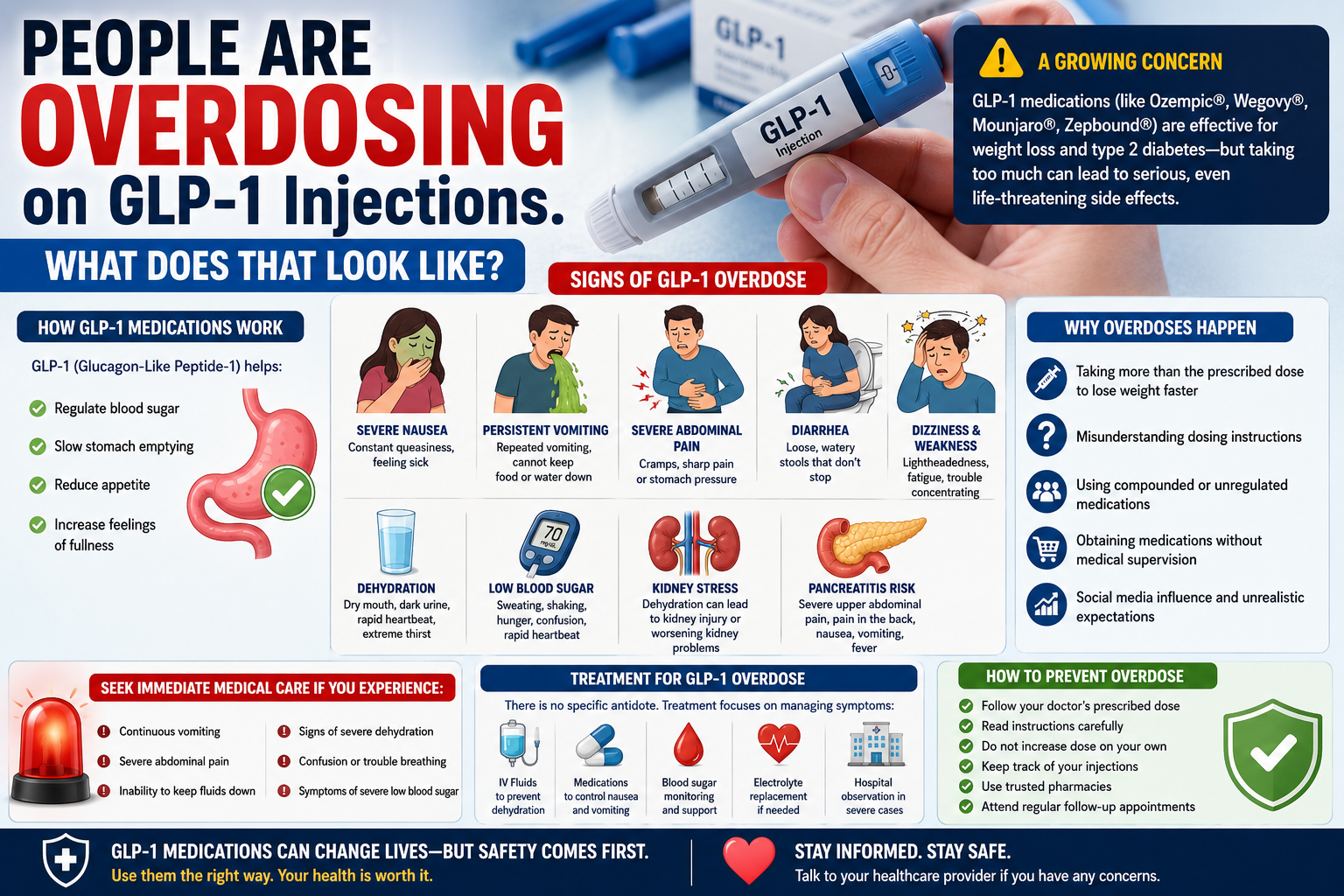
Over the past few years, Weight-loss drugs have become some of the most talked-about medications in the world. Originally developed to help manage type GLP 2 diabetes, medications such as semaglutide and tirzepatide have gained widespread popularity for their ability to help people lose significant amounts of weight.
As demand has surged, so have reports of medication errors, accidental overdoses, and misuse. Many people are seeking faster results and may mistakenly believe that taking a GLP larger dose will accelerate weight loss. Unfortunately, that assumption can be dangerous.
Recent reports highlighted in Latest Health News have drawn attention to an increasing number of people overdosing on GLP-1 medications. Understanding what an overdose looks like, the symptoms it can cause, and how to prevent it is essential for anyone using these medications.
Understanding GLP-1 Medications
GLP-1 stands for Glucagon-Like Peptide-1, a hormone naturally produced in the intestines.
GLP-1 receptor agonist medications work by:
- Slowing stomach emptying
- Reducing appetite
- Increasing feelings of fullness
- Stimulating insulin production when blood sugar rises
- Reducing glucose production in the liver
Popular GLP-1 medications include:
- Ozempic (Semaglutide)
- Wegovy (Semaglutide)
- Rybelsus (Semaglutide)
- Mounjaro (Tirzepatide)
- Zepbound (Tirzepatide)
These medications have transformed obesity treatment and diabetes management, making them among the most prescribed Weight-loss drugs today.
GLP-1 and the Rise of Weight-loss Drugs
The popularity of Weight-loss drugs has exploded due to social media exposure, celebrity endorsements, and growing awareness of obesity-related health risks.
Many patients report:
- Significant weight reduction
- Improved blood sugar control
- Better cardiovascular health
- Reduced hunger cravings
However, the increased popularity has also led to:
- Incorrect self-dosing
- Counterfeit products
- Medication mix-ups
- Misunderstanding dosage instructions
As a result, healthcare professionals are seeing more cases of GLP-1 overdose than ever before.
Why People Are Overdosing on GLP-1 Medications
There are several reasons why overdoses occur.
1. Taking Too Much by Mistake
Some users accidentally inject a larger dose than prescribed.
2. Misreading Dosing Instructions
Many injectable pens require careful dose measurement. New users may misunderstand how much medication they are administering.
3. Seeking Faster Weight Loss
Some individuals believe increasing the dosage will produce faster results.
4. Using Compounded Medications
Compounded formulations sometimes require manual measurements, increasing the risk of dosing errors.
5. Lack of Medical Supervision
People obtaining medications without proper medical guidance may be unaware of safe dosing practices.
Symptoms of a GLP-1 Overdose
The symptoms of a GLP-1 overdose can range from uncomfortable to potentially serious.
Severe Nausea
One of the most common signs is intense nausea that persists for hours or days.
Symptoms include:
- Constant queasiness
- Inability to tolerate food
- Loss of appetite
Persistent Vomiting
Many overdose patients experience repeated vomiting.
This can lead to:
- Fluid loss
- Electrolyte imbalance
- Weakness
- Hospitalization
Severe Abdominal Pain
Excessive activation of GLP-1 receptors may cause significant gastrointestinal discomfort.
Symptoms may include:
- Cramping
- Sharp stomach pain
- Pressure in the abdomen
Diarrhea
Some individuals develop severe diarrhea, worsening dehydration risks.
Dizziness and Weakness
Fluid loss and reduced food intake can cause:
- Fatigue
- Weakness
- Lightheadedness
- Difficulty concentrating
Dehydration
Dehydration is one of the most dangerous complications.
Signs include:
- Dry mouth
- Dark urine
- Rapid heartbeat
- Extreme thirst
- Confusion
How GLP-1 Overdose Affects the Digestive System
Because GLP-1 medications slow stomach emptying, taking too much can dramatically affect digestion.
The digestive system may become overwhelmed, causing:
- Delayed gastric emptying
- Severe bloating
- Stomach fullness
- Nausea
- Vomiting
Some patients describe feeling unable to eat for extended periods.
Can GLP-1 Overdose Cause Low Blood Sugar?
The risk depends on the person’s medical situation.
For many people taking GLP-1 medications alone, severe hypoglycemia is uncommon.
However, risk increases when combined with:
- Insulin
- Sulfonylurea medications
- Certain diabetes drugs
Low blood sugar symptoms include:
- Sweating
- Trembling
- Hunger
- Confusion
- Rapid heartbeat
In severe cases:
- Seizures
- Loss of consciousness
Kidney Problems and GLP-1 Overdose
Severe vomiting and dehydration can place tremendous stress on the kidneys.
Potential complications include:
- Acute kidney injury
- Reduced kidney function
- Electrolyte abnormalities
Patients with pre-existing kidney disease may face greater risks.
Pancreatitis and GLP-1 Medications
Though uncommon, pancreatitis remains a serious concern.
Warning signs include:
- Severe upper abdominal pain
- Pain radiating to the back
- Nausea
- Vomiting
- Fever
Anyone experiencing these symptoms should seek immediate medical care.
The Psychological Impact of Misusing Weight-loss Drugs
The popularity of Weight-loss drugs has created unrealistic expectations.
Some users become:
- Impatient
- Anxious about weight loss
- Obsessed with rapid results
This pressure can encourage unsafe behaviors such as:
- Increasing doses without approval
- Combining medications
- Ignoring side effects
Healthy weight loss remains a gradual process.
Emergency Signs of a GLP-1 Overdose
Seek immediate medical attention if you experience:
🚨 Continuous vomiting
🚨 Severe dehydration
🚨 Extreme abdominal pain
🚨 Inability to keep fluids down
🚨 Confusion
🚨 Difficulty breathing
🚨 Signs of severe hypoglycemia
Prompt treatment can prevent serious complications.
Treatment for GLP-1 Overdose
Currently, there is no specific antidote for GLP-1 overdose.
Treatment focuses on managing symptoms.
Common treatments include:
Intravenous Fluids
To correct dehydration.
Anti-Nausea Medication
To control vomiting.
Blood Sugar Monitoring
Particularly for diabetic patients.
Electrolyte Replacement
To restore normal body function.
Observation
In severe cases, hospital monitoring may be required.
How to Prevent GLP-1 Overdose
Prevention is the best strategy.
Follow Prescribed Doses
Never increase your dose without medical approval.
Read Instructions Carefully
Understand how your injection pen works.
Keep a Medication Log
Track doses and injection dates.
Avoid Double Dosing
If unsure whether you injected, consult your healthcare provider.
Use Trusted Pharmacies
Avoid counterfeit or unregulated products.
Attend Follow-Up Appointments
Regular monitoring improves safety.
What Healthcare Providers Want Patients to Know About GLP-1
Healthcare providers emphasize that more medication does not equal better results.
Safe weight loss involves:
- Proper dosing
- Balanced nutrition
- Physical activity
- Medical supervision
- Realistic expectations
Patients should report side effects early rather than trying to manage severe symptoms alone.
Why This Story Matters in Latest Health News
The growing number of overdose reports highlights a critical issue in modern healthcare.
The increasing popularity of Weight-loss drugs means millions of people are using medications that require careful monitoring.
Stories appearing in Latest Health News serve as reminders that even highly effective treatments can be dangerous when misused.
Education and awareness remain essential for patient safety.
The Future of GLP-1 Therapy
Researchers continue studying GLP-1 medications for:
- Obesity treatment
- Heart disease prevention
- Kidney protection
- Sleep apnea management
- Metabolic disorders
As these medications become more common, improving patient education will be crucial to reducing overdoses and preventing complications.
Conclusion
GLP-1 medications have revolutionized diabetes care and weight management. These innovative Weight-loss drugs offer significant benefits when used correctly, helping millions improve their health and quality of life.
However, overdosing can lead to severe nausea, vomiting, dehydration, abdominal pain, kidney complications, and other serious health risks. The growing attention in Latest Health News underscores the importance of proper dosing, medical supervision, and patient education.
If you are taking a GLP-1 medication, follow your healthcare provider’s instructions carefully and seek medical attention immediately if severe symptoms develop. Safe use is the key to achieving the benefits while minimizing the risks.
Frequently Asked Questions (FAQ)
1. What is a GLP-1 medication?
A medication that mimics a natural hormone helping regulate blood sugar and appetite.
2. Are Weight-loss drugs safe?
Yes, when prescribed and monitored by healthcare professionals.
3. What causes a GLP-1 overdose?
Taking too much medication, dosing mistakes, or misuse.
4. What is the most common overdose symptom?
Severe nausea and vomiting.
5. Can GLP-1 overdose be life-threatening?
In severe cases involving dehydration or complications, it can become serious.
6. How quickly do symptoms appear?
Symptoms may begin within hours after an excessive dose.
7. Can overdose cause kidney damage?
Severe dehydration may lead to kidney injury.
8. Is there an antidote for GLP-1 overdose?
No. Treatment focuses on symptom management and supportive care.
9. Should I skip my next dose after an overdose?
Consult your healthcare provider for individualized guidance.
10. Why is this topic appearing in Latest Health News?
Because increasing use of Weight-loss drugs has led to a rise in reported dosing errors and overdose cases, making patient awareness more important than ever.