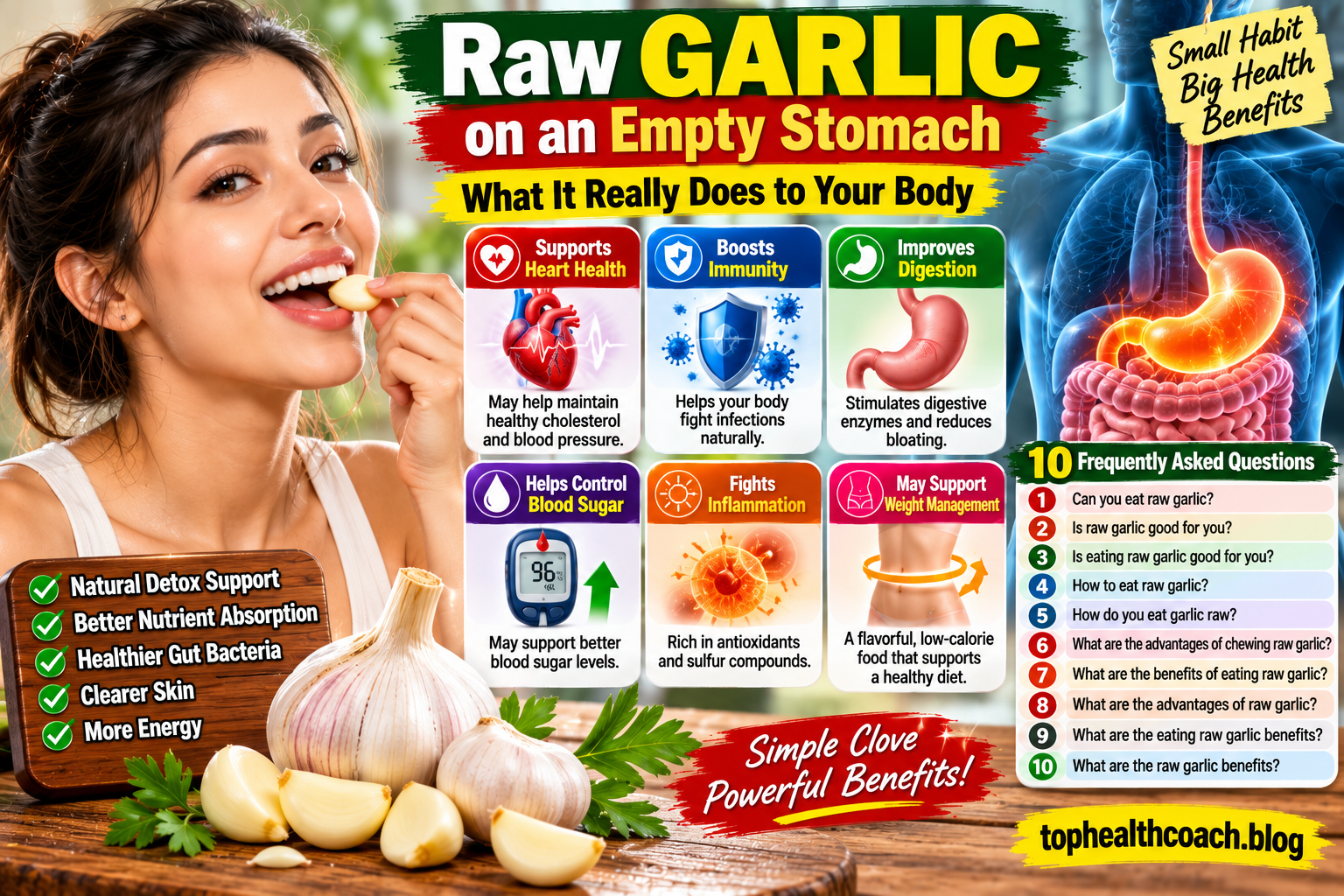
Raw Garlic on an Empty Stomach: What It Really Does to Your Body
Eating raw garlic on an empty stomach is a popular home-health practice. Some people believe it can improve digestion, strengthen immunity, support heart health, control blood sugar, or even help with weight loss.
But what does eating raw garlic on an empty stomach actually do to your body?
Garlic (Allium sativum) contains sulfur-containing compounds, including allicin, that have attracted considerable scientific interest. Research suggests garlic may have modest effects on certain cardiovascular and metabolic risk factors, but many popular claims about raw garlic go beyond what clinical evidence can currently prove.
The important distinction is that raw garlic benefits are not necessarily unique to eating garlic first thing in the morning. There is currently no strong evidence that consuming garlic on an empty stomach produces special health benefits compared with eating it with a meal.
So, if you enjoy raw garlic, how should you use it safely? Let’s look at what science really says.
What Happens When You Eat Raw Garlic?
When garlic cloves are chopped, crushed, or chewed, chemical reactions can produce compounds such as allicin. These compounds are one reason garlic has attracted interest for its potential biological effects.
The 2026 updated systematic review and meta-analysis of 108 randomized controlled trials involving 7,137 adults found that garlic intake was associated with modest improvements in several cardiovascular and metabolic markers, including total cholesterol, LDL cholesterol, triglycerides, blood pressure, fasting blood glucose, and some inflammatory and oxidative-stress markers. However, the analysis did not find significant effects on body weight or BMI.
That means advantages of chewing raw garlic may include exposure to potentially beneficial garlic compounds—but this does not make raw garlic a cure or replacement for medical treatment.
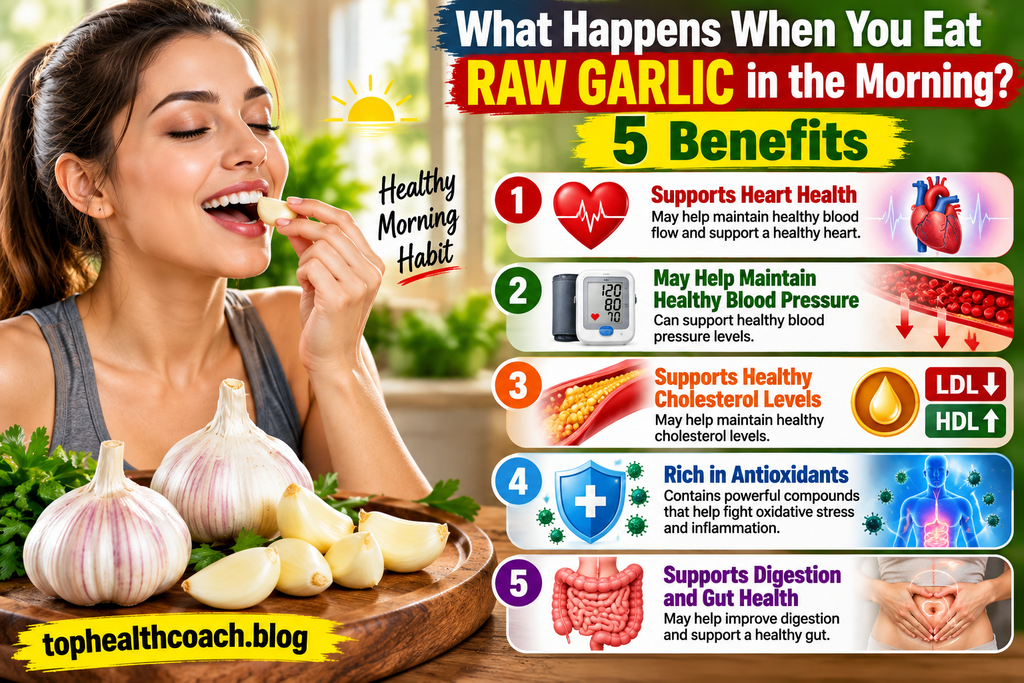
1. It May Support Heart Health
One of the most researched benefits of eating raw garlic involves cardiovascular health.
Research on garlic has examined cholesterol and blood pressure extensively. The National Center for Complementary and Integrative Health (NCCIH) says garlic supplements may reduce total and LDL cholesterol by a small amount in people with high cholesterol, while evidence also suggests a small reduction in blood pressure in some people with hypertension.
The newer 2026 meta-analysis found modest improvements in several cardiovascular risk markers across garlic interventions.
However, these studies often involve garlic preparations or supplements rather than specifically chewing one fresh clove on an empty stomach.
So, advantages of raw garlic should be viewed as part of an overall healthy diet—not as a substitute for cholesterol or blood-pressure medication.
2. It Provides Sulfur Compounds With Antioxidant Activity
Garlic contains several biologically active compounds, particularly sulfur-containing compounds.
These compounds have antioxidant and other biological activities that are being investigated for their potential effects on human health.
The 2026 meta-analysis reported improvements in markers related to oxidative stress and inflammation among adults consuming garlic.
This is one reason eating raw garlic benefits is such a popular search topic.
However, antioxidant activity in laboratory studies does not automatically mean that eating raw garlic will prevent a particular disease. Human health is much more complicated, and clinical outcomes require stronger evidence.
3. It May Support Healthy Blood Pressure
Another possible raw garlic benefit is modest blood-pressure support.
Earlier clinical research has found that garlic preparations may lower blood pressure, particularly in people who already have high blood pressure. NCCIH describes the evidence as suggesting a small benefit.
The 2026 meta-analysis also reported modest reductions in systolic and diastolic blood pressure across garlic interventions.
But raw garlic should not be used as a replacement for prescribed blood-pressure treatment.
If you have hypertension, continue your medical treatment and discuss dietary supplements or concentrated garlic products with your healthcare professional.
4. It May Have Modest Effects on Blood Sugar
Garlic has also been studied for its relationship with blood glucose.
NCCIH states that garlic supplements may lower blood sugar by a small amount in people with diabetes.
The newer meta-analysis similarly found a small improvement in fasting blood glucose and insulin-related markers.
However, this does not mean raw garlic can treat diabetes.
People taking diabetes medications should be especially cautious about making large dietary or supplement changes without discussing them with their healthcare professional.
5. It May Support a Healthy Diet—but It Is Not a Fat Burner
One of the most common internet claims is that chewing raw garlic in the morning can “melt belly fat.”
There isn’t good evidence supporting that claim.
The 2026 meta-analysis found that garlic interventions improved several metabolic markers but did not significantly change body weight or BMI.
Therefore, raw garlic benefits for weight loss should not be exaggerated.
Garlic can certainly be part of a healthy diet because it adds flavor without requiring large amounts of calories. But sustainable weight management still depends on overall calorie intake, food quality, physical activity, sleep, and other lifestyle factors.
Does Eating Raw Garlic on an Empty Stomach Make It More Effective?
This is where popular advice and scientific evidence differ.
There is no strong clinical evidence that eating raw garlic on an empty stomach is uniquely better than eating garlic with food.
Some people prefer morning garlic because it is easy to remember. Others find raw garlic too irritating to consume without food.
If raw garlic causes stomach discomfort when eaten before breakfast, there is no compelling reason to force yourself to eat it on an empty stomach.
Eating garlic as part of a balanced meal may be a more comfortable option.
How Much Raw Garlic Should You Eat?
There is no universally established medical dose of raw garlic for general wellness.
Garlic is normally considered safe when consumed in amounts commonly found in food. However, larger amounts can cause side effects.
NCCIH reports that oral garlic can cause bad breath, body odor, abdominal pain, flatulence, and nausea, with some side effects potentially being more noticeable with raw garlic.
Rather than following an aggressive “garlic challenge,” treat garlic as a food ingredient.
A small amount incorporated into meals is generally more practical than consuming large quantities of raw cloves.
How to Eat Raw Garlic Safely
If you want to try raw garlic, start with a small amount.
How to eat raw garlic
You can:
- Finely chop a small amount and add it to a salad.
- Crush garlic and mix it into yogurt or a healthy dip.
- Add minced raw garlic to vegetables after cooking.
- Mix it into a homemade dressing.
- Combine a small amount with food rather than eating a large amount alone.
If you prefer chewing garlic directly, remember that raw garlic can have a strong, irritating taste and may cause heartburn or stomach discomfort.
There is no health requirement to chew an entire garlic clove every morning.
Who Should Be Careful With Raw Garlic?
Although garlic is safe for most people when consumed as food, some individuals should exercise caution.
Garlic may increase bleeding risk, particularly in supplement form, and it may interact with medicines that affect blood clotting. NCCIH specifically advises people taking anticoagulants or aspirin to discuss garlic and other herbal products with their healthcare provider.
Extra caution is appropriate if you:
- Take blood-thinning medication
- Have a bleeding disorder
- Are preparing for surgery
- Experience severe acid reflux or stomach irritation
- Have a garlic allergy
- Are pregnant or breastfeeding and considering amounts greater than those normally found in food
Do not apply raw garlic directly to your skin. NCCIH warns that fresh raw garlic used topically can cause severe irritation and chemical burns.
Raw Garlic vs. Garlic Supplements
It’s also important not to treat fresh garlic and garlic supplements as identical.
Studies often use standardized garlic extracts, aged garlic preparations, or other supplements rather than fresh raw cloves.
NCCIH notes that research has focused extensively on garlic supplements, particularly regarding cholesterol and blood pressure.
Therefore, you shouldn’t assume that the results of a supplement study mean that chewing one raw garlic clove will produce exactly the same effect.
Health News: What Recent Research Says About Garlic
Recent research continues to investigate garlic’s potential cardiovascular and metabolic effects.
A 2026 systematic review and meta-analysis of 108 randomized controlled trials involving 7,137 participants reported modest improvements in cholesterol, triglycerides, blood pressure, fasting glucose, insulin-related measures, inflammatory markers, and oxidative-stress markers. Importantly, the analysis found no significant effect on body weight or BMI.
This provides a more balanced picture of garlic: it may have useful biological effects, but it isn’t a miracle food.
The strongest takeaway is that garlic can be a nutritious addition to an overall healthy eating pattern, while claims about disease cures, rapid weight loss, or special “detox” effects should be treated cautiously.
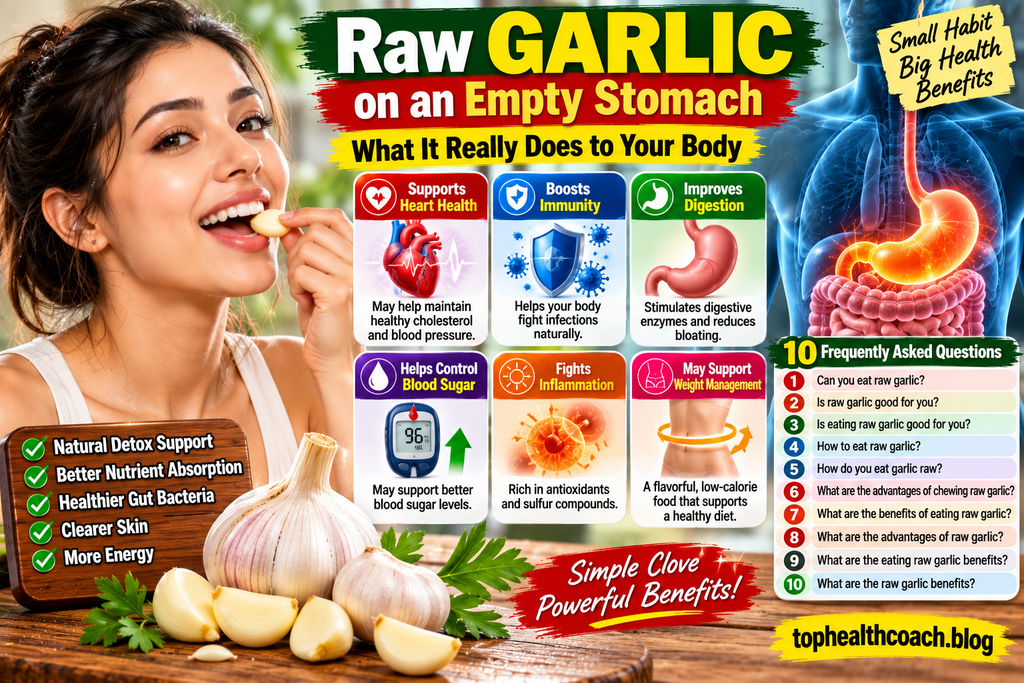
10 Frequently Asked Questions About Raw Garlic
1. Can you eat raw garlic?
Yes. Most people can safely consume raw garlic in normal food amounts. However, raw garlic may cause heartburn, abdominal discomfort, gas, nausea, and strong breath or body odor in some people.
2. Is raw garlic good for you?
For most people, raw garlic can be part of a healthy diet. Research suggests garlic may have modest effects on cardiovascular and metabolic risk markers, but it should not be considered a cure for disease.
3. Is eating raw garlic good for you?
Is eating raw garlic good for you? It can be, particularly when consumed as part of a balanced diet. However, there is no strong evidence that raw garlic must be eaten on an empty stomach to provide health benefits.
4. How to eat raw garlic?
How to eat raw garlic safely depends on your tolerance. You can finely chop or crush a small amount and add it to salads, yogurt, dips, dressings, or other foods.
5. How do you eat garlic raw?
How do you eat garlic raw? Some people chew a small piece directly, while others find it easier to crush or mince it and combine it with food. Eating it with a meal may reduce stomach irritation.
6. What are the advantages of chewing raw garlic?
The advantages of chewing raw garlic may include exposure to sulfur-containing compounds formed when garlic is crushed or chewed. However, chewing raw garlic has not been proven to provide unique benefits compared with other ways of consuming garlic.
7. What are the benefits of eating raw garlic?
The benefits of eating raw garlic may include modest support for cholesterol, blood pressure, blood glucose, and certain oxidative-stress markers based on clinical research on garlic interventions.
8. What are the advantages of raw garlic?
The advantages of raw garlic include its nutritional value, flavor, and biologically active sulfur compounds. Research suggests possible cardiovascular and metabolic benefits, but the evidence varies by garlic preparation and health outcome.
9. What are the eating raw garlic benefits?
Potential eating raw garlic benefits include adding a flavorful, low-calorie ingredient Health News to meals while providing sulfur-containing compounds. Some research also suggests modest effects on cardiovascular risk factors.
10. What are the raw garlic benefits?
Potential raw garlic benefits include modest support for cholesterol, blood pressure, and some metabolic markers. However, raw garlic isn’t proven to detox the body, burn belly fat, or cure infections.
Final Takeaway
Raw garlic is a nutritious food with biologically active compounds, but the internet often makes its benefits sound much more dramatic than the science supports.
The evidence suggests that garlic may provide modest cardiovascular and metabolic benefits, particularly for cholesterol, blood pressure, blood glucose, and certain markers of inflammation and oxidative stress.
But there is no strong evidence that eating raw garlic on an empty stomach is uniquely beneficial.
If you enjoy garlic, incorporate reasonable amounts into a balanced diet. If eating it raw causes heartburn, nausea, or stomach irritation, there is no need to force yourself to consume it before breakfast.
And if you take blood thinners, aspirin, or other medications, speak with your healthcare professional before using large amounts of garlic or garlic supplements.
Medical Disclaimer: This article is for general health education and does not diagnose, treat, or prevent any disease. Garlic should not replace prescribed medication or professional medical care.
Long-Tail SEO Keywords
advantages of chewing raw garlic, benefits of eating raw garlic, advantages of raw garlic, eating raw garlic benefits, raw garlic benefits, can you eat raw garlic, is raw garlic good for you, is eating raw garlic good for you, how to eat raw garlic, how do you eat garlic raw, raw garlic on an empty stomach benefits, benefits of eating garlic in the morning, eating raw garlic in the morning, raw garlic benefits for heart health, raw garlic benefits for cholesterol, raw garlic and blood pressure, raw garlic for blood sugar, raw garlic for weight loss, does raw garlic burn belly fat, best time to eat raw garlic, how much raw garlic should you eat, raw garlic side effects, raw garlic before breakfast, garlic health benefits, garlic benefits and side effects, health news, latest health news.