Water is one of the most important nutrients your body needs every day. It helps regulate body temperature, supports digestion, lubricates joints, protects sensitive tissues, and helps your body remove waste. Yet one common question remains: how much water should you drink a day?
You may have heard the popular “8 glasses a day” rule, but hydration needs are not exactly the same for everyone. Your age, body size, activity level, diet, climate, health conditions, pregnancy status, and medications can all influence how much fluid you need.
This guide explains how much water to drink, how many ounces may be appropriate, whether distilled water is safe, how hydration changes during hot U.S. summers and exercise, and how to recognize signs that you may need more fluids.
Health note: This article provides general information for adults in the USA. People with kidney, heart, liver, or other conditions that affect fluid balance may need individualized advice from a healthcare professional.
How Much Water Should You Drink a Day?
There is no single number that applies to every adult.
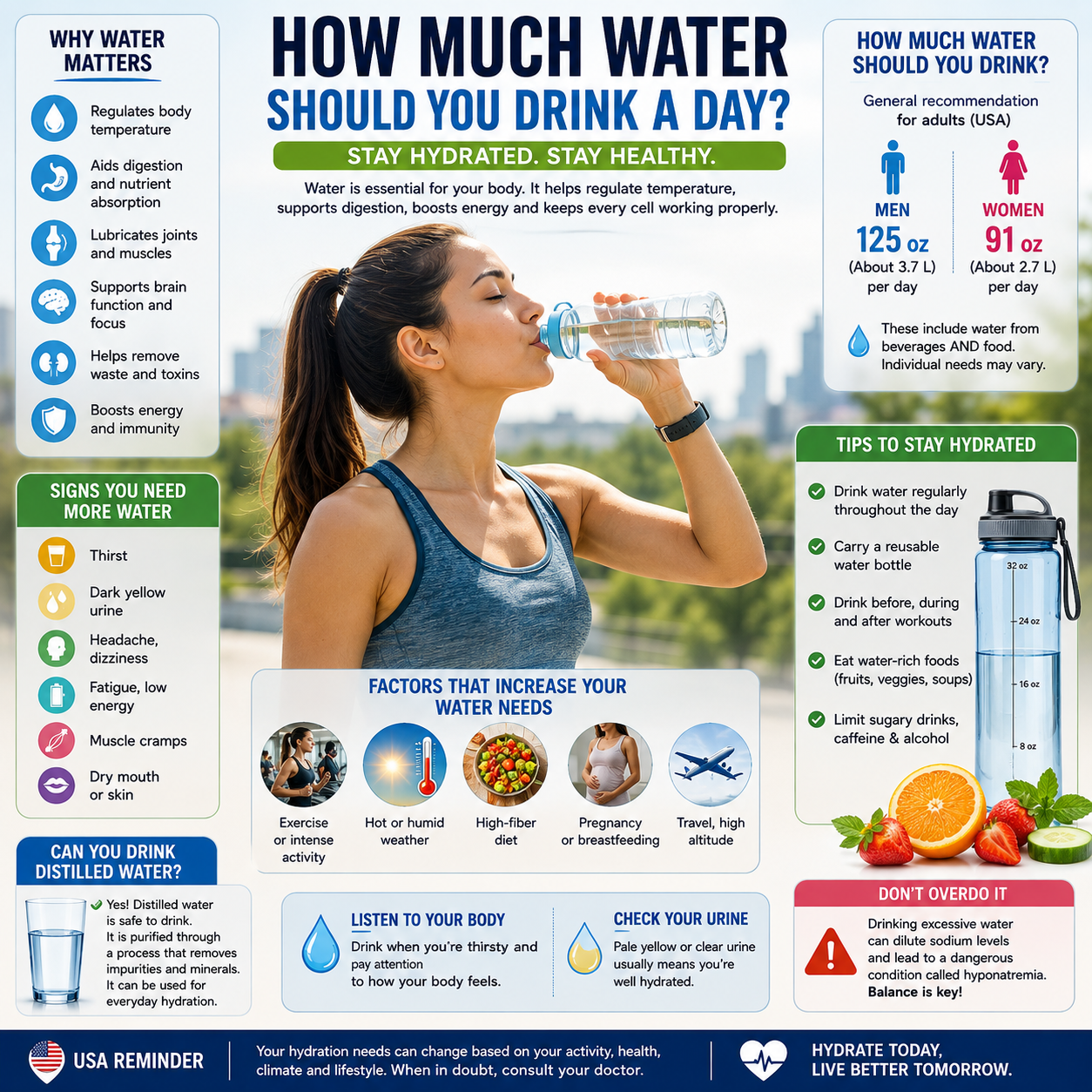
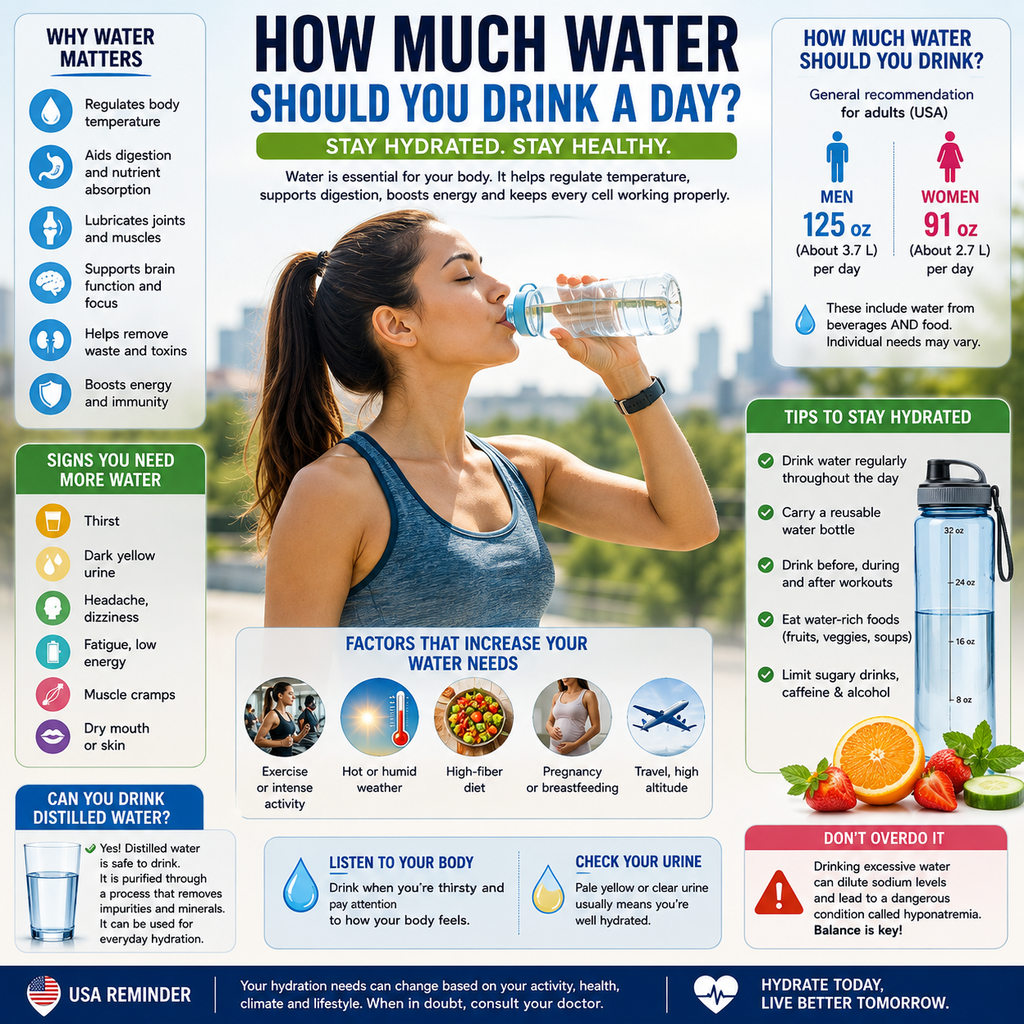
The National Academies’ dietary reference values list total water intake—not just beverages—at about 3.7 liters (125 ounces) per day for men ages 19–30 and about 2.7 liters (91 ounces) for women ages 19–30. These amounts include water from beverages and food. The reference values are similar across many adult age groups, although individual needs vary.
This is an important distinction.
If someone says they need around 3 liters of water per day, that does not necessarily mean they must drink exactly 3 liters of plain water. Foods such as fruits, vegetables, soups, yogurt, and other foods also contribute to total water intake.
The CDC also emphasizes that individual hydration needs can increase when you are in a hot climate, physically active, or experiencing fever, vomiting, or diarrhea.
How Much Water Should I Drink a Day?
If you’re asking how much water should i drink a day, start by thinking about your individual circumstances rather than following a rigid number.
For a healthy adult, drinking water regularly throughout the day is a practical approach.
You can:
- Drink water with meals.
- Carry a reusable water bottle.
- Drink before, during, and after physical activity.
- Choose water instead of sugary drinks more often.
- Drink more when you’re sweating heavily.
- Pay attention to thirst and other signs of hydration.
The CDC says drinking enough water can help prevent dehydration and supports normal body functions.
A Simple Starting Point
For many adults, a practical starting point is to drink regularly throughout the day rather than trying to consume a huge amount at once.
You don’t need to force yourself to drink a fixed amount every hour.
Your needs change from day to day.
How Many Ounces of Water Should I Drink a Day?
A common search is how many ounces of water should i drink a day.
There isn’t one universal number.
The National Academies’ figures for total water are approximately:
| Group | Total water per day* |
|---|---|
| Adult men | About 125 ounces |
| Adult women | About 91 ounces |
*These figures include water from food as well as beverages.
Therefore, these numbers should not be interpreted as a requirement to drink 125 or 91 ounces of plain water every day.
For example, someone who eats plenty of water-rich fruits and vegetables receives some of their daily water through food.
A person exercising outdoors in Arizona during a hot afternoon may also need significantly more fluid than someone spending the day indoors in a cool environment.
Why Does Your Body Need Water?
Water plays several important roles in the body.
1. Temperature Regulation
Your body uses sweating and evaporation to help regulate temperature.
This becomes particularly important during exercise and hot weather.
2. Digestion
Adequate fluid intake supports normal digestion and can help prevent dehydration-related constipation.
3. Waste Removal
Water helps your kidneys remove waste through urine.
4. Joint Support
Water contributes to the fluids that help lubricate and cushion joints.
5. Normal Brain and Body Function
Dehydration can contribute to symptoms such as unclear thinking, mood changes, overheating, and other problems.
Signs You May Need More Water
Your body provides several signals when fluid intake isn’t keeping up with losses.
Possible signs of dehydration include:
- Thirst
- Darker urine
- Infrequent urination
- Dizziness
- Headache
- Fatigue
- Muscle cramps
- Weakness
- Dry mouth
The CDC lists thirst, darker urine, infrequent urination, dizziness, fatigue, headache, and muscle cramps among signs associated with dehydration and heat-related illness.
Urine color can also provide a general hydration clue. The CDC notes that urine that is light yellow or clear usually indicates that you are drinking enough water.
However, urine color can be influenced by medications, supplements, foods, and other factors, so it should not be treated as a medical test.
How Much Water Should You Drink When Exercising?
Exercise increases fluid loss because you may sweat more.
If you’re exercising indoors in a moderate environment, your fluid needs may be relatively manageable.
Outdoor exercise during hot or humid weather is different.
The CDC recommends drinking more water than usual when exercising on hot days and not waiting until you are thirsty to increase fluid intake.
Before Exercise
Start your workout normally hydrated rather than trying to compensate by drinking a huge amount immediately beforehand.
During Exercise
Take regular drinks according to your thirst, workout intensity, duration, temperature, and individual sweat rate.
After Exercise
Replace fluids lost through sweating.
For long-duration exercise or heavy sweating, electrolytes may sometimes be appropriate, particularly when substantial sodium is lost through sweat.
For ordinary short workouts, plain water is often sufficient.
Hydration During Summer in the USA
The United States includes very different climates.
A summer day in Phoenix can be dramatically different from a cool day in Seattle or Maine.
During periods of high heat, your body can lose more water through sweating.
The CDC’s current heat-health guidance recommends staying hydrated, carrying a water bottle, drinking throughout the day, and limiting beverages high in sugar, sodium, caffeine, and alcohol.
People who exercise or work outdoors should be especially careful.
If you develop severe weakness, confusion, fainting, difficulty breathing, or other serious heat-related symptoms, seek urgent medical care.
Can You Drink Distilled Water?
Another frequently searched question is can you drink distilled water?
Yes. Distilled water can be sold as bottled drinking water in the United States.
The FDA specifically recognizes distilled water as a type of purified bottled water. FDA regulations require bottled-water producers to follow safety and sanitation requirements and protect water sources from contaminants.
Distillation removes many dissolved minerals and impurities from water through a purification process.
However, distilled water isn’t necessarily “better” than other safe drinking water for everyday hydration.
For most people, the most important factor is that the water is safe to drink and fits their preferences.
Distilled Water vs. Tap Water
Both can be suitable for hydration when they meet applicable safety standards.
In the United States, public drinking water is regulated by the Environmental Protection Agency, while the FDA regulates bottled drinking water.
Your local water quality can vary.
If you use tap water, your local water supplier generally provides information about the quality of the water supply. MedlinePlus notes that U.S. drinking-water quality can vary depending on the source and treatment.
If you have concerns about your local water, check your local water-quality report or contact the appropriate local health or water authority.
Can You Drink Too Much Water?
Yes.
Although dehydration receives much more attention, excessive water consumption can also be dangerous.
Drinking an excessive amount of water can dilute sodium in the blood, a condition known as hyponatremia. Severe cases can cause confusion, seizures, coma, and other life-threatening complications.
This doesn’t mean you should be afraid of drinking water.
It means you should avoid forcing yourself to drink extreme amounts simply because someone says “more water is always better.”
During prolonged exercise, especially in heat, hydration should be balanced with individual fluid and electrolyte losses.
Does Coffee Count Toward Your Water Intake?
Yes, beverages other than plain water can contribute to total fluid intake.
However, water is generally an excellent choice because it contains no calories and supports hydration.
If you drink coffee or tea, be mindful of added sugar and other ingredients.
The CDC recommends considering limits on beverages high in sugar, sodium, caffeine, and alcohol, particularly in hot conditions.
Does Food Provide Water?
Absolutely.
Many foods contain substantial amounts of water.
Examples include:
- Watermelon
- Oranges
- Strawberries
- Cucumbers
- Tomatoes
- Lettuce
- Soups
- Yogurt
This is one reason the recommended intake is described as total water, rather than simply glasses of drinking water.
A person eating a diet rich in fruits and vegetables may receive more water through food than someone eating mostly dry foods.
Water and Weight Management
Water can also be useful for people working on healthy weight management.
Plain water contains no calories.
Replacing sugary drinks with water can reduce Benefits of Drinking Water Every Morning calorie intake, which may support healthy weight-management efforts. The CDC specifically notes that replacing sugary drinks with water can help reduce caloric intake.
However, drinking excessive water does not automatically cause fat loss.
A healthy weight-management plan should include balanced nutrition, regular physical activity, adequate sleep, and sustainable habits.
Simple Ways to Drink More Water
If you regularly forget to drink water, try these practical strategies:
Keep a Water Bottle Nearby
Having water within reach makes drinking throughout the day easier.
Drink With Meals
Make water part of breakfast, lunch, and dinner.
Add Flavor
If plain water seems boring, add lemon, lime, cucumber, mint, or fruit.
Choose Water When Eating Out
Instead of automatically ordering a sugary beverage, choose water more often.
Drink Before Outdoor Activities
Start outdoor activities adequately hydrated, particularly during hot weather.
Don’t Force Huge Amounts
Spread your fluid intake throughout the day rather than trying to consume most of it at once.
Who May Need Individual Hydration Advice?
Some people should not simply follow generic water recommendations.
Talk to a healthcare professional if you have:
- Kidney disease
- Heart failure
- Liver disease
- Certain hormonal conditions
- A history of low blood sodium
- A condition requiring fluid restriction
- Medications that significantly affect fluid balance
People with these conditions may need personalized fluid recommendations.
Pregnant or breastfeeding women may also have different fluid needs.
Children and older adults likewise have different hydration considerations.
A Practical Daily Hydration Routine
Here’s an easy example for a healthy adult:
Morning: Drink water after waking and with breakfast.
Midday: Keep water available during work and lunch.
Afternoon: Drink regularly, especially if you’re active or outdoors.
Workout: Hydrate according to the duration, intensity, temperature, and your sweat losses.
Evening: Drink as needed, while avoiding excessive amounts immediately before bed if nighttime urination is a problem.
This isn’t a rigid prescription.
Your actual needs may be higher or lower.
10 Frequently Asked Questions
1. How much water should you drink a day?
There is no single amount for everyone. National Academies reference values for total water are about 125 ounces per day for adult men and 91 ounces for adult women, including water from food and beverages. Individual needs vary.
2. How much water should i drink a day?
Start by drinking regularly throughout the day and adjust for activity, weather, diet, illness, and individual needs. If you have a medical condition affecting fluid balance, ask your healthcare professional for personalized guidance.
3. How many ounces of water should i drink a day?
The commonly cited National Academies values are approximately 125 ounces of total water for adult men and 91 ounces for adult women. These figures include water from food, not just drinking water.
4. How much water to drink during exercise?
It depends on workout duration, intensity, temperature, humidity, and how much you sweat. In hot conditions, the CDC recommends drinking more water than usual and not waiting until you are thirsty to increase intake.
5. Can you drink distilled water?
Yes. Distilled water is recognized by the FDA as a type of purified bottled drinking water. It can be used for hydration when it is produced and handled safely.
6. Is eight glasses of water a day enough?
Eight glasses can be a simple reminder, but it isn’t a universal medical requirement. Your total water needs depend on individual factors and include water obtained from food and other beverages.
7. Can you drink too much water?
Yes. Excessive water intake can contribute to low blood sodium, or hyponatremia, which can become a serious medical emergency. Avoid deliberately consuming extreme amounts of water.
8. Does coffee count as water?
Coffee and other beverages contribute to total fluid intake. However, plain water is an excellent low-calorie choice, especially when replacing sugary beverages.
9. How do I know if I’m dehydrated?
Possible signs include thirst, darker urine, infrequent urination, dizziness, fatigue, headache, and muscle cramps. Severe symptoms require prompt medical attention.
10. Should I drink more water in hot weather?
Usually, your fluid needs increase when you’re exposed to heat or exercising. The CDC recommends staying hydrated during hot weather and carrying water with you.
Final Thoughts
So, how much water should you drink a day?
The best answer is: it depends.
Rather than obsessing over one fixed number, drink regularly throughout the day and consider your body size, activity, diet, climate, health, and other factors.
For many healthy adults, the National Academies’ total-water reference values—about 91 ounces for adult women and 125 ounces for adult men—provide useful context, but remember that these amounts include water from food and beverages.
If you’re active or living through a hot U.S. summer, you may need more. If you have a condition that affects fluid balance, you may need individualized advice.
And if you’re wondering can you drink distilled water, the answer is yes—distilled water is a recognized type of purified bottled drinking water in the United States.
The goal isn’t to drink the maximum amount possible.
The goal is to stay appropriately hydrated without overdoing it.
Medical disclaimer: This article is for general educational purposes and does not replace individualized medical advice. If you have kidney, heart, liver, endocrine, or other conditions that affect hydration, or if you experience severe dehydration symptoms, consult a qualified healthcare professional.