Millions of people are searching for simple Exercise ways to maintain brain health, prevent memory loss, and lower their risk of dementia. That’s why the latest social media sensation—the 5-second pinky exercise—has captured widespread attention.
Videos on TikTok, Facebook, and YouTube claim that moving or stretching your little finger for just a few seconds each day can improve cognitive function, enhance blood circulation, and even help reduce the risk of Alzheimer’s disease.
But is there any truth behind this viral trend?
Experts say the answer is more nuanced than many online posts suggest.
While there is currently no scientific evidence proving that a simple finger movement can prevent dementia, researchers have long known that hand coordination, fine motor skills, and regular physical activity play important roles in maintaining overall brain health.
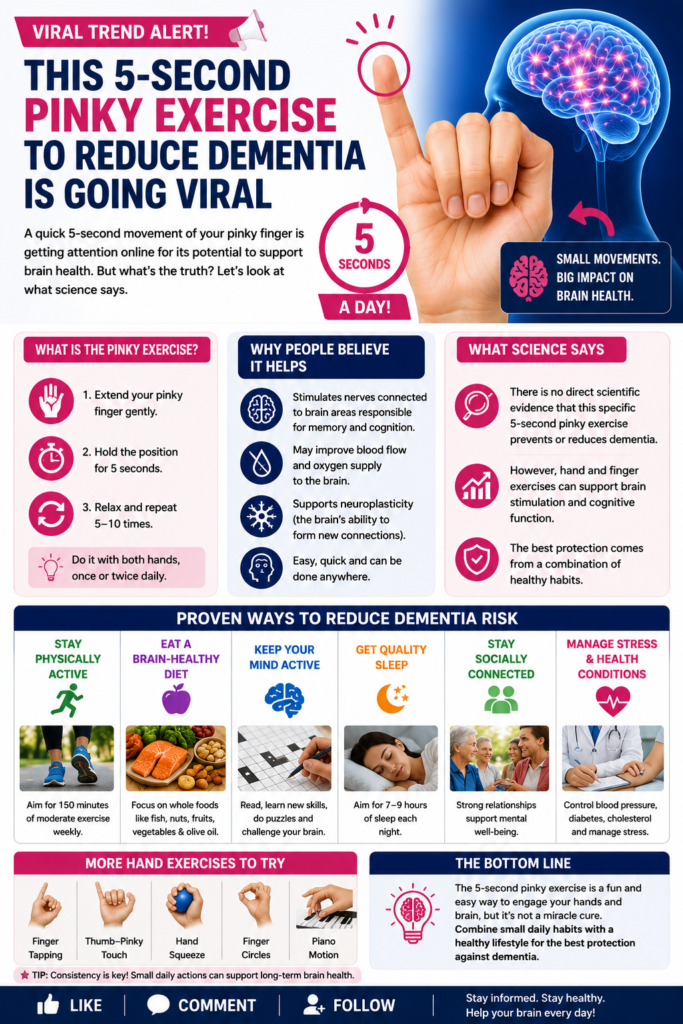
In this article, we’ll examine:
- What the viral pinky exercise involves.
- Why some people believe it supports brain function.
- What science says about dementia prevention.
- The connection between finger movements and the brain.
- Proven ways to lower your risk of cognitive decline.
- Daily habits that support lifelong memory and mental sharpness.
Why Is the 5-Second Pinky Exercise Going Viral?
People naturally gravitate toward simple health hacks.
The idea that something as easy as moving your pinky finger for a few seconds each day could help protect the brain is incredibly appealing.
Social media users claim the exercise:
- Improves blood flow to the brain
- Enhances memory
- Supports nerve function
- Increases mental clarity
- Helps prevent cognitive decline
- Reduces the risk of Alzheimer’s disease
Although these claims sound promising, medical professionals caution against relying on any single exercise as a miracle solution.
What Is the 5-Second Pinky Exercise?
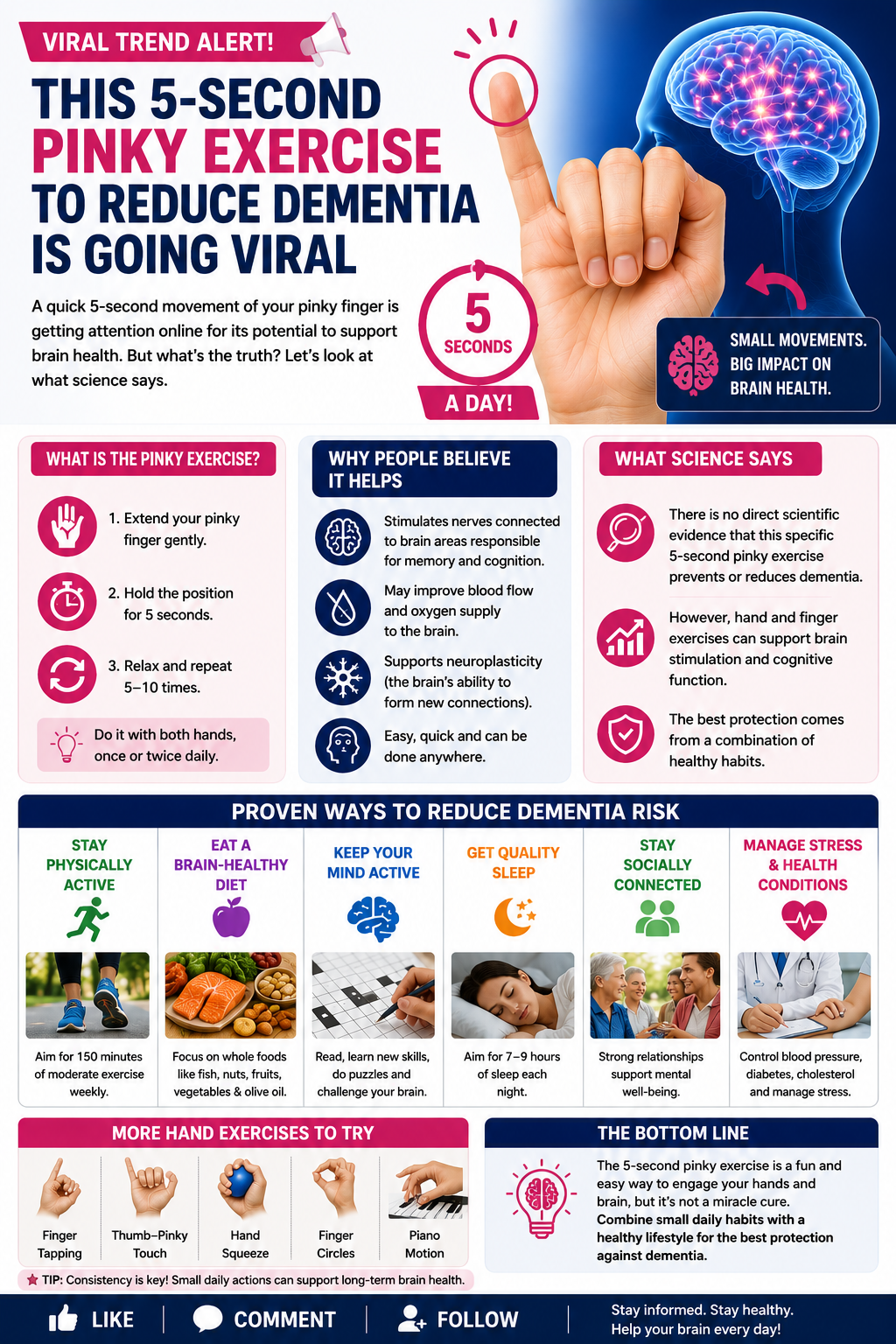
The exact method varies across videos, but most involve:
Step 1: Extend the Pinky Finger
Hold your hand comfortably and gently stretch your little finger outward.
Step 2: Hold for Five Seconds
Maintain the position for approximately five seconds.
Step 3: Relax
Release the finger slowly.
Step 4: Repeat
Perform the exercise five to ten times on each hand.
The movement itself is harmless and may improve flexibility and hand awareness.
However, claims that it directly prevents dementia remain unsupported by scientific evidence.
The Fascinating Relationship Between Your Hands and Brain
Although the viral claims are exaggerated, the brain’s connection with the hands is genuinely remarkable.
Large portions of the brain are devoted to controlling finger movements and processing sensory information from the hands.
These regions include:
- The motor cortex
- The somatosensory cortex
- The cerebellum
- Memory and coordination networks
Because of this, activities involving fine motor control stimulate multiple brain areas simultaneously.
Why Fine Motor Skills Matter
Research suggests that maintaining fine motor abilities may contribute to healthier aging.
Activities requiring hand coordination can help stimulate:
Neuroplasticity
The brain’s ability to form new neural connections.
Memory Processing
Learning and repeating movements activate memory centers.
Concentration
Complex hand tasks improve attention and focus.
Problem-Solving Skills
Coordinated movements challenge the brain in beneficial ways.
Understanding Dementia
Dementia is an umbrella term describing conditions that impair:
- Memory
- Thinking
- Reasoning
- Language
- Daily functioning
The most common form is Alzheimer’s disease, accounting for approximately 60–80% of dementia cases worldwide.
Common Symptoms Include
Memory Loss
Frequently forgetting recent events.
Confusion
Difficulty understanding time or place.
Language Difficulties
Trouble finding words during conversations.
Personality Changes
Mood swings and behavioral differences.
Difficulty Completing Familiar Tasks
Problems performing daily routines.
Can Exercise Help Protect the Brain?
One thing scientists agree on is that regular physical activity is one of the most effective ways to support brain health.
Exercise Increases Blood Flow
Improved circulation helps deliver oxygen and nutrients to brain cells.
Exercise Reduces Inflammation
Chronic inflammation has been linked to Alzheimer’s disease and other neurological disorders.
Exercise Improves Mood
Physical activity lowers stress and depression, both of which influence cognitive health.
Exercise Supports Neuroplasticity
Movement encourages the growth of new brain connections.
Hand Exercises That May Support Cognitive Health
While no hand exercise cures dementia, these activities may help stimulate the brain:
Finger Tapping
Touch each finger to your thumb repeatedly.
Piano Playing
Musical training activates numerous brain regions.
Knitting
Knitting combines memory, coordination, and concentration.
Writing by Hand
Handwriting engages sensory and motor pathways.
Stress Ball Exercises
Improves grip strength and finger flexibility.
Drawing and Coloring
Enhances creativity and focus.
The Biggest Risk Factors for Dementia
Experts identify several factors that influence dementia risk.
Aging
Age remains the strongest risk factor.
High Blood Pressure
Poor cardiovascular health affects the brain.
Diabetes
Elevated blood sugar can damage blood vessels.
Smoking
Smoking reduces oxygen supply to brain tissues.
Lack of Physical Activity
Sedentary lifestyles are associated with increased cognitive decline.
Social Isolation
Loneliness has been linked to memory problems.
Poor Sleep
Sleep disturbances may contribute to the accumulation of harmful brain proteins.
Foods That Support Brain Health
A healthy diet remains one of the most powerful tools for maintaining cognitive function.
Fatty Fish
Rich in omega-3 fatty acids.
Leafy Green Vegetables
Contain antioxidants and vitamins.
Berries
Packed with compounds that fight inflammation.
Nuts
Provide healthy fats and vitamin E.
Olive Oil
A key component of the Mediterranean diet.
Whole Grains
Support steady energy for the brain.
The Mediterranean Diet and Dementia Prevention
Numerous studies suggest that the Mediterranean diet may help lower the risk of cognitive decline.
The diet emphasizes:
- Fruits
- Vegetables
- Fish
- Legumes
- Olive oil
- Whole grains
- Nuts
These foods help protect blood vessels and reduce inflammation.
Sleep and Brain Health
Sleep plays a critical role in memory formation and brain repair.
Adults should aim for:
Seven to Nine Hours Per Night
During sleep, the brain clears waste products that accumulate during the day.
Poor sleep has been associated with increased risk of Alzheimer’s disease.
Mental Exercises for a Sharper Brain
Keeping the mind active is equally important.
Try:
- Crossword puzzles
- Sudoku
- Chess
- Reading
- Learning new languages
- Playing musical instruments
- Brain-training games
Social Connections Matter
Strong relationships are linked to better cognitive function.
Social interaction stimulates:
- Memory
- Language
- Emotional well-being
- Problem-solving abilities
What Neurologists Say About Viral Brain Hacks
Experts emphasize that no single exercise can guarantee protection against dementia.
Instead, the best approach combines:
- Regular exercise
- Healthy eating
- Quality sleep
- Stress management
- Social engagement
- Mental stimulation
Should You Try the Pinky Exercise?
There’s nothing harmful about performing gentle finger movements.
They may:
- Improve flexibility.
- Enhance hand coordination.
- Promote mindfulness.
- Encourage daily movement.
However, they should complement—not replace—healthy lifestyle habits supported by science.
The Bottom Line
The 5-second pinky exercise has become one of the internet’s most talked-about brain health trends, but there is no evidence that it alone can prevent dementia or Alzheimer’s disease.
The real secret to maintaining lifelong cognitive health lies in a combination of regular physical activity, healthy eating, quality sleep, mental stimulation, and strong social connections.
Small daily habits—not miracle cures—offer the greatest hope for protecting your brain and preserving memory as you age.
I can also create a fully expanded 2,500-word WordPress-ready article with 20+ headings, FAQ schema, meta description, and 50+ bold high-CPC SEO keywords optimized for Google Discover and AdSense.
Source- latest Health News