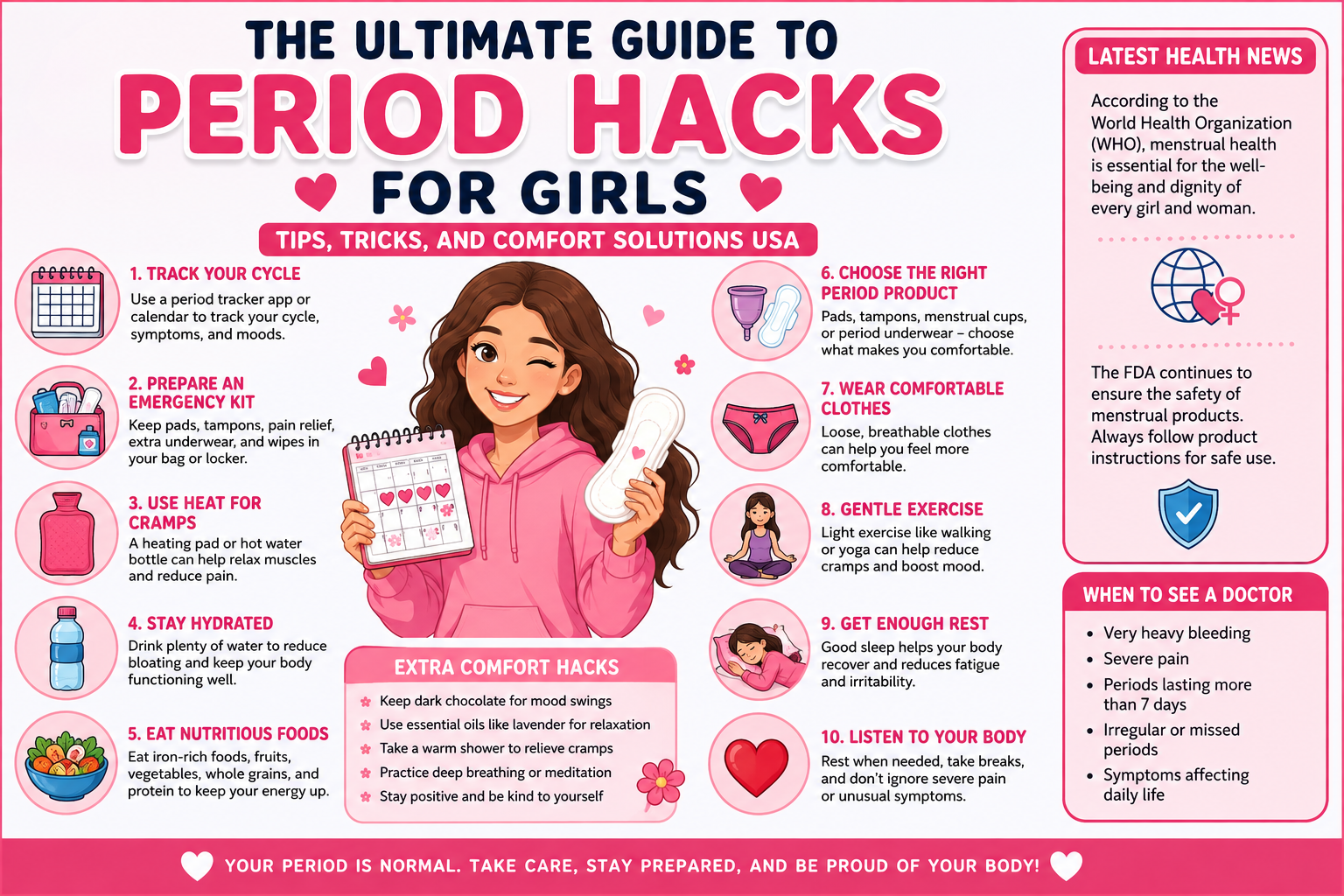
Getting your first period can feel exciting, confusing, embarrassing, or even scary. You may wonder why there is blood, whether cramps are normal Period Guide, what products to use, or what you should do if your period starts while you’re at school.
The good news is that menstruation is a normal part of puberty and reproductive health. Most girls get their first period around ages 12–13, although starting earlier or later can still be normal. ACOG explains that the first period commonly occurs about 2–3 years after breast development begins.
This Ultimate Period Guide for Teenagers is designed especially for girls and families in Florida, with practical information about first period symptoms, period cramps, period products, menstrual hygiene, PMS, exercise, nutrition, tracking your cycle, and knowing when to ask a doctor for help.
Health note: This article is educational and isn’t a substitute for personalized medical advice. If you have severe pain, unusually heavy bleeding, fainting, or other concerning symptoms, talk with a parent/guardian and a healthcare professional.
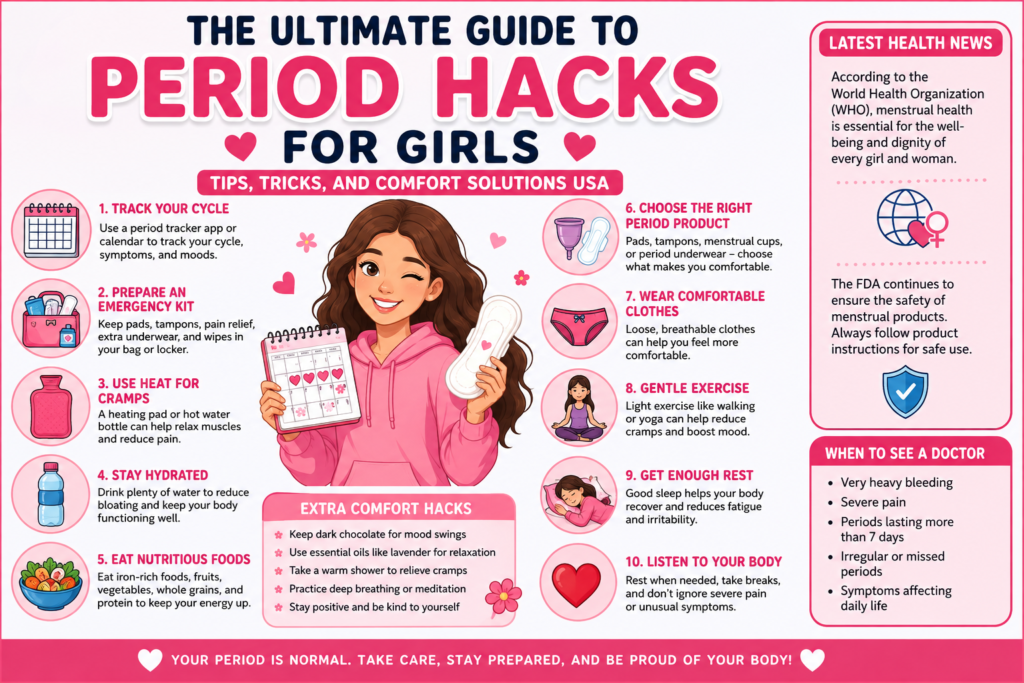
What Is a Period? — Florida Teen Health Guide
A period, medically called menstruation, happens when the lining of the uterus leaves the body through the vagina.
During puberty, the brain and ovaries begin communicating through hormones. These hormones help regulate the menstrual cycle. Each cycle involves changes in the ovaries and uterus. An egg may be released during ovulation, while the uterine lining becomes prepared for a possible pregnancy. If pregnancy doesn’t occur, the lining is shed as menstrual bleeding.
Having a period doesn’t mean something is wrong. It is one of the normal physical changes associated with puberty.
For girls in Florida, the hot and humid climate can also make period days feel uncomfortable, so staying hydrated and wearing breathable clothing may help you feel more comfortable.
When Do Girls Get Their First Period Guide in Florida?
There is no exact period age limit.
Most girls begin menstruating between approximately 12 and 13 years old, but some begin earlier or later. The timing is influenced by puberty, genetics, overall health, nutrition, and other factors.
ACOG notes that menstruation often begins around 2–3 years after breast development starts.
What if a Girl Starts Her Period Early in Florida?
Puberty can begin at different ages. HealthyChildren.org explains that puberty beginning before age 8 in girls is generally considered unusually early and should be evaluated by a pediatrician.
If you’re concerned about when puberty or menstruation begins, don’t compare yourself with classmates or friends. A pediatrician can evaluate your individual development.
What if a Girl Hasn’t Started Her Period?
ACOG recommends discussing it with a doctor if a girl hasn’t started her first period by age 15. A medical evaluation may also be appropriate when puberty itself doesn’t appear to be progressing normally.
Signs Your Daughter May Be Getting Her First Period in Florida
Parents and teenagers often search for signs your daughter is about to start her period.
There isn’t a precise countdown that can predict the exact day. However, several puberty changes may happen before the first period.
These can include:
- Breast development
- Growth in height
- Development of pubic or underarm hair
- Normal changes in body shape
- Vaginal discharge
HealthyChildren.org notes that clear or white vaginal discharge can occur several months before the first period and can be a normal part of puberty.
A first period may then begin sometime after these changes.
How Parents Can Prepare for the First Period
Don’t wait until the first period happens to explain menstruation.
Parents can prepare a teenager by:
- Explaining what menstruation is.
- Showing her how period products work.
- Keeping products available at home.
- Putting emergency supplies in her school bag.
- Explaining that periods can initially be irregular.
- Talking about cramps and comfort options.
- Encouraging her to ask questions without embarrassment.
HealthyChildren.org specifically recommends preparing girls before their first period so they aren’t surprised when menstruation begins.
What Triggers a Girl’s First Period in Florida?
Many people ask, what triggers a girl’s first period?
There isn’t one single event that suddenly “turns on” menstruation.
Instead, the first period occurs as part of puberty, when the brain, pituitary gland, ovaries, and hormones begin coordinating reproductive development. Hormonal changes lead to development of the reproductive system and eventually the menstrual cycle.
Genetics also matter. The age at which close family members experienced puberty can provide some context, but it doesn’t predict an exact date.
What Should a Girl Do During Her First Period in Florida?
If you suddenly notice blood in your underwear, don’t panic.
Step 1: Stay Calm
A first period is normal.
Step 2: Tell a Trusted Adult
Talk to your parent, guardian, school nurse, teacher, or another trusted adult.
Step 3: Use a Period Product
A sanitary pad is often a simple option for someone experiencing their first period.
Step 4: Track the Date
Write down the first day of bleeding. This becomes Day 1 of your menstrual cycle.
Step 5: Monitor Your Symptoms
Notice whether you experience cramps, headaches, fatigue, or other symptoms.
Remember that early periods may be light and irregular. ACOG notes that periods can take years to become regular.
How Long Does a Period Last? — Florida Teen Guide
A typical period can last approximately 2–7 days. ACOG recommends talking with a doctor if bleeding continues for more than 7 days.
The first few periods may be:
- Very light
- Short
- Irregular
- Brownish or reddish
- Different from month to month
Don’t assume that your period should look exactly like your friend’s.
Your body has its own pattern.
Understanding the Menstrual Cycle in Florida Teens
A menstrual cycle is counted from the first day of bleeding to the first day of the next period.
The average cycle is often described as about 28 days, but ACOG notes that cycles between 21 and 45 days can be normal for adolescents.
During the first several years, cycles may be unpredictable.
Menstruation
This is the period itself—the time when the uterine lining is shed.
Follicular Phase
Hormones stimulate development of an egg-containing follicle in the ovary.
Ovulation
An ovary releases an egg.
Luteal Phase
Hormones change as the body prepares for a possible pregnancy.
If pregnancy doesn’t occur, hormone levels change again and menstruation begins.
Period Cramps: What Florida Girls Should Know
Period cramps, medically called dysmenorrhea, are common.
ACOG explains that natural chemicals called prostaglandins contribute to uterine contractions that cause menstrual cramps.
Cramps can feel like:
- Aching
- Pressure
- Tightness
- Throbbing
- Lower-abdominal pain
- Lower-back pain
Some girls may also experience nausea, headaches, vomiting, or diarrhea.
How to Help a 12-Year-Old With Period Pain in Florida
If you’re caring for a 12-year-old experiencing period pain, start with comfort and observation.
Heat
A heating pad or warm compress on the lower abdomen or back may help ease cramps.
Don’t place extremely hot objects directly against the skin.
Gentle Exercise
Walking, stretching, or gentle exercise may help some girls.
Rest
If she feels tired, allow her to rest.
Pain Medication
Over-the-counter medicines such as ibuprofen or naproxen may help menstrual cramps for people who can safely take them. A parent/guardian should follow the medication label and consult a pediatrician or pharmacist if there are questions about whether a medicine is appropriate.
Don’t give a child medication based only on an internet article.
Period Products for Teenagers in Florida
Girls have several choices when it comes to period products.
Pads
Pads are worn inside underwear and absorb menstrual blood.
They can be an easy choice for beginners.
Tampons
Tampons are inserted into the vagina and absorb menstrual fluid.
They can be useful for swimming and sports, but they must be used according to product instructions.
Menstrual Cups and Discs
These collect menstrual fluid rather than absorbing it.
They require learning how to insert, remove, clean, and use them properly.
Period Underwear
Specially designed period underwear can absorb menstrual fluid and may be used alone or as additional protection.
ACOG recommends changing pads and tampons at least every 4–8 hours, with changes potentially needed more frequently depending on flow.
Menstrual Hygiene for Girls in Florida
Good menstrual hygiene doesn’t need to be complicated.
Remember to:
- Wash your hands before and after changing products.
- Change products regularly.
- Dispose of disposable products appropriately.
- Keep the genital area clean.
- Wear clean underwear.
- Avoid putting unapproved substances inside the vagina.
Girls can shower or bathe during their periods. Menstruation doesn’t mean you need to stop normal hygiene routines.
Florida’s warm weather can make sweating more noticeable, so changing out of damp clothing and wearing breathable fabrics can improve comfort.
PMS Symptoms Every Florida Teen Should Know
PMS, or premenstrual syndrome, refers to symptoms that occur before a period.
Possible symptoms include:
- Bloating
- Breast tenderness
- Mood changes
- Headaches
- Fatigue
- Food cravings
- Irritability
Keeping a period tracker can help identify whether symptoms follow a monthly pattern.
Can Girls Exercise During Their Period in Florida?
Yes.
Having a period doesn’t automatically mean you need to stop exercising.
Depending on how you feel, you can participate in:
- Walking
- Swimming
- Yoga
- Dancing
- Cycling
- Strength training
- School physical education
HealthyChildren.org notes that girls can participate in normal activities while menstruating and that exercise may sometimes ease cramps.
In Florida, outdoor exercise during hot or humid weather requires additional attention to hydration and heat safety.
If you’re dizzy, unusually weak, severely uncomfortable, or experiencing significant symptoms, stop and tell a trusted adult.
Nutrition and Period Health in Florida
A balanced healthy diet supports overall growth and development.
Teenagers should regularly eat a variety of foods, including:
- Fruits
- Vegetables
- Whole grains
- Protein-rich foods
- Dairy or fortified alternatives
- Beans and lentils
- Nuts and seeds
### Why Iron Matters
Menstrual bleeding causes iron loss. Iron-rich foods can be part of a balanced diet.
Examples include:
- Lean meat
- Beans
- Lentils
- Spinach
- Iron-fortified cereals
If you have very heavy periods and feel unusually tired or weak, speak with a healthcare professional. Don’t start iron supplements without appropriate medical guidance.
Period Tracking for Teenagers in Florida
A period tracker can help you understand your menstrual pattern.
Record:
- First day of bleeding
- Last day
- Flow
- Cramps
- Headaches
- Mood
- Other symptoms
ACOG recommends tracking periods because it can help girls recognize patterns and know approximately when the next period may occur.
However, tracking isn’t about predicting your body perfectly.
Teen cycles can naturally vary.
Period Leaks at School: Florida Emergency Plan
One of the biggest fears for teenagers is a period leak at school.
Prepare a small emergency kit containing:
- 2–3 pads or other preferred products
- Spare underwear
- Tissues
- A small disposal bag
- A change of clothes if possible
If you experience a leak, remember: you haven’t done anything wrong.
Ask a trusted teacher, school nurse, counselor, friend, parent, or guardian for help.
Can You Swim During Your Period in Florida?
Yes, menstruation doesn’t automatically prevent swimming.
Girls can choose products that work for them during swimming, such as tampons or other appropriate menstrual products.
If you’re swimming, change your menstrual product according to the product’s instructions and maintain good hygiene.
Don’t let fear of your period stop you from participating in normal activities.
When Are Periods NOT Normal? — Florida Medical Guide
Although irregular periods are common during adolescence, some symptoms require professional attention.
Talk with a healthcare professional if:
- Your period lasts more than 7 days.
- You need to change a pad or tampon every 1–2 hours because of heavy bleeding.
- You feel dizzy or light-headed.
- Your heart is racing.
- Period pain prevents normal activities.
- Your cycles repeatedly occur less than 21 days apart.
- Your cycles repeatedly occur more than 45 days apart.
- Your periods stop for more than 3 months after previously occurring.
Severe cramps shouldn’t automatically be dismissed as something every girl must endure. Conditions such as endometriosis can cause significant menstrual pain.
10 FAQs About Periods for Girls in Florida
1. How to make a girl’s period better?
Start with practical comfort measures: use appropriate period products, stay hydrated, eat balanced meals, get adequate sleep, and consider gentle exercise or a heating pad for cramps. If symptoms interfere with school or daily activities, speak with a healthcare professional.
2. How to help a 12-year-old with period pain?
Offer reassurance, rest, a heating pad or warm compress, and gentle movement if she feels comfortable. Appropriate over-the-counter pain medicine may help, but use it according to the label and ask a pediatrician or pharmacist when uncertain. Severe or disabling pain should be medically evaluated.
3. What should a girl do in her first period?
Stay calm, tell a trusted adult, use a menstrual product, track the first day of bleeding, and learn what symptoms are normal. A first period can be light and irregular.
4. What triggers a girl’s first period?
The first period is triggered by the hormonal changes of puberty, rather than by one specific event. The brain, pituitary gland, ovaries, and reproductive system gradually coordinate the hormonal processes that lead to menstruation.
5. What are the signs your daughter is about to start her period?
Breast development, growth, pubic or underarm hair, and vaginal discharge can occur during puberty before the first period. Clear or white discharge can be normal.
6. What age do girls usually get their first period?
Many girls get their first period around ages 12–13, although there is natural variation. It commonly begins 2–3 years after breast development starts.
7. Is it normal for a teenager’s period to be irregular?
Yes. Periods can be irregular during the first several years after menstruation begins. However, repeatedly very short or very long cycles should be discussed with a healthcare professional.
8. Can girls exercise during their period?
Yes. Most girls can continue normal physical activities during menstruation. Walking, swimming, yoga, and other exercise may even help some girls feel better.
9. How long should a period last?
Many periods last between 2 and 7 days. Bleeding longer than 7 days should be discussed with a doctor.
10. When should a teenager see a doctor for period problems?
Seek medical advice for extremely heavy bleeding, severe pain, dizziness, fainting, periods lasting more than 7 days, or major changes in your usual cycle. If pain prevents normal activities, it deserves evaluation.
Final Period Checklist for Girls in Florida
Before your next period, make sure you have:
✅ Period products
✅ Extra underwear
✅ A small emergency kit
✅ A way to track your cycle
✅ Comfortable clothing
✅ Access to water
✅ A trusted adult you can talk to
✅ Knowledge of how to manage cramps
✅ A plan for school or sports
✅ Awareness of when to seek medical help
Conclusion: Your Period Is Normal
Your period is a normal part of puberty and reproductive health. It can take time to understand your body’s individual pattern, especially during the first few years.
For teenagers in Florida, being prepared can make periods much easier. Keep supplies available, learn about menstrual hygiene, track your cycle, understand period cramps, stay active when you feel comfortable, and eat a balanced diet.
Parents also have an important role. Open, calm conversations can help girls feel less embarrassed and more confident about asking questions.
Most importantly, remember that every girl’s body develops differently. You don’t need to compare your first period, cycle length, flow, or symptoms with anyone else’s.
If something feels unusually painful, extremely heavy, or disruptive to everyday life, speak with a healthcare professional. Severe period symptoms deserve attention—not embarrassment.