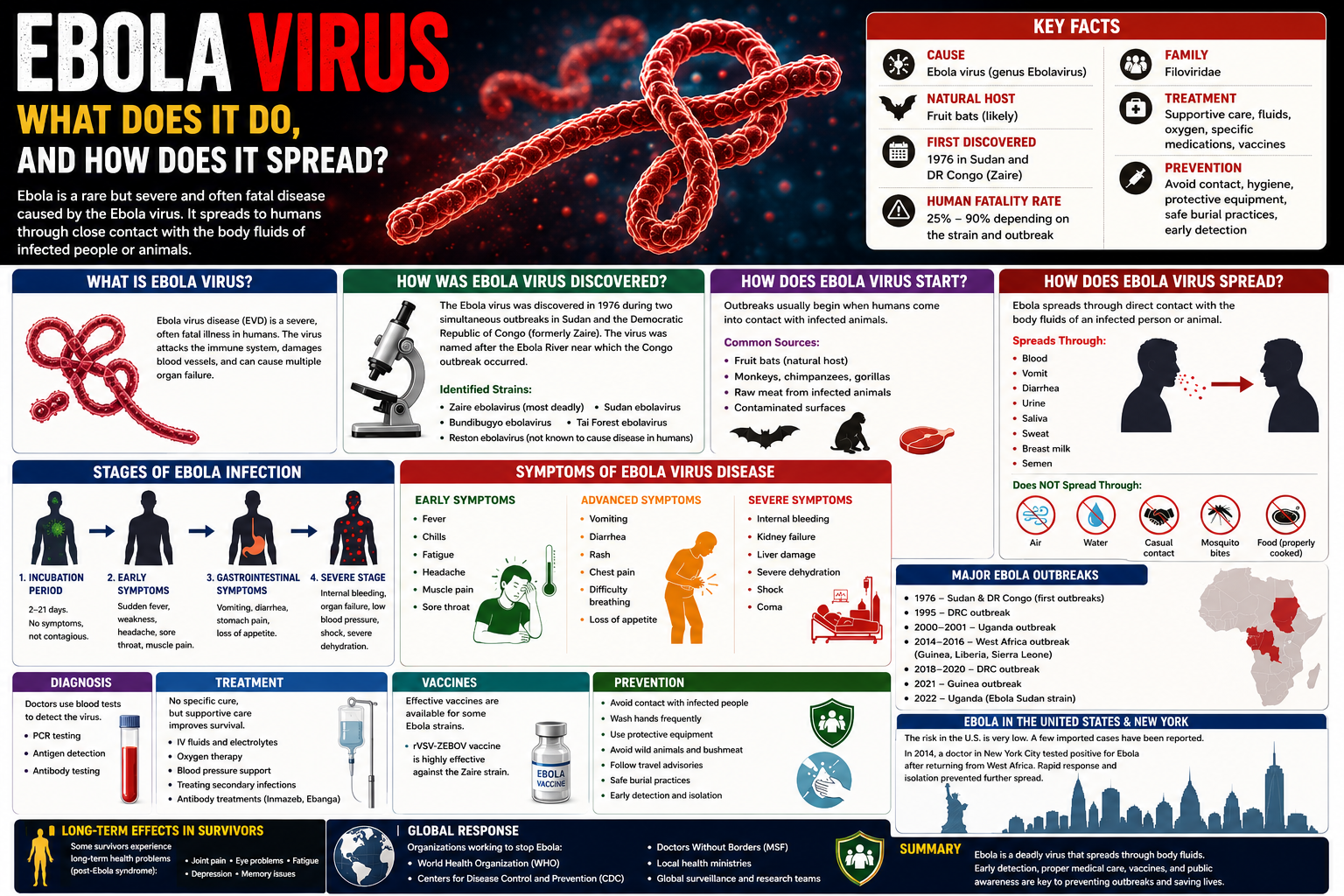
The ebola virus is one of the world’s deadliest infectious diseases and has caused fear across continents because of its high fatality rate and rapid spread during outbreaks. Although Ebola outbreaks are relatively rare, they can become extremely dangerous when not contained quickly. Understanding how Ebola affects the body, how it spreads, and what symptoms to watch for is essential for preventing future health emergencies.
In this detailed guide, we will explore the history, symptoms, transmission, treatment, and prevention of Ebola, while also answering common questions people ask about the disease.
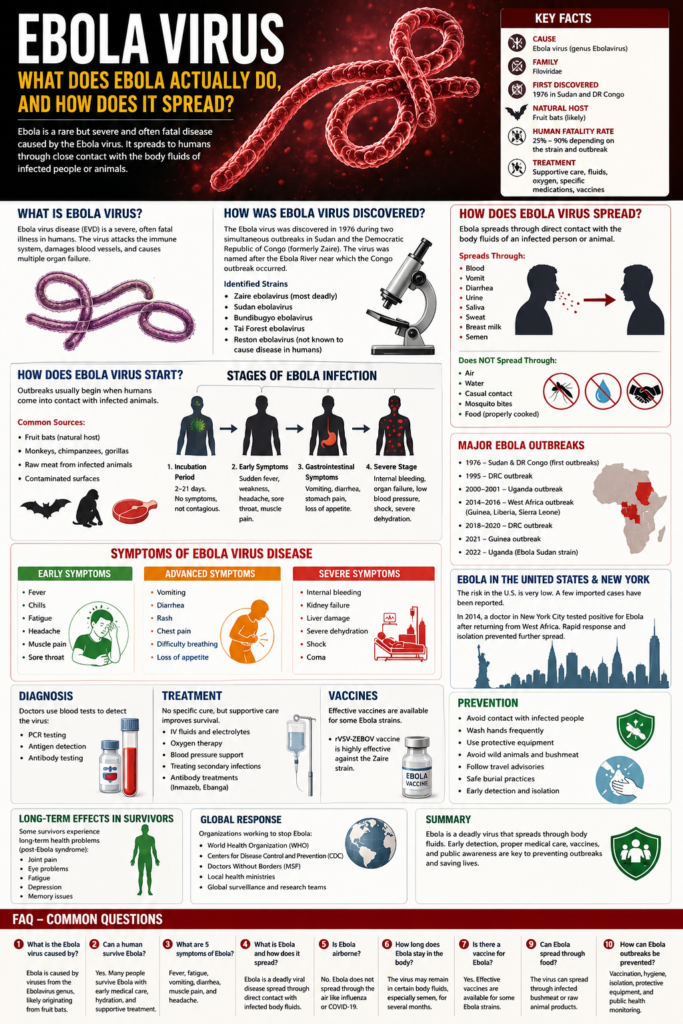
What Is Ebola Virus?
What is ebola virus? Ebola is a severe and often fatal viral infection caused by viruses from the genus Ebolavirus. It belongs to the Filoviridae family and primarily affects humans and nonhuman primates such as monkeys and chimpanzees.
The disease caused by the virus is called ebola virus disease (EVD). It was previously known as Ebola hemorrhagic fever because many infected people experience internal and external bleeding.
The virus attacks the immune system, damages blood vessels, and can lead to organ failure. Without rapid treatment and supportive care, Ebola can become life-threatening.
How Was Ebola Virus Discovered?
One of the most common questions people ask is how was ebola virus discovered.
The Ebola virus was first identified in 1976 during two simultaneous outbreaks in Sudan and the Democratic Republic of Congo (formerly Zaire). The Congo outbreak occurred near the Ebola River, which is how the virus got its name.
Scientists investigating the mysterious illness found that infected patients had high fever, severe bleeding, and shock-like symptoms. Laboratory testing later confirmed a completely new virus.
Since then, multiple strains of Ebola have been identified, including:
- Zaire ebolavirus
- Sudan ebolavirus
- Bundibugyo ebolavirus
- Tai Forest ebolavirus
- Reston ebolavirus
The Zaire strain is considered the deadliest.
How Does Ebola Virus Start?
Another important question is how does ebola virus start?
Ebola outbreaks typically begin when humans come into close contact with infected wild animals. Fruit bats are believed to be the natural host of the virus. Humans can become infected through contact with:
- Blood from infected animals
- Raw meat from wild animals
- Body fluids of infected animals
- Contaminated surfaces
Once a person becomes infected, the virus can quickly spread from person to person.
How Does the Ebola Virus Affect the Body?
The Ebola virus attacks several parts of the body simultaneously. Once inside the bloodstream, it targets immune cells and organs such as:
- Liver
- Kidneys
- Spleen
- Blood vessels
The virus weakens the immune response and causes severe inflammation throughout the body.
Stages of Ebola Infection
1. Incubation Period
Symptoms usually appear 2–21 days after exposure. During this period, the infected person does not show symptoms and is generally not contagious.
2. Early Symptoms
The disease begins suddenly with flu-like symptoms such as:
- Fever
- Weakness
- Muscle pain
- Headache
- Sore throat
3. Gastrointestinal Symptoms
As the virus spreads, patients may develop:
- Vomiting
- Diarrhea
- Stomach pain
- Loss of appetite
4. Severe Stage
The infection can progress to:
- Internal bleeding
- Organ failure
- Low blood pressure
- Shock
- Severe dehydration
Without treatment, many patients die from multiple organ failure or shock.
What Is the Symptoms of Ebola Virus Disease?
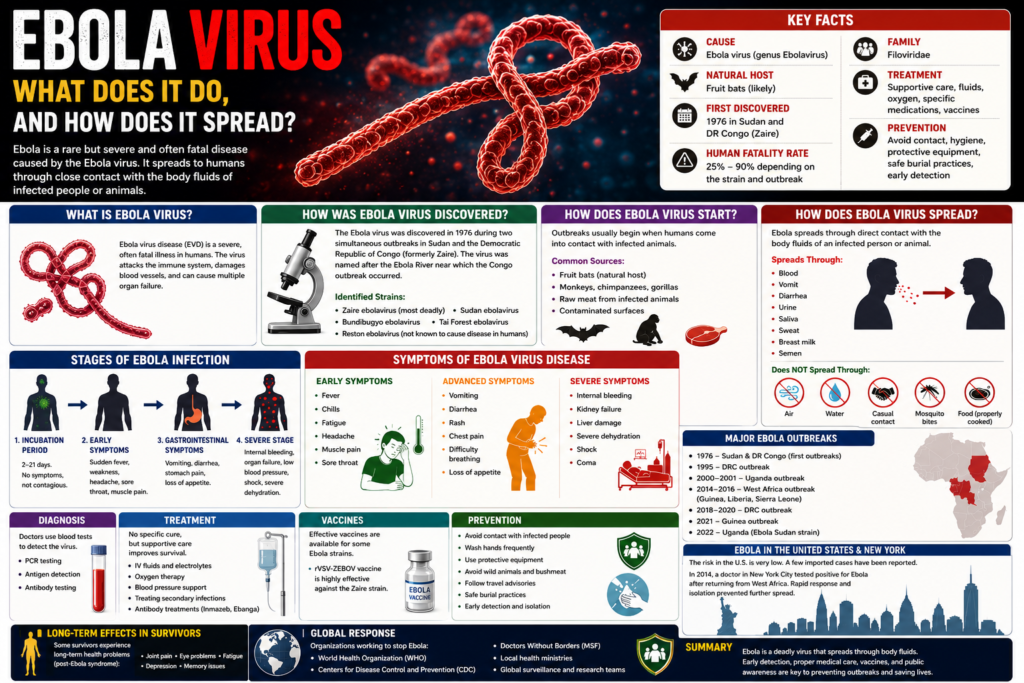
Many people search for what is the symptoms of ebola virus disease because early detection is crucial.
The most common symptoms include:
Early Symptoms
- Fever
- Chills
- Muscle aches
- Fatigue
- Headache
Advanced Symptoms
- Vomiting
- Diarrhea
- Rash
- Chest pain
- Difficulty breathing
- Bleeding from gums or nose
Severe Symptoms
- Internal bleeding
- Kidney failure
- Liver damage
- Shock
- Coma
Symptoms often worsen rapidly within days.
How Did Ebola Virus Spread?
A major concern worldwide is how did ebola virus spread during past outbreaks.
The virus spreads through direct contact with:
- Blood
- Vomit
- Sweat
- Urine
- Saliva
- Breast milk
- Semen
Transmission can happen when someone touches infected fluids or contaminated surfaces.
Ebola Does NOT Spread Through:
- Air like the flu
- Water
- Casual contact
- Mosquito bites
However, Ebola spreads very efficiently in healthcare settings without proper protective equipment.
How Is Ebola Transmitted?
People often ask: how is ebola transmitted?
Transmission happens through:
Human-to-Human Contact
Caregivers and family members are at highest risk when caring for infected patients.
Medical Equipment
Needles or medical tools contaminated with infected blood can spread the virus.
Funeral Practices
Traditional burial rituals involving touching the body of a deceased patient contributed heavily to past outbreaks.
Sexual Transmission
The virus can remain in semen for months after recovery.
Major Ebola Virus Disease Outbreak Events
Several major outbreaks have occurred since 1976.
2014–2016 West Africa Crisis
This was the largest ebola virus disease outbreak in history.
Countries affected included:
- Guinea
- Liberia
- Sierra Leone
More than 28,000 cases and over 11,000 deaths were reported.
Democratic Republic of Congo Outbreaks
The DRC has experienced repeated Ebola outbreaks due to wildlife exposure and healthcare challenges.
Uganda Outbreaks
Sudan strain outbreaks have periodically emerged in Uganda.
The Global Fear of an Ebola Virus Epidemic
The possibility of an ebola virus epidemic causes international concern because outbreaks can overwhelm healthcare systems quickly.
During major outbreaks:
- Hospitals become overcrowded
- Healthcare workers face high infection risk
- Travel restrictions may occur
- Economies can suffer severe losses
Global organizations such as the World Health Organization (WHO) work to contain outbreaks rapidly.
Could Ebola Reach the United States?
Searches for ebola virus united states and ebola virus new york increased dramatically during past outbreaks.
Although Ebola cases in the United States have been extremely rare, imported cases have occurred through international travel.
Ebola in New York
In 2014, a doctor returning from West Africa tested positive for Ebola in New York City. Strict isolation and rapid public health action prevented further spread.
The United States now uses:
- Airport screening
- Isolation protocols
- Contact tracing
- Specialized treatment centers
to reduce outbreak risks.
Ebola Diagnosis
Doctors diagnose Ebola using laboratory tests such as:
- PCR testing
- Antigen detection
- Blood testing
Because symptoms resemble malaria, typhoid, or influenza, laboratory confirmation is essential.
Patients suspected of Ebola are isolated immediately to prevent spread.
Ebola Treatment
There is no simple cure for Ebola, but supportive medical care greatly improves survival rates.
Ebola Treatment Includes:
- IV fluids
- Oxygen therapy
- Blood pressure support
- Electrolyte replacement
- Treatment of secondary infections
Antibody Treatments
New medications have improved survival:
- Inmazeb
- Ebanga
These treatments target the virus directly.
Ebola Vaccines
Vaccines have become a major breakthrough in preventing Ebola outbreaks.
rVSV-ZEBOV Vaccine
This vaccine is highly effective against the Zaire strain of Ebola.
Vaccination programs are often used during outbreaks to protect:
- Healthcare workers
- Family members
- High-risk communities
Prevention Tips
Preventing Ebola requires strong public health measures.
How to Protect Yourself
- Avoid contact with infected individuals
- Wash hands frequently
- Use protective equipment
- Avoid handling wild animals
- Follow travel advisories
Healthcare Safety
Healthcare workers should wear:
- Gloves
- Masks
- Face shields
- Protective suits
Proper sanitation is critical.
Why Ebola Is So Dangerous
Ebola is feared because:
- It spreads quickly through body fluids
- Fatality rates can exceed 50%
- Symptoms worsen rapidly
- Healthcare systems can become overwhelmed
However, modern medicine and faster response systems have improved survival rates significantly.
Long-Term Effects in Survivors
People who survive Ebola may still experience health problems called “post-Ebola syndrome.”
These include:
- Joint pain
- Eye problems
- Fatigue
- Depression
- Memory issues
Some survivors require long-term medical support.
The Future of Ebola Research
Scientists continue studying Ebola to:
- Develop better vaccines
- Improve treatments
- Understand animal reservoirs
- Prevent future outbreaks
Global surveillance systems are stronger today than during previous outbreaks.
Conclusion
The ebola virus remains one of the world’s most serious infectious diseases. Understanding what is ebola virus, how it spreads, and recognizing early symptoms can help prevent deadly outbreaks.
While Ebola can be terrifying, medical advancements, vaccines, rapid diagnosis, and public health awareness have dramatically improved the world’s ability to fight this disease.
Knowing how did ebola virus spread, understanding how is ebola transmitted, and recognizing what is the symptoms of ebola virus disease are essential steps in protecting communities worldwide.
Continued education, research, and global cooperation remain the key to preventing another major ebola virus epidemic.
Frequently Asked Questions (FAQ)
1. What is the Ebola virus caused by?
Ebola is caused by infection with viruses from the Ebolavirus genus, likely originating from fruit bats.
2. Can a human survive Ebola?
Yes. Many people survive Ebola with early medical care, hydration, and supportive treatment.
3. What are 5 symptoms of Ebola?
Five common symptoms are:
- Fever
- Fatigue
- Vomiting
- Diarrhea
- Muscle pain
4. What is Ebola and how does it spread?
Ebola is a deadly viral disease spread through direct contact with infected body fluids.
5. Is Ebola airborne?
No. Ebola does not spread through the air like influenza or COVID-19.
6. How long does Ebola stay in the body?
The virus may remain in certain body fluids, especially semen, for several months after recovery.
7. Is there a vaccine for Ebola?
Yes. Effective vaccines are available for some Ebola strains.
8. Can Ebola spread through food?
The virus can spread through infected bushmeat or raw animal products from infected wildlife.
9. What countries have had Ebola outbreaks?
Countries include:
- Democratic Republic of Congo
- Uganda
- Guinea
- Liberia
- Sierra Leone
10. How can Ebola outbreaks be prevented?
Outbreaks can be prevented through:
- Vaccination
- Isolation
- Hygiene
- Protective equipment
- Public health monitoring
Author- Certified Health Coach Author