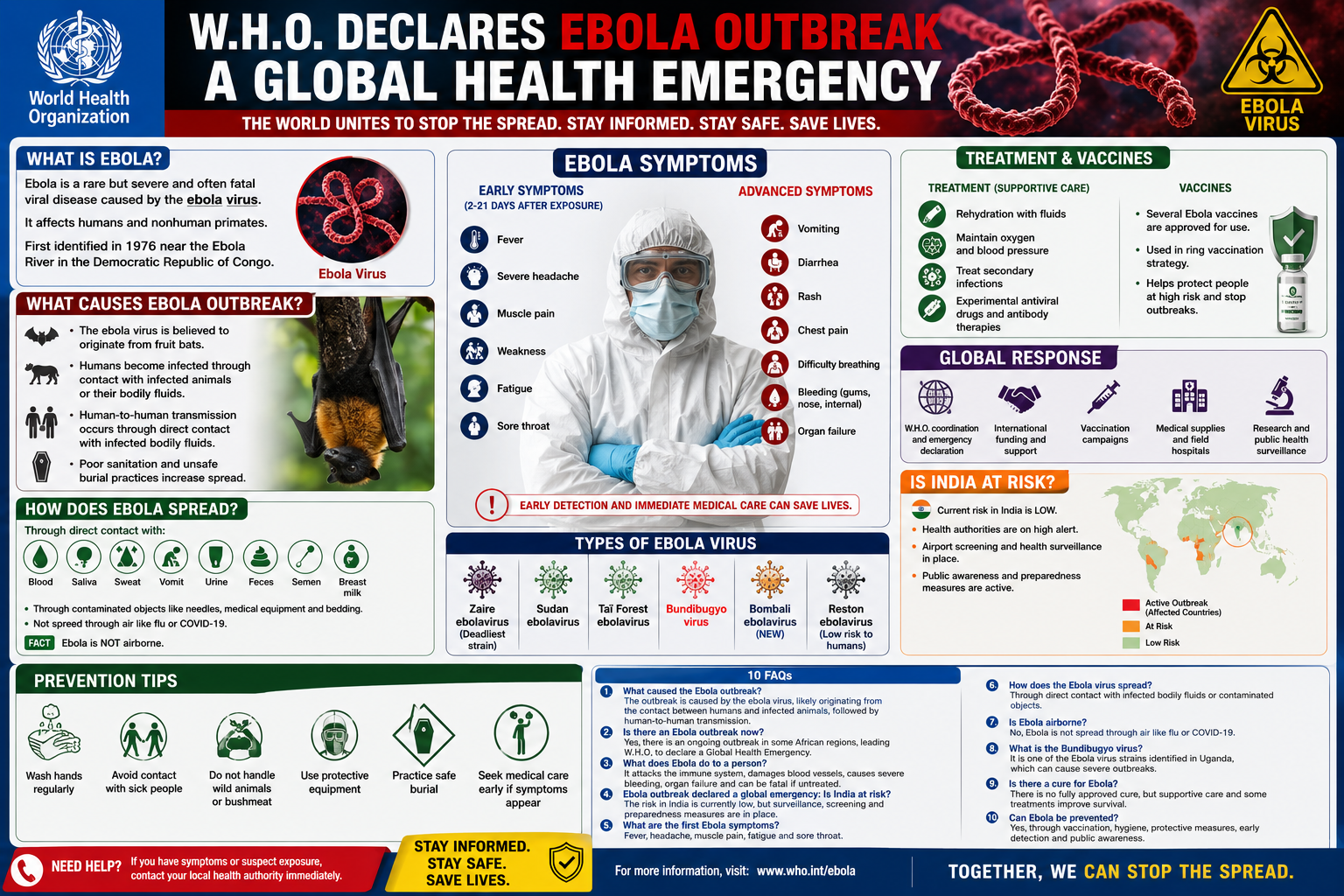
The World Health Organization (W.H.O.) has officially declared the latest ebola outbreak a Global Health Emergency, raising concerns across the world about the spread of the deadly disease. Health authorities, governments, and medical experts are now working together to prevent the rapid transmission of the ebola virus and protect vulnerable populations.
This announcement has sparked fear and curiosity among millions of people asking questions such as: what is ebola, how dangerous is it, what are the warning signs, and whether countries like India are at risk. Understanding the facts about Ebola is essential to avoid panic and encourage proper preventive measures.
In this detailed guide, we will explain everything you need to know about the current ebola outbreak, including causes, symptoms, transmission, treatment, global response, and safety measures.
What Is Ebola?
Many people are searching online for answers to the question: what is ebola?
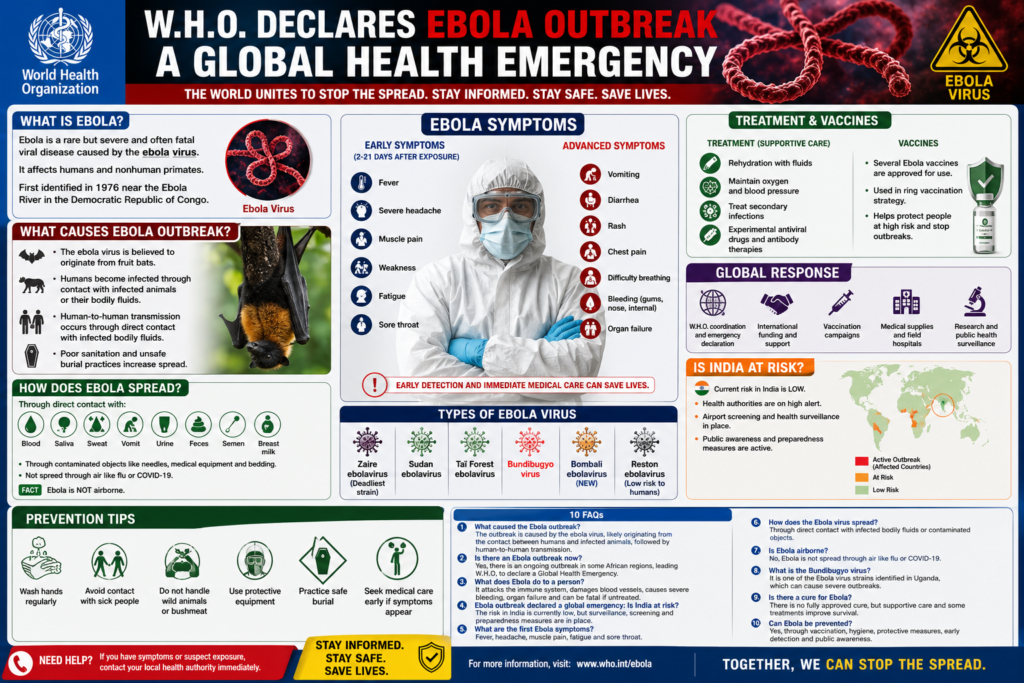
Ebola is a severe and often deadly viral disease caused by the ebola virus. It belongs to the Filoviridae family of viruses and can spread rapidly among humans through direct contact with infected bodily fluids.
The disease was first identified in 1976 near the Ebola River in what is now the Democratic Republic of Congo. Since then, multiple outbreaks have occurred in African countries, causing thousands of deaths.
The latest ebola outbreak has become a major international concern because of its rapid spread and high fatality rate.
Understanding the Ebola Virus
The ebola virus is one of the world’s most dangerous viruses. It attacks the immune system and damages blood vessels, leading to severe bleeding, organ failure, and death in many cases.
There are several species of the virus, including:
- Zaire ebolavirus
- Sudan ebolavirus
- Taï Forest ebolavirus
- Reston ebolavirus
- Bombali ebolavirus
- bundibugyo virus
The bundibugyo virus is a lesser-known strain but has been responsible for significant outbreaks in the past. Scientists continue to study how different Ebola strains behave and spread.
Why Did W.H.O. Declare a Global Health Emergency?
The W.H.O. declares a Global Health Emergency when a disease outbreak poses a serious international public health risk.
The current ebola outbreak raised alarms because:
- Cases increased rapidly in affected regions
- The disease crossed regional boundaries
- Healthcare systems became overwhelmed
- International travel increased the risk of global spread
- The mortality rate remained high
The declaration allows countries and organizations to coordinate emergency funding, medical support, research, and public awareness campaigns.
What Caused the Ebola Outbreak?
One of the most common questions is: “What caused the Ebola outbreak?”
The exact origin of many Ebola outbreaks is linked to animal-to-human transmission. Scientists believe fruit bats are natural hosts of the ebola virus.
Humans can become infected through:
- Contact with infected animals
- Handling bushmeat
- Exposure to bodily fluids
- Poor sanitation
- Unsafe burial practices
Once the virus infects a person, it spreads quickly through communities if proper isolation measures are not taken.
The recent ebola outbreak may have started through animal exposure and later spread through human contact.
How Ebola Spreads
The ebola virus spreads through direct contact with:
- Blood
- Saliva
- Sweat
- Vomit
- Urine
- Semen
- Breast milk
It can also spread through contaminated surfaces, needles, and medical equipment.
Importantly, Ebola is not spread through the air like the flu or COVID-19. However, close physical contact makes transmission extremely dangerous.
Healthcare workers and family members caring for infected individuals are at the highest risk during an ebola outbreak.
Ebola Symptoms
Recognizing ebola symptoms early can save lives and reduce transmission.
Symptoms usually appear 2 to 21 days after infection.
Early Ebola Symptoms
Common early ebola symptoms include:
- Fever
- Severe headache
- Muscle pain
- Weakness
- Fatigue
- Sore throat
Advanced Ebola Symptoms
As the disease worsens, patients may experience:
- Vomiting
- Diarrhea
- Rash
- Chest pain
- Difficulty breathing
- Bleeding from gums or nose
- Internal bleeding
- Organ failure
Severe ebola symptoms require immediate medical attention and isolation.
What Does Ebola Do to a Person?
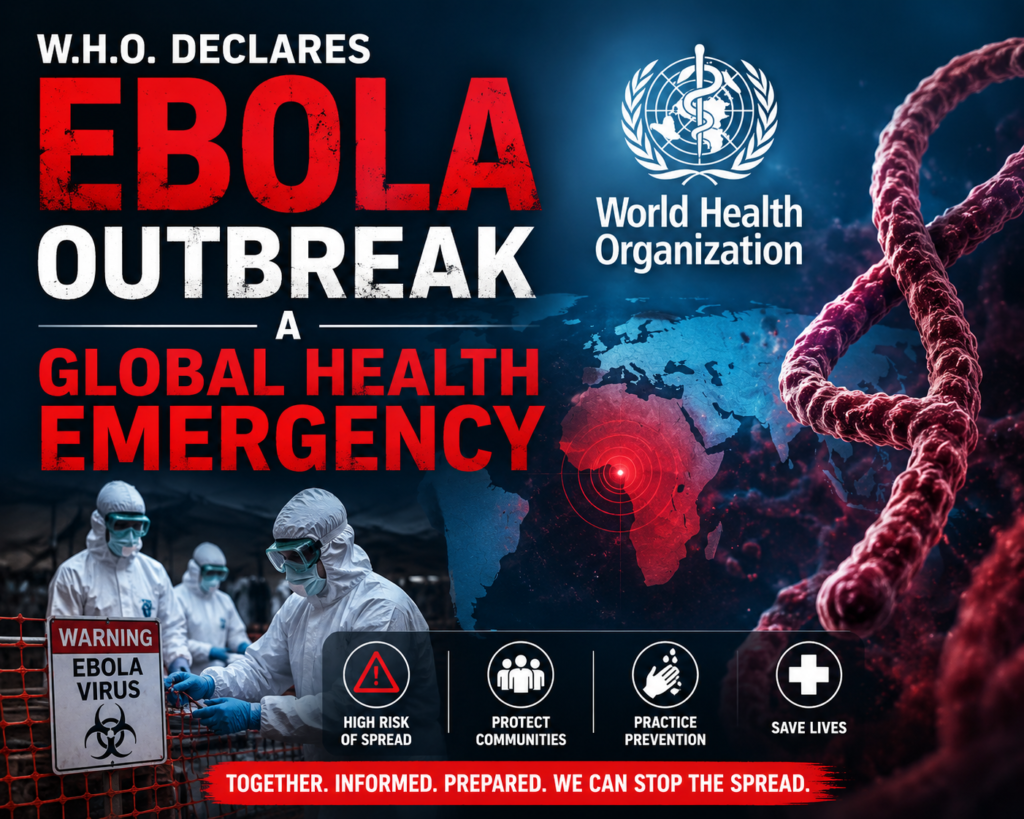
Many people ask: “What does Ebola do to a person?”
The ebola virus attacks the body aggressively. It weakens the immune system and damages blood vessels, leading to internal bleeding and organ failure.
The disease affects:
- Liver
- Kidneys
- Digestive system
- Blood clotting mechanisms
Patients often suffer from dehydration, shock, and multiple organ dysfunction. Without rapid treatment, Ebola can be fatal.
Even survivors may face long-term complications such as:
- Joint pain
- Eye problems
- Fatigue
- Mental health issues
What Is the Bundibugyo Virus?
The bundibugyo virus is one of the six known species of the Ebola virus family.
It was first identified in Uganda in 2007 during a deadly outbreak. Compared to the Zaire strain, the bundibugyo virus has shown a somewhat lower fatality rate, but it still remains extremely dangerous.
Scientists closely monitor the bundibugyo virus because mutations or changes in transmission patterns could trigger future outbreaks.
Understanding the bundibugyo virus helps researchers improve vaccines and treatments.
Is There an Ebola Outbreak Now?
Yes, there is ongoing concern regarding the current ebola outbreak in affected African regions.
Health authorities continue monitoring cases, contact tracing, and implementing emergency containment strategies.
Several factors influence whether an outbreak grows:
- Speed of detection
- Access to healthcare
- Vaccination programs
- Public awareness
- International support
The W.H.O.’s emergency declaration aims to stop the ebola outbreak before it spreads further internationally.
Ebola Outbreak Declared a Global Emergency: Is India at Risk?
One major concern is: “Ebola outbreak declared a global emergency: Is India at risk?”
India currently has no widespread Ebola transmission, but health authorities remain alert because international travel can increase risks.
India has implemented:
- Airport screening
- Health surveillance
- Isolation protocols
- Emergency preparedness plans
The risk of a large-scale ebola outbreak in India is considered low, but not impossible.
Public health experts emphasize:
- Early detection
- Quarantine measures
- Rapid testing
- Public awareness
India’s healthcare system learned important lessons during the COVID-19 pandemic, which may help in responding quickly if Ebola cases appear.
How Doctors Diagnose Ebola
Doctors use laboratory tests to confirm the presence of the ebola virus.
Common diagnostic methods include:
- PCR testing
- Blood analysis
- Antigen detection
- Antibody testing
Early diagnosis is critical during an ebola outbreak because symptoms often resemble malaria, typhoid, or flu in the beginning.
Ebola Treatment Options
Currently, there is no universal cure for Ebola, but treatments have improved significantly.
Medical care focuses on:
- Rehydration
- Oxygen support
- Blood pressure stabilization
- Treating secondary infections
- Antiviral medications
Some experimental therapies and antibody treatments have shown positive results against the ebola virus.
Early medical intervention greatly increases survival chances.
Ebola Vaccines
Vaccination is one of the most effective tools against the ebola outbreak.
Several Ebola vaccines have been developed and used successfully in outbreak zones.
Vaccination strategies include:
- Ring vaccination
- Healthcare worker immunization
- High-risk population protection
Vaccines help reduce the spread of the ebola virus and lower death rates.
Global Response to the Ebola Crisis
The international response to the ebola outbreak includes support from:
- World Health Organization
- CDC
- UNICEF
- Red Cross
- Local governments
- Research institutions
Efforts focus on:
- Emergency funding
- Medical supply distribution
- Isolation centers
- Public education
- Vaccine campaigns
Global cooperation is essential to contain the ebola virus.
How Communities Can Prevent Ebola Spread
Communities play a major role in stopping the ebola outbreak.
Important preventive measures include:
1. Hand Hygiene
Wash hands regularly with soap or sanitizer.
2. Avoid Contact
Avoid direct contact with infected individuals.
3. Safe Burial Practices
Traditional burial rituals may spread the ebola virus if bodies are handled unsafely.
4. Protective Equipment
Healthcare workers must use PPE kits.
5. Public Awareness
Education reduces fear and misinformation.
Challenges in Controlling Ebola
Several challenges make Ebola difficult to control:
- Remote outbreak locations
- Weak healthcare systems
- Fear and misinformation
- Limited medical resources
- Cultural practices
- Political instability
The W.H.O. emergency declaration aims to address these challenges more effectively.
Economic Impact of the Ebola Outbreak
A major ebola outbreak can damage economies by:
- Reducing tourism
- Disrupting trade
- Overloading healthcare systems
- Increasing unemployment
- Affecting agriculture
Countries affected by Ebola often require international financial assistance.
Mental Health Effects During Ebola Outbreaks
Fear during an ebola outbreak affects mental health significantly.
People may experience:
- Anxiety
- Panic
- Depression
- Social stigma
- Trauma
Healthcare workers also face emotional stress due to long working hours and exposure risk.
Mental health support is an important part of outbreak management.
Lessons Learned From Past Ebola Outbreaks
Past Ebola crises taught the world valuable lessons:
- Rapid response saves lives
- Public trust matters
- Vaccines are critical
- Global cooperation is essential
- Healthcare infrastructure must improve
Countries now monitor outbreaks more aggressively to prevent international spread.
The Future of Ebola Research
Scientists continue researching:
- Better vaccines
- Faster testing methods
- Antiviral drugs
- Virus mutation tracking
Understanding strains like the bundibugyo virus may help prevent future global emergencies.
Research remains essential in the fight against the ebola virus.
Frequently Asked Questions (FAQ)
1. What caused the Ebola outbreak?
The ebola outbreak was likely caused by animal-to-human transmission, followed by human-to-human spread through bodily fluids and close contact.
2. Is there an Ebola outbreak now?
Yes, health authorities are monitoring ongoing cases linked to the current ebola outbreak, which prompted the W.H.O. to declare a Global Health Emergency.
3. What does Ebola do to a person?
The ebola virus damages the immune system, causes severe bleeding, organ failure, dehydration, and can lead to death if untreated.
4. Ebola outbreak declared a global emergency: Is India at risk?
India’s risk remains low, but authorities are maintaining airport screening and emergency preparedness measures to prevent imported cases.
5. What are the first Ebola symptoms?
Early ebola symptoms include fever, headache, fatigue, muscle pain, and sore throat.
6. How does the Ebola virus spread?
The ebola virus spreads through direct contact with infected bodily fluids or contaminated surfaces.
7. Is Ebola airborne?
No, Ebola is not considered an airborne disease like influenza or COVID-19.
8. What is the Bundibugyo virus?
The bundibugyo virus is one strain of the Ebola virus family that caused outbreaks in Uganda and nearby regions.
9. Is there a cure for Ebola?
There is no complete cure, but supportive care and some treatments improve survival rates significantly.
10. Can Ebola be prevented?
Yes, Ebola prevention includes vaccination, hygiene, isolation, protective equipment, and public awareness.
Conclusion
The W.H.O.’s declaration of the current ebola outbreak as a Global Health Emergency highlights the seriousness of the situation. The deadly ebola virus continues to threaten vulnerable populations, making global cooperation more important than ever.
Understanding what is ebola, recognizing ebola symptoms, and learning about strains like the bundibugyo virus can help people stay informed and prepared.
While countries such as India remain at relatively low risk, international travel and globalization mean no nation can ignore the threat entirely. Continued research, vaccines, healthcare preparedness, and public awareness are the strongest weapons against future outbreaks.
The world must stay vigilant, informed, and united in the fight against Ebola.
Author- Certified Health Coach Author